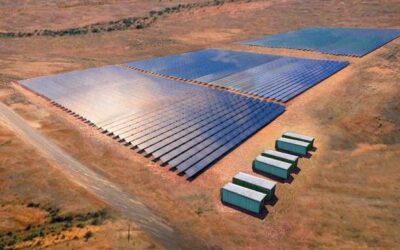
Australian renewables investor Lyon Group has penned an agreement with China Huadian Corporation which will see the duo co-develop and invest in power-plus-battery energy storage systems across Australia, China and other Asian markets.
Distributed renewables and energy storage are now the cheapest form of baseload power and if Western Australia’s remote areas can benefit from that, we can all benefit, argues David Martin, founder of energy trading platform provider Power Ledger.
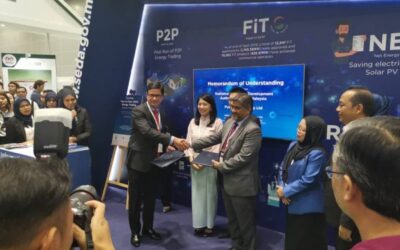
Australian technology firm Power Ledger is to launch an eight-month pilot project of its peer-to-peer energy trading technology after penning an agreement with Malaysia’s Sustainable Energy Development Authority (SEDA).
New technologies and designs aimed at driving down the cost of energy storage facilities are currently the focus of intense industry R&D. Sara Verbruggen reports on DC coupling, an emerging system architecture that many believe will soon become the industry standard.
Engie has been hired by Guam’s state electricity utility to build two solar-plus-storage plants with a combined capacity of 50MWp/300MWh on the Micronesian island.
Energy-Storage.news editor Andy Colthorpe reports back from Solar Power International 2019 in Salt Lake City on trends including bifacial PV modules, corporate PPAs, utilities and energy storage as a grid infrastructure asset and lots more.
CATL sold 21.31GWh of lithium batteries in 2018, primarily to the EV market in China, but after exhibiting at two major trade shows in the west, claims its 12,000 cycle lithium iron phosphate batteries are ready to take on the stationary energy storage system (ESS) market, too.
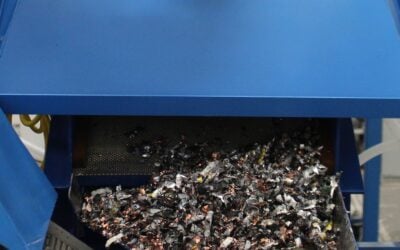
The huge upsurge in lithium-ion battery deployment expected over the next two decades poses a particular problem: what to do with cells that have reached the end of their useful life. Stefan Hogg investigates how lithium recycling will come into its own to handle spent batteries