US-headquartered battery storage system integrator and manufacturer Powin has signed a multi-year, 15GWh deal for the supply of battery cells with China’s Eve Energy.
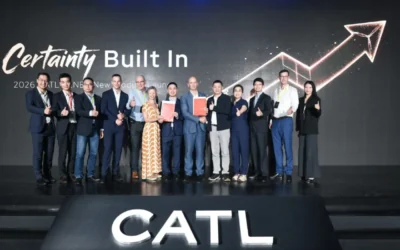
The strategic offtake deal, covering Tier 1 battery supplier Eve’s 280Ah and 306Ah lithium iron phosphate (LFP) cells, was signed this week at the ees Europe trade exhibition and conference in Germany.
It marks the third publicly announced multi-gigawatt-hour deal with Chinese battery makers this year for Powin, following a 5GWh agreement with Hithium, announced in January, and a 12GWh framework agreement with Rept Battero in late April.
It is also the Oregon-headquartered battery energy storage system (BESS) integrator’s third such deal with Eve Energy.
Try Premium for just $1
- Full premium access for the first month at only $1
- Converts to an annual rate after 30 days unless cancelled
- Cancel anytime during the trial period
Premium Benefits
- Expert industry analysis and interviews
- Digital access to PV Tech Power journal
- Exclusive event discounts
Or get the full Premium subscription right away
Or continue reading this article for free
The two signed a 10GWh supply agreement last June, with some of those cells to be used at Powin’s 850MW/1,680MWh Waratah Super Battery for developer Akaysha Energy in Australia. In 2021, a “multi-gigawatt” two-year deal of undisclosed capacity kicked off their relationship.
On the signing of that first deal, Powin senior VP Danny Lu told Energy-Storage.news that the reasons for selecting Eve included the manufacturer’s 20-year performance guarantee and its prismatic LFP cells’ being of the right form factor to drop into Powin BESS racks, cabinets, and containers.
Powin’s supplier base is known to include at least five different cell manufacturers. In May, a company spokesperson told Energy-Storage.news Premium that “procuring cells is still a top concern for integrators who lack a diversified supply chain,” even after the pandemic-era lithium price spikes had eased up and costs began declining again in 2023.
With Powin’s average project size now over 100MW, procuring enough cells “can be challenging for companies that lack a diversified supply chain, which is one of the reasons we prioritise a diversity of suppliers,” the spokesperson said.
This has included broadening its net to include companies ranked as Tier 2, including Rept Battero, at the time of the companies’ initial 3GWh deal and then 12GWh upscaling.
With Powin having launched ‘Pod, a 20-ft containerised BESS solution a couple of months ago with 5MWh energy density—making it the latest BESS provider to target the higher energy density end of the market—large-format cells are also a priority with Rept also providing 312Ah cells and Hithium 300Ah cells.