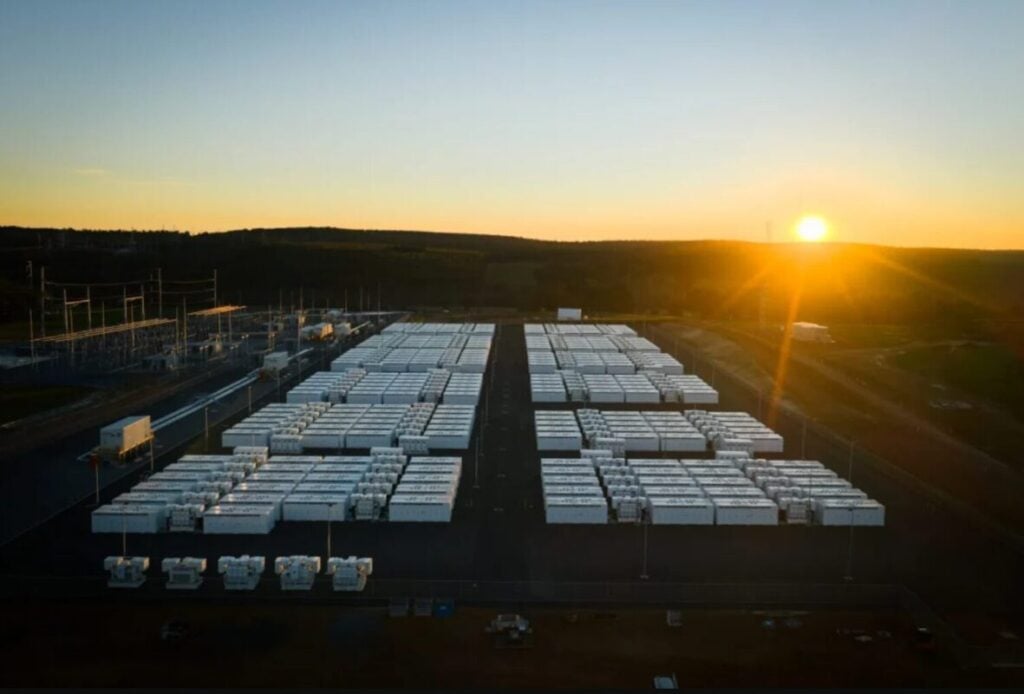
New South Wales (NSW) battery energy storage systems (BESS) set two charging records on 2 May, reaching 1,240MW of charging power and capturing 11.9% of state consumption during the late morning solar window.
According to energy market analyst Geoff Eldridge of consultancy Global Power Energy, the records mark a 72.5% year-on-year increase in charging capacity and a 68% rise in the charge share of consumption compared to the same period in 2025, when NSW batteries charged at 341MW and accounted for 3.8% of consumption.
The previous records were set on 12 April 2026.
What distinguishes these records from earlier milestones is the market context in which they occurred. Dispatch prices on 2 May ranged from only -AU$1.10/MWh (-US$0.79/MWh) to AU$79/MWh across the day, a relatively narrow band compared to the volatility that has historically driven battery charging behaviour in the National Electricity Market (NEM).
Try Premium for just $1
- Full premium access for the first month at only $1
- Converts to an annual rate after 30 days unless cancelled
- Cancel anytime during the trial period
Premium Benefits
- Expert industry analysis and interviews
- Digital access to PV Tech Power journal
- Exclusive event discounts
Or get the full Premium subscription right away
Or continue reading this article for free
NSW battery storage systems charged around 4.47GWh at an average price of AU$15.80/MWh and discharged around 3.31GWh at an average price of AU$58.76/MWh, producing a charge-to-discharge spread of approximately AU$43/MWh.
Stored energy in NSW battery systems moved from a low of 608MWh at 06:45 to a high of 4,353MWh at 14:15, representing close to 87% of visible storage capacity, before drawing down through the evening.
“This was therefore not only a charging record. It was a visible example of the daily rhythm of battery storage becoming more established: charging into the solar trough, holding energy through the afternoon, and releasing it into the evening shoulder,” Eldridge wrote in a LinkedIn post.
The charging records come as NSW’s battery fleet has expanded rapidly. By the end of Q1 2026, NSW had reached 2,911MWh of installed battery storage capacity, according to AEMO’s latest Quarterly Energy Dynamics report.
Eight battery storage systems commenced commissioning in the NEM during Q1 2026, including the 415MW/1,660MWh Orana BESS in New South Wales.
In addition, average battery discharge across the NEM reached 359MW during Q1 2026, more than three times the 98MW recorded in Q1 2025, driven by 4,445MW of new large-scale battery storage systems that have added 11,219MWh to the grid since the end of Q1 2025.
The state’s storage requirements have increased substantially in recent months. NSW now requires 56GWh of energy storage by 2030, up 40% from 40GWh projected in mid-2025, according to Paul Peters, CEO of the Energy Security Corporation, speaking at the Energy Storage Summit Australia 2026 last month.
Of the 56GWh needed, only 12.5GWh has reached a financial investment decision, meaning 75% of what is required by 2030 is not yet contracted.
Interested in Australia? Read Energy-Storage.news’ Energy Storage Summit Australia coverage and related content.