The US clean energy manufacturing industry is starting to undergo a wholesale restructuring and recapitalisation as companies look to reduce their exposure to numerous risks, including FEOC.
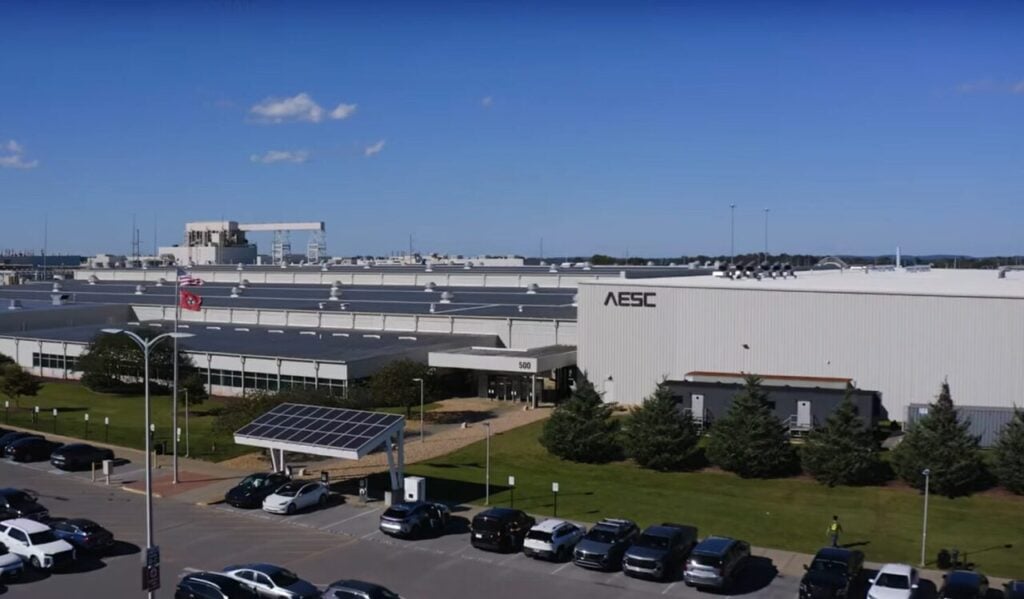
In the past week, Chinese firms Envision Energy (via AESC) and JinkoSolar have sold majority stakes in battery and solar manufacturing assets, respectively.
These deals are the first of many that will reflect the collision of long-term political risk, Foreign Entity of Concern (FEOC) restrictions on tax credit eligibility, bankability and financeability and the US’ continued reliance on Chinese supply chains. That is according to Mona Dajani, law firm Cooley’s co-head of infrastructure, energy and real estate, who discussed the topic with Energy-Storage.news.
“This is not Chinese firms leaving the market entirely, it’s the US clean energy supply chain becoming recapitalised and politically restructured as the market starts to price, and take steps to mitigate, FEOC and related risks,” she said.
Try Premium for just $1
- Full premium access for the first month at only $1
- Converts to an annual rate after 30 days unless cancelled
- Cancel anytime during the trial period
Premium Benefits
- Expert industry analysis and interviews
- Digital access to PV Tech Power journal
- Exclusive event discounts
Or get the full Premium subscription right away
Or continue reading this article for free
Chinese ownership has become an issue
“This is Chinese-linked manufacturers restructuring operations to preserve access to US capital, tax credits and insurance markets,” Dajani explained. “That Chinese ownership is starting to become a financeability issue, and some major developers are pulling back from doing business with Chinese-linked companies.”
“Counterparties are now asking: who owns the IP, where are materials sourced from, do the Chinese sponsors retain control or veto rights etc. Developers now have supply chains due diligence in transactions.”
FEOC restrictions were brought in as part of President Trump’s One Big Beautiful Bill (OBBB). As of 1 January, upstream and downstream clean energy tax credits are restricted if a project uses products from a company which has more than 25% of its board seats, voting rights, or equity interests from a FEOC-linked company (typically Chinese).
Other deals may follow the Jinko template, whereby the company sold a 75.1% stake to be under that 25% threshold, Dajani added.
“The Chinese companies want to retain technology relationships and minority ownerships as there will still be demand for their products in the US market. The AI boom means domestic manufacturing will still be key.”
Opportunity for private equity and investors
The timing and uncertainty around FEOC and the broader anti-China legislative environment in the US are also making these companies’ assets attractive for investors, rather than strategic buyers.
“US investors can acquire these projects at attractive valuations, and repackage them into manufacturing platforms that are more finance-able,” Dajani said.
“These trades are about restructuring and risk, not industry, and strategic buyers are reluctant to inherit FEOC-exposed assets and deal with any future disputes. FEOC rules are evolving in real-time.”
There is still considerable uncertainty around FEOC, particularly around control, technology licensing and supply chain links which are also criteria for tax credit exclusion (alongside the 75% threshold). And the extent to which these are rigidly interpreted and enforced long-term is not clear.
The US Treasury’s first interim FEOC guidance was issued in February, and further details have been provided in the past week. But there are at least 25 FEOC areas where further guidance is still needed, according to the New York State Bar Association.
However, note that BESS technology firm Fluence has revealed that it made an offer to acquire the Tennessee gigafactory of AESC but AESC opted not to pursue. The factory is supplying lithium iron phosphate (LFP) cells to Fluence for US-made BESS products.
AESC opted in the end to sell to a newly-formed entity called Fixx Energy, founded by venture capitalist Brett Conrad. Jinko meanwhile sold its asset to private equity firm FH Capital.
“We are in the early innings and this process could be enormous. This doesn’t affect a few factories, this affects the whole industry,” Dajani concludes. “The market is at a critical inflection point. This is the possibility of an entire generation of manufacturing assets that may need to be financially and politically re-engineered.”