Organic flow battery company CMBlu Energy has closed a €50 million (US$58.76 million) Series C financing with participation from Samsung Ventures.
Notably, this brings CMBlu’s valuation to over US$1 billion. According to the company, on 30 April, all existing investors, including technology group Strabag SE, also joined the financing round.
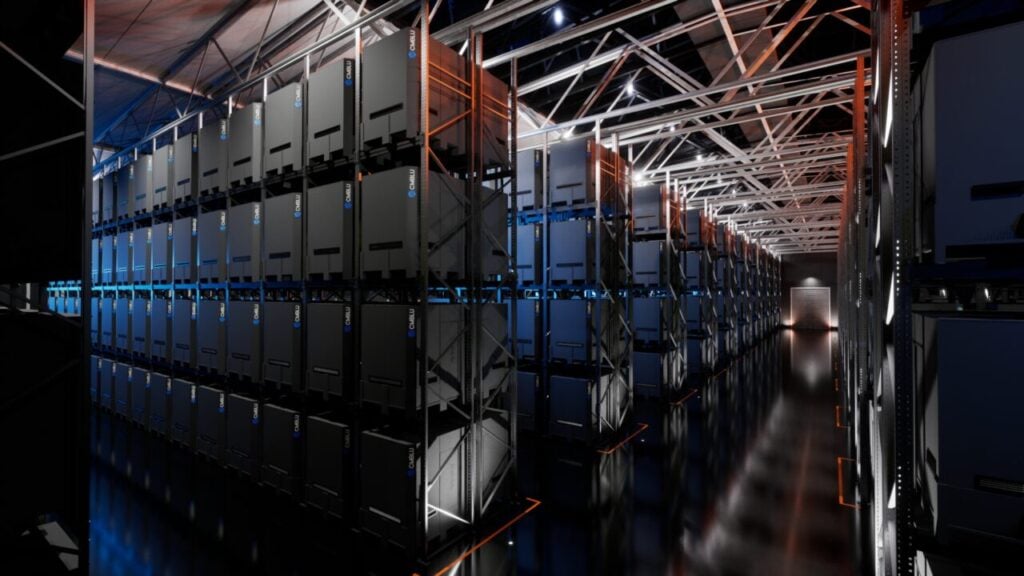
CMBlu’s SolidFlow battery energy storage system (BESS) is based on a patented combination of organic redox flow technology and solid-state storage materials. The company has said it is specifically designed for market-driven use in the multi-hour range.
In January, ESN Premium spoke with Giovanni Damato, CMBlu Energy’s North American president about the company’s technology.
Try Premium for just $1
- Full premium access for the first month at only $1
- Converts to an annual rate after 30 days unless cancelled
- Cancel anytime during the trial period
Premium Benefits
- Expert industry analysis and interviews
- Digital access to PV Tech Power journal
- Exclusive event discounts
Or get the full Premium subscription right away
Or continue reading this article for free
Damato explained, “At its core, the architecture is like a flow battery with two major twists that we think give us a strong competitive advantage. One aspect is the Organic component, which is carbon-based in chemical terms. This means we are not reliant on conflict materials or rare earth elements, avoiding the geopolitical issues that often accompany discussions about battery metals today.”
He continued, “The other piece is the solid part, or SolidFlow. That sounds like an oxymoron, but if you are familiar with flow battery architecture, there are tanks and stacks, and then pumps which pump fluid through the stacks.Our system has stationary solids in the tank that dramatically improve our energy density.”
In February, CMBlu entered into a conditional supply contract with German power firm Uniper, that would see CMBlue deliver at 5GW of its technology.
The agreement, valid until 2037, provides Uniper with the flexibility to procure battery systems from CMBlu in batches of at least 100MWh each, with deliveries starting in 2027.
With its latest funding announcement, the company highlights its ability to power data centres, and that its technology avoids foreign entity of concern (FEOC) restrictions in the US.
Damato spoke with ESN Premium again in February, saying of FEOC restrictions, “FEOC restrictions introduced real procurement and compliance uncertainty, which initially slowed some decisions, but they’ve also accelerated demand for FEOC-safe supply chains and domestic manufacturing. That regulatory tension has become one of the single biggest factors shaping project timing and sourcing strategy.”
He continued, “For CMBlu, we’re seeing growing interest precisely because our technology does not carry FEOC concerns, and because we can ramp US manufacturing quickly—from active material supply chains through module assembly.”
Damato also spoke to the company’s view of data centres, and how CMBlu’s organic SolidFlow battery and similar technologies could be utilised at them.
“We expect a period of real disruption across the industry as utilities manage unprecedented load growth while simultaneously transitioning their generation portfolios, retiring older coal assets and rapidly adding solar and wind. At the same time, hyperscalers are under intense pressure to site and power AI-driven data centres as quickly as possible, and the fastest path forward is pairing renewables with energy storage and firm generation,” Damato said.
As of late, this trend, of data centres seeking long-duration energy storage (LDES) solutions has been growing.
Last month, ESN Premium examined LDES BESS applications at data centers, noting that flow batteries may offer better economics than lithium-ion for LDES, particularly in high-cycling scenarios including renewable plants, island grids, data centers, C&I facilities, and grid-scale storage.