Longroad Energy’s 340MWh Arizona co-located BESS reaches commercial operation

LinkedIn
Twitter
Reddit
Facebook
Email

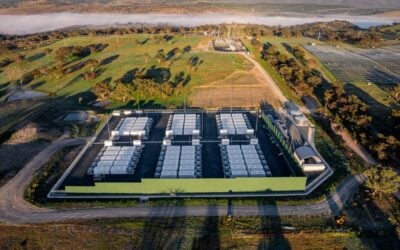
US renewable energy IPP Longroad Energy’s Sun Pond solar-plus-storage project in Maricopa County, Arizona, US has reached commercial operation.

Announced 5 May, Sun Pond combines 111MW of solar PV generation with a 85MW/340MWh battery energy storage system (BESS), and has long-term power purchase agreements (PPAs) with California community choice aggregators (CCA) Ava Community Energy and  San José Clean Energy (SJCE).

In December 2024, Longroad announced financial close of Sun Pond, noting that construction company McCarthy Building Companies would act as the engineering, procurement and construction (EPC) contractor on the project.

Additionally, the BESS cells would be provided by Japan-headquartered lithium-ion battery manufacturer Automotive Energy Supply Corporation (AESC), which is majority owne by Chinese firm Envision Energy.

This article requires Premium SubscriptionBasic (FREE) Subscription

Try Premium for just $1

  • Full premium access for the first month at only $1
  • Converts to an annual rate after 30 days unless cancelled
  • Cancel anytime during the trial period

Premium Benefits

  • Expert industry analysis and interviews
  • Digital access to PV Tech Power journal
  • Exclusive event discounts

Or get the full Premium subscription right away

Or continue reading this article for free

BESS integrator Fluence, which at that time, had recently secured US-manufactured cells from AESC, would work with Longroad and operations and maintenance firm NovaSource Power Services to provide operations and maintenance (O&M) services for the Sun Pond project.

In the past week, AESC sold its stake in the US lithium-ion battery manufacturing business to US firm Fixx Energy, amid tighter restrictions in the US on companies seen to be controlled by the Chinese government.

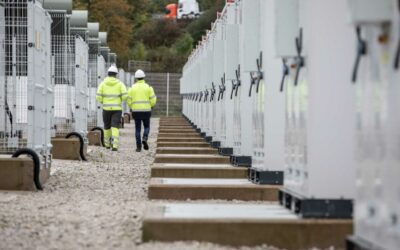
Longroad has specified that Fluence’s Gridstack BESS solution was used at Sun Pond. PV modules from First Solar, smart trackers from Nextpower, and solar inverters from Sungrow were also used in the project.

Sun Pond is part of Longroad’s Sun Streams Complex, which is made up of three additional projects, and brings the Complex’s total capacity to 973MW solar PV and 600MW/2,400MWh BESS.

Sun Streams Complex ProjectMW PV, MW/MWh BESS
Sun Streams 2200MW solar PV
Sun Streams 3285MW solar PV, 215MW/860MWh BESS
Sun Streams 4377MW solar PV, 300MW/1200MWh BESS
Sun Pond111MW solar PV, 85MW/340MWh BESS

Longroad claims that the Sun Streams Complex will provide over US$300 million in benefits to Arizona schools and local communities through its long-term leases with the Arizona State Land Department and tax remittances.

In March 2024, the company closed on Serrano, a large-scale solar PV and battery storage project in Pinal and Pima Counties, Arizona, with PV modules also developed by First Solar.

Prior to closing on the Serrano project, Longroad closed on Sun Streams 4, which was the company’s largest solar and storage project to date, at 377MW PV and 300MW/1,200MWh. The project was part of a portfolio it acquired from First Solar.

In 2025, Longroad secured a PPA for its Allium solar-plus-storage project in San Benito County, California, with CCA Marin Clean Energy.

26 November 2026
9am GMT / 1pm GST
In this webinar, Florian Didier and Salomé Perperot from Clean Horizon share the approach they use when supporting IPPs through optimiser selection and contract negotiation across Europe. The presentation will be followed by a live Q&A session in which attendees can put their own questions to the speakers. Who should attend: IPPs and developers, asset owners and investors, lenders and financial advisors, and anyone involved in the commercial structuring of battery storage projects.
2 February 2027
The Tower Hotel, London, UK
Solar & Storage Finance Europe Summit brings together the developers, investors and lenders financing European solar and storage projects. As grid constraints, curtailment and weaker capture prices put pressure on returns, the summit explores what makes projects bankable, how co-located storage changes the revenue case and where capital providers see investable opportunities. Attendees can compare how their peers structure projects and meet people who could help them move their own projects or investments forward.
22 February 2027
InterContinental London - The O2, London, UK
The Future of Energy Storage Starts Here Three days in London where developers, IPPs, investors, utilities and the manufacturers building the technology come to close deals, not swap business cards. If you need to be in the room with the people deploying capital into European storage, this is that room.
20 April 2027
Renaissance Dallas at Plano Legacy West Hotel, Dallas, Texas, Dallas
Policy, Procurement and Power Demand: Defining the Next Chapter for Energy Storage. Two days in Dallas where developers, IPPs, investors, utilities and the manufacturers building the technology come to close deals, not swap business cards. If you need to be in the room with the people deploying capital into US storage, this is that room.

Read Next

November 20, 2026
Sodium-ion (Na-ion) is continuing to gain traction as a legitimate “major chemistry” — with CATL, BYD, and GM all committing to it — some developers, within and outside the US Na-ion space have argued that greater policy support should be directed toward advancing the technology.
November 20, 2026
EDF power solutions Australia has acquired the 250MW Holloway BESS project in New South Wales (NSW) from developer SynCo Global.
November 20, 2026
Australia committed a record 2.4GW of renewable energy projects to construction in the third quarter of 2026, while battery energy storage systems (BESS) committed in the quarter covered 13% of the new storage capacity needed by 2030.
Premium
November 19, 2026
As AI-driven data centre demand reshapes the US power landscape, BESS technology providers at RE+ highlighted an unexpected competitive advantage.
Sponsored
November 19, 2026
Pressure-sensitive adhesive (PSA) tape suppliers are testing dielectric materials for BESS lifetimes of 30 years or more, as rising pack voltages push tracking performance requirements higher.