IPP Sonnedix has put two solar-plus-storage projects into commercial operation in Portugal, coinciding with the government moving to use BESS to strengthen the reliability of its electricity grid.
Grid-forming mandatory for standalone projects over 45MW
Decree No. 464-A/2026/1, published last week, has been drafted to ‘strengthen the operational and supply security of the National Electricity System (SEN)’, the government said. You can read the full document (in Portuguese) here.
It decrees that all battery energy storage system (BESS) projects over 45MW will need to able to run in grid-forming mode and provide synthetic inertia. Plants between 10MW and 45MW are also covered by specific terms.
With the quantity and capacity of BESS projects on the SEN network expected to grow substantially, it is ‘imperative to ensure that their equipment meets technical requirements that guarantee the safety, reliability, and stability of the SEN’, the decree reads.
Try Premium for just $1
- Full premium access for the first month at only $1
- Converts to an annual rate after 30 days unless cancelled
- Cancel anytime during the trial period
Premium Benefits
- Expert industry analysis and interviews
- Digital access to PV Tech Power journal
- Exclusive event discounts
Or get the full Premium subscription right away
Or continue reading this article for free
Portugal is targeting 6.9GW of storage by 2030 and reached 80% renewables in January 2026. In spring 2025, the whole Iberian peninsula suffered a near total blackout, leading to discussions around how to strengthen grid reliability.
The decree document outlines the grid-forming (GFM) and synthetic inertia requirements in a lot of detail.
Grid-forming and inertia services are seen as the next frontier of monetisable large-scale BESS applications and Europe as a whole is moving towards this as a minimum requirement for the technology. Discussions about doing that are ongoing at ENTSO-E, the grouping of European TSOs. Germany’s inertia market is opening up, though it’s not a requirement yet.
Grid-forming inverters don’t materially increase the cost of a BESS product, but they do create additional simulation, modelling and testing requirements during the deployment and commissioning phase.
Tendering for 1,050MVA of BESS capacity
The government of Portugal has announced it will award around 1GW (1,050MVA) of grid capacity for battery energy storage system (BESS) projects throughout the country.
However, the grid connections will come with some limitations. The transmission system operator (TSO) REN can curtail up to 500 hours of charge and discharge a year for standalone projects and up to 750 hours a year for co-located ones (charging only).
For both standalone and co-located projects there is a 0.75% auction operator fee and there are also locational-specific bidding rules.
Projects need to have a minimum duration of 4-hours. Projects being built in the country now vary between 2-hours and 4-hours. Independent power producer (IPP) Prosalia just commissioned a 4-hour system at a solar PV plant, while Sonnedix’s projects (section below) are around 2.5-hours. Galp’s 2-hour BESS in Portugal is being built with grid-forming capabilities.
Sonnedix begins operations at two solar-plus-storage projects in Portugal
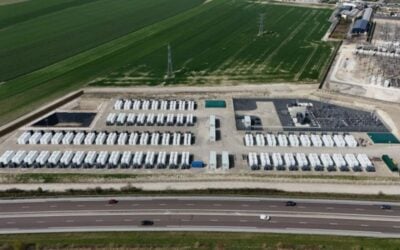
IPP Sonnedix has completed two solar-plus-storage projects in Portugal, totalling just under 70MWp of solar capacity and 140.5MWh of BESS.
The Acail project pairs 28.3MWp PV and a 60.2MWh BESS while Felgueiras pairs 39.9MWp PV and a 80.3MWh BESS.
Sonnedix said that both BESS are operating in hybrid mode with ‘full grid charging capacity’. Though it didn’t define this, it’s noteworthy considering the limitations that the government’s 1,050MVA tender comes with.
The firm secured financing for the two projects in March this year, and they are its first solar-plus-storage projects to come online.