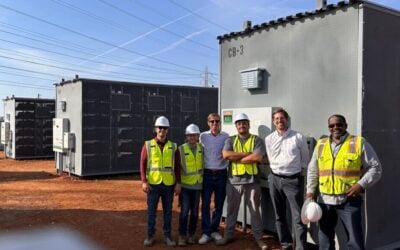
LG Energy Solution’s US battery storage system integrator arm has signed a 1.5GW/6GWh deal with Michigan utility DTE Energy.
The South Korean battery manufacturer’s North American subsidiary, LG Energy Solution Vertech (LG ES Vertech), announced the supply agreement yesterday (27 May).
The system integrator will provide Michigan’s second-biggest utility with equipment featuring lithium iron phosphate (LFP) cells manufactured in the US and Canada, including the LG Energy Solution (LG ES) factory complex in the state.
The BESS solutions will be used in eight DTE Energy projects, with deliveries over a two-year timeframe.
Try Premium for just $1
- Full premium access for the first month at only $1
- Converts to an annual rate after 30 days unless cancelled
- Cancel anytime during the trial period
Premium Benefits
- Expert industry analysis and interviews
- Digital access to PV Tech Power journal
- Exclusive event discounts
Or get the full Premium subscription right away
Or continue reading this article for free
Michigan was the first, and so far, the only, Midwest US state to set a policy target for energy storage deployments. Governor Gretchen Whitmer signed the 2.5GW by 2030 goal into law in 2023, alongside a 100% Clean Energy Standard by 2040.
Meanwhile, DTE Energy, which serves around two million customers in Michigan, has so far deployed just one lithium-ion (Li-ion) BESS, a 14MW, 4-hour duration system which went online in 2025, replacing diesel engines at one of its thermal power plants.
The utility is also constructing a second project, Trenton BESS, at the site of a demolished coal power plant of the same name. DTE had initially contracted the US system integrator Powin to work on the 220MW/880MWh project after receiving regulatory approval in 2024.
However, Powin missed its delivery deadlines for the Trenton BESS before going bankrupt and out of business last year, with most of its assets acquired by rival FlexGen. DTE Energy filed a request in late 2025 with the Michigan Public Service Commission (MPSC) to change its supplier to LG ES Vertech, claiming that this would also lower project costs by approximately US$30 million if approved.
While a decision from the MPSC on the Trenton deal is still pending, the utility has moved forward with the new multi-year deal with LG ES Vertech. The utility cited the fact that a portion of the battery cells to be used will be manufactured at the LG ES complex in Holland, Michigan, as one of the advantages of the deal.
“By working with LG Energy Solution Vertech to bring more battery storage online through their Holland, Michigan, manufacturing facility, we’re keeping Michigan at the forefront of technology and economic opportunity – creating good-paying jobs in communities while driving responsible growth, improving reliability for our customers and investing in clean energy solutions,” DTE Energy president and CEO Joi Harris said.
DTE sees opportunity in data centre demand growth
In addition to its clean energy obligations through Michigan’s policy targets, the utility is also subject to the data centre development boom. Alongside trends in building and transport electrification, this is resulting in unprecedented electric load growth projections for many regions of the US, as it is in other parts of the world.
In March, the MPSC approved six DTE Energy BESS project proposals totalling 1,332MW. Part of the new BESS capacity would support the energy use and power fluctuations of a major new data centre for database solutions company Oracle.
More recently, in late April, DTE said the US$16 billion data centre campus could enable it to put a hold on customer rate increases for two years, in a filing with the MPSC.
CEO Harris said at the time that if the data centre comes online as planned by the end of 2027 and DTE can receive other regulatory approvals, the utility would “refrain from filing another rate request until at least 2028.” The regulatory MPSC has already approved one data centre request from DTE.
The Michigan utility is also planning to power a proposed Google data centre with resources including 1.6GW of solar PV capacity paired with a 450MW BESS.
LG ES Vertech’s vertical integration with parent company’s cell production
LG ES launched its subsidiary in 2023 to integrate grid-scale battery energy storage system (BESS) projects in North America. It followed the manufacturer’s acquisition of NEC Energy Solutions, the defunct BESS integration arm of Japan’s NEC Corporation, a year earlier.
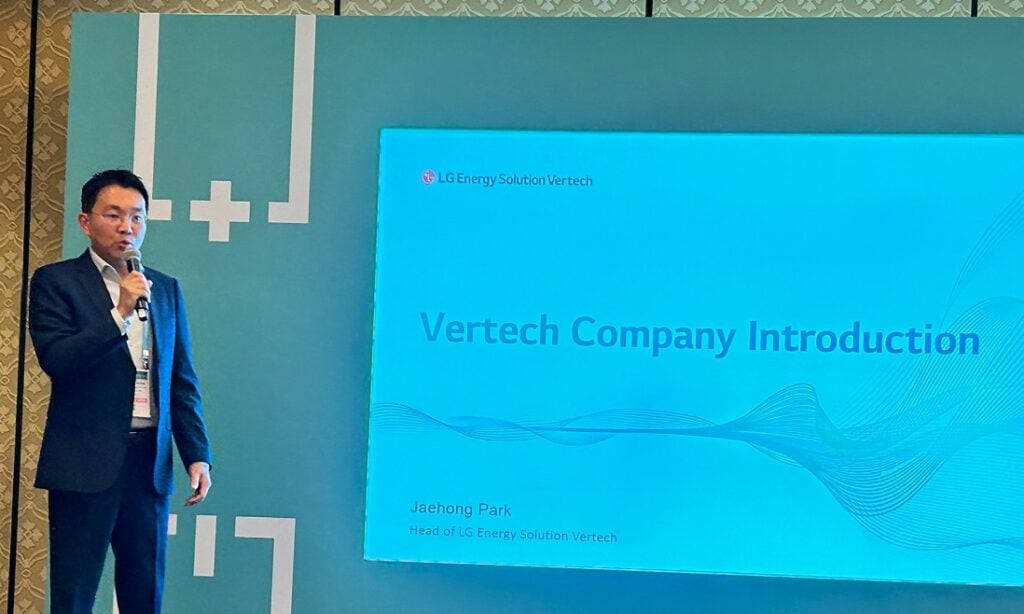
“We’re thrilled to work with DTE to bring Michigan-made energy storage to our communities,” LG ES Vertech CEO Jaehong Park said of the deal.
“As more US-made energy storage projects are added to the energy grid, we’re building opportunities for advanced roles in the state that support our national energy needs.”
LG ES Vertech is aiming to produce and deliver 50GWh of energy storage projects this year, followed by a “much larger pipeline” through 2030, a spokesperson told ESN Premium in February of this year.
Parent company LG ES has a total 300GWh of annual battery manufacturing capacity worldwide, across all market segments, including electric vehicles (EVs). It has been investing in creating 50GWh+ of production lines for BESS cells in the US alone, largely from converting existing lines for EV cells to stationary storage, including 17GWh already in operation at the Holland factories.
While those investments contributed to a Q1 2026 quarterly loss, LG ES said they positioned the company to capture opportunities in the growing US market.
With the US market increasingly emphasising domestic content and its push to decouple from Chinese supply chains and investment, the EV-to-BESS pivot strategy has put LG ES in an early lead in the market.
Vertical integration with its parent company also means that LG ES Vertech does not want for cell supply, LG ES Vertech CEO Jaehong Park told ESN Premium in a 2025 interview. LG ES will also supply other system integrators, including Tesla, with which it signed a US$4.3 billion agreement for LFP prismatic cells. That deal was first rumoured and reported before the company confirmed it in March.
In addition to the Holland plant, LG ES BESS cell production centres in the US include a factory in Ontario, Canada, developed by NextStar Energy, a joint venture (JV) with automotive OEM Stellantis. LG ES bought Stellantis out of the JV and fully acquired NextStar and its factory in February.
LG ES Vertech, meanwhile, has brokered supply and integration deals with other parties that include a 4.8GWh purchase agreement with Qcells signed in May 2024. The two companies later also entered into a 5GWh engineering, procurement, and construction (EPC) agreement at the beginning of this year. Others that have been publicly announced include a 7.5GWh deal with Excelsior Energy Capital, signed in late 2024.