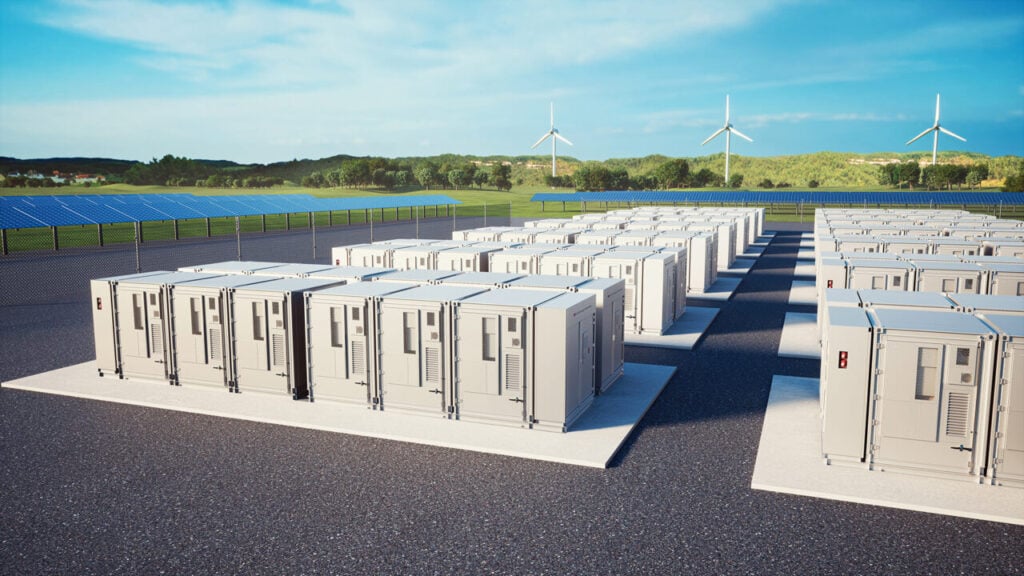
LG Energy Solution and Stellantis’ joint venture (JV), NextStar Energy, operator of Canada’s first large-scale lithium-ion (Li-ion) battery manufacturing plant, is expanding to produce energy storage system (ESS) batteries.
Beginning in November, the Windsor, Ontario, plant will start producing battery cells designed for commercial and grid-scale energy storage solutions.
NextStar notes the expansion of AI data centres as an important driver of demand for ESS cells. To support this expansion, the company has added lithium iron phosphate (LFP) cell chemistry to its production.
This will accompany the nickel manganese cobalt (NMC) chemistry cell production at the plant, which NextStar says ensures it is well-placed to serve both the ESS and electric vehicle (EV) battery markets for its JV partners.
Try Premium for just $1
- Full premium access for the first month at only $1
- Converts to an annual rate after 30 days unless cancelled
- Cancel anytime during the trial period
Premium Benefits
- Expert industry analysis and interviews
- Digital access to PV Tech Power journal
- Exclusive event discounts
Or get the full Premium subscription right away
Or continue reading this article for free
The company has been conducting material testing and equipment calibration to prepare for mass production, which is set to commence in the upcoming weeks.
NextStar was formed in 2022, and it received the occupancy permit for its 4.2 million sq. ft. facility on 30 September.
The company states that it has hired over 1,000 employees so far, many of whom have undergone specialized training.
This training has been provided directly by NextStar Energy as well as through programmes like Battery Boost. Created in collaboration with Invest WindsorEssex and Palette Skills, Battery Boost offers “hands-on” experience using virtual reality simulations to prepare technicians for real-world tasks.
In recent months, several South Korean companies have repurposed production lines at factories originally designed for EV cell manufacturing to produce BESS cells, particularly in the US, where EV demand has been in a relative slump compared to the growth in the ESS market following this year’s sweeping policy changes under the Trump Administration.
The three major South Korean battery players: LG Energy Solution, Samsung SDI and SK On are all pursuing this strategy. LG ES is already hosting LFP lines for ESS applications at its Holland, Michigan, factory complex, targeting a ramp-up to 30GWh of annual production capacity within the US by the end of next year.
Meanwhile, Samsung SDI said in its most recent earnings call and financial results a few days ago that it too is targeting 30GWh annual production capacity by the end of 2026 in the US (ESN Premium access), with two new 20-foot containerised grid-scale BESS solutions, also to be produced for the North American market and assembled in the US.
In July, LG Energy Solution’s (LG ES’s) joint venture with General Motors, Ultium Cells, announced plans to upgrade its battery cell plant in Spring Hill, Tennessee, to boost LFP cell production. Also, that month, SK On and South Korean materials firm L&F signed an MOU to supply LFP cathode materials in North America.
SK On explained that its collaboration with L&F, a leading battery materials manufacturer in South Korea, is aimed at meeting the growing demand for LFP batteries in the US. Additionally, the company seeks to bolster its presence in the ESS market.
In September, SK On signed a BESS supply agreement with Flatiron Energy Development, providing up to 7.2GWh of energy storage for Flatiron’s projects in New England and other regions through 2030.