Electric vehicle (EV) manufacturer Ola Electric Mobility (Ola Electric) has entered India’s utility-scale battery storage market with a vertically integrated business model.
Ola Electric announced the signing of a Memorandum of Understanding (MoU) with renewable energy developer Axis Energy Ventures (Axis Energy) to the National Stock Exchange of India (NSE) and Bombay Stock Exchange (BSE) earlier this week (5 August).
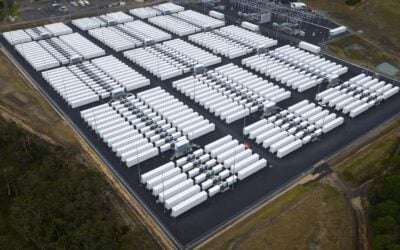
The MoU outlines the potential deployment of up to 20GWh of battery energy storage system (BESS) by 2032. The pair targets a ramp-up of annual deployments to 5GWh from 2028.
The announcement coincides with Ola Electric’s launch of Ola Mahashakti, a new platform for utility-scale and commercial and industrial (C&I) battery energy storage system (BESS) projects. Ola Mahashakti launches officially on 15 August. Details of its product range have not yet been revealed.
Try Premium for just $1
- Full premium access for the first month at only $1
- Converts to an annual rate after 30 days unless cancelled
- Cancel anytime during the trial period
Premium Benefits
- Expert industry analysis and interviews
- Digital access to PV Tech Power journal
- Exclusive event discounts
Or get the full Premium subscription right away
Or continue reading this article for free
The company is best known as a maker of two-wheeled EVs, with a range of scooters and bikes, but it also currently offers two battery energy storage system (BESS) products for residential and small-scale commercial and industrial (C&I) customers.
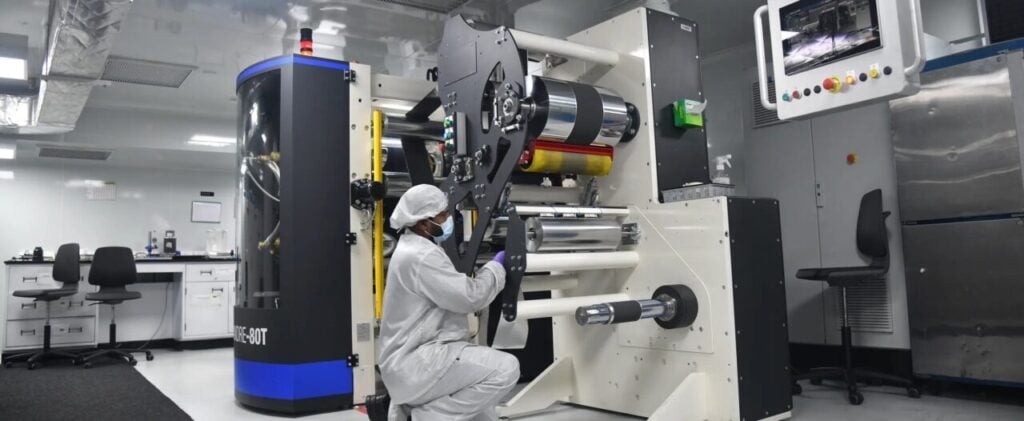
Also central to Ola Electric’s business model is the company’s first-mover position in battery cell production within India. Ola Electric was one of the recipients of a share of Union Government funding to start production of advanced chemistry cell (ACC) batteries under the Production Linked Incentive (PLI) scheme.
The PLI for ACC manufacturing launched in 2021. It targeted support for 50GWh of annual domestic cell manufacturing capacity, to be online by 2025.
As of May this year, Ola Electric remained the sole PLI scheme winner to have commissioned production capacity, bringing 1.4GWh online, Charith Konda and Dhruv Garg of the Institute for Energy Economics and Financial Analysis (IEEFA) wrote in a Guest Blog for Energy-Storage.news on India’s battery supply chain.
‘Strong interest from potential partners’
The company said it will be the first vertically integrated BESS manufacturer in India, with a cell-to-pack platform. It claimed this enables customers to have more control over the safety and performance of systems, gives Ola Electric better supply chain security and lowers the total cost of ownership.
MoU partner Axis Energy is headquartered in Hyderabad and is active across key regions in India. It has commissioned around 1.5GW of renewable energy projects, with a claimed total development pipeline of nearly 30GW.
Axis formed a joint development partnership in 2023 with global asset manager Brookfield, with an initial US$845 million investment, through Brookfield’s Global Transition Fund II. In April, their joint venture (JV) Evren raised US$600 million for a firm and dispatchable renewable energy (FDRE) hybrid wind-solar-BESS project in Andhra Pradesh and Rajasthan.
FDRE is one of the main market mechanisms for tendering and purchasing renewable energy backed by energy storage in India, including peak-specific, round-the-clock (RTC), assured peak and load-following energy delivery contract types.
According to Ola Electric, Axis Energy’s pipeline of energy storage projects includes FDRE, hybrid renewable energy and “other non-solar configurations.” It has secured grid approvals for more than 3,750MW of projects in Andhra Pradesh and Rajasthan and has a further pipeline of ~3,500MW, Ola Electric said.
“As our renewable energy portfolio continues to expand, battery energy storage is quintessential to enabling reliable, round-the-clock clean power,” Axis Energy Ventures chairman and managing director Ravi Kumar Reddy Kataru said.
“This MoU marks an important step towards evaluating indigenous battery storage solutions that will support the next phase of our renewable energy growth.”
Meanwhile, Ola Electric chairman and managing director Bhavish Aggarwal said that as the company’s first partner in large-scale storage, the Axis Energy MoU is “an important early validation of Mahashakti’s potential.”
“We are witnessing a strong interest from potential partners in the industry, and this MoU further strengthens our momentum in building long-term partnerships,” Aggarwal said.