General Motors (GM) has partnered with sodium-ion (Na-ion) battery storage startup Peak Energy to target the grid-scale energy storage market.
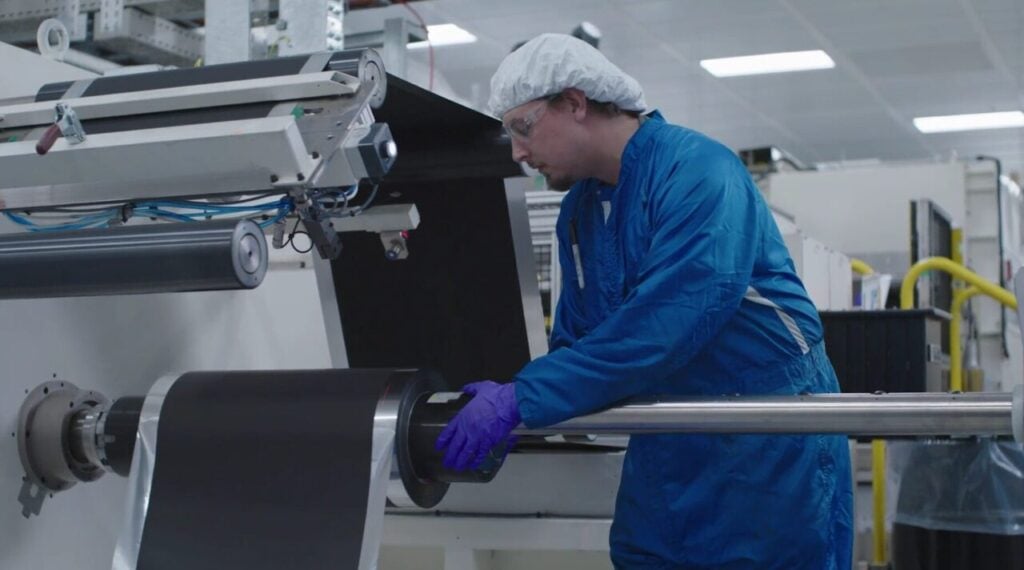
Announced this week as part of a broader distributed energy strategy, US automotive giant GM will develop prototype sodium-ion cells at its Wallace Battery Cell Innovation Center R&D facility in Warren, Michigan.
Targeting the first production of prototypes this year, GM’s cells will be purpose-built for the grid-scale market and integrated into Peak Energy’s battery energy storage system (BESS) solutions. The carmaker has also made a strategic investment in Peak Energy through its GM Ventures venture capital (VC) arm.
GM VP of battery & sustainability Kurt Kelty wrote in a company blog yesterday (9 June) that the wider operating temperature range and potential for longer cycle life than “incumbent chemistries” reduce system-level complexity and eliminate the need for active cooling.
Try Premium for just $1
- Full premium access for the first month at only $1
- Converts to an annual rate after 30 days unless cancelled
- Cancel anytime during the trial period
Premium Benefits
- Expert industry analysis and interviews
- Digital access to PV Tech Power journal
- Exclusive event discounts
Or get the full Premium subscription right away
Or continue reading this article for free
The major incumbent chemistry in the global grid-scale BESS market is lithium iron phosphate (LFP) cell technology, which Kelty wrote has seen significant improvements in the past 25 years. However, according to Kelty, “as it has matured, those gains are beginning to plateau.”
GM is nonetheless also entering the LFP space through its joint venture (JV) with the US manufacturing arm of South Korean battery manufacturer LG Energy Solution (LG ES).
Initially created to focus on the electric vehicle (EV) market, the JV, Ultium Cells, said it would produce LFP cells in addition to nickel manganese cobalt (NMC) at its factory in Spring Hill, Tennessee, back in July 2025.
This invited speculation that Ultium Cells would also cater to the BESS sector. This was confirmed in March this year following media reports and Kelty said LFP cell production would begin later this month to serve LG ES’s commercial and industrial (C&I) business, ahead of an originally announced 2027 timeline.
According to Kelty, the LFP cells will serve near-term demand before the sodium-ion products go into mass production. Among its other perceived advantages, sodium-ion could offer higher energy densities, Kelty said, but can be made using many of the same production techniques and equipment as lithium-ion batteries.
Peak Energy said in an announcement that GM will retain exclusive manufacturing rights to the Na-ion cell.
‘Safer, cheaper, and faster to deploy’
Peak Energy CEO Landon Mossburg claimed that the company’s proprietary energy storage system will be “safer, cheaper, and faster to deploy than any other technology on the market, enabling the US to meet rapidly growing energy demand without saddling consumers with higher prices.”
Peak Energy further claimed its proprietary BESS will reduce costs by 20% compared to existing systems, while achieving 99% uptime, and that its passive cooling could reduce US energy waste compared to LFP.
Although operating temperature ranges are more forgiving in Na-ion batteries, it should be noted that CATL’s new Na-ion cells operating at 25°C have a significantly higher expected cycle life than those operating at 45°C. Expected to be among the first to hit the mass market, the Chinese OEM revealed technical specifications of its new sodium cells last week at the SNEC 2026 trade show in Shanghai.
Startup Peak Energy has already signed multi-year supply agreements with US BESS developers, including a 720MWh initial agreement with Jupiter Power, potentially extending to 4GWh and a 1.5GWh agreement with Energy Vault. The US arm of German power company RWE is also piloting a 3.1MWh Peak Energy system at an R&D lab in Wisconsin.
ESN Premium subscribers can read our recent deep-dive comparison between announced sodium-ion products from major manufacturers, including CATL, BYD and Envision.
US EV ecosystem’s pivot and expansion into BESS market
Tesla, of course, already has a well-established energy storage business, first launched in 2015, but it has now been followed by Ford’s recent launch of its Ford Energy subsidiary and GM, into that market.
Although Tesla’s BESS business is global, it appears Ford and GM will, at least for now, focus on the North American market. This comes amid a slowdown in US EV demand, largely due to the US government’s rollback of EV purchase subsidies and environmental standards.
Energy storage retained its tax credit incentives for both manufacturing and deployments through last year’s ‘One, Big, Beautiful Bill Act’ (‘OBBBA’). However, projects using Chinese-made cells cannot qualify for the investment tax credit (ITC). Projects using US-made cells receive a 10% domestic content bonus ITC.
These market and policy dynamics have also been factors in existing battery manufacturers, including LG ES, deciding to retool NMC production lines to make LFP cells for the BESS market and, in the process, creating a significant US-based supply chain.
GM Empower distributed energy strategy includes V2G, second-life BESS technologies
In addition to the sodium-ion and LFP BESS announcements, GM Empower, the company’s distributed energy strategy event, featured updates on GM’s bidirectional vehicle-to-grid (V2G) activities, a new EV charging app for end-customers and a second-life BESS project.
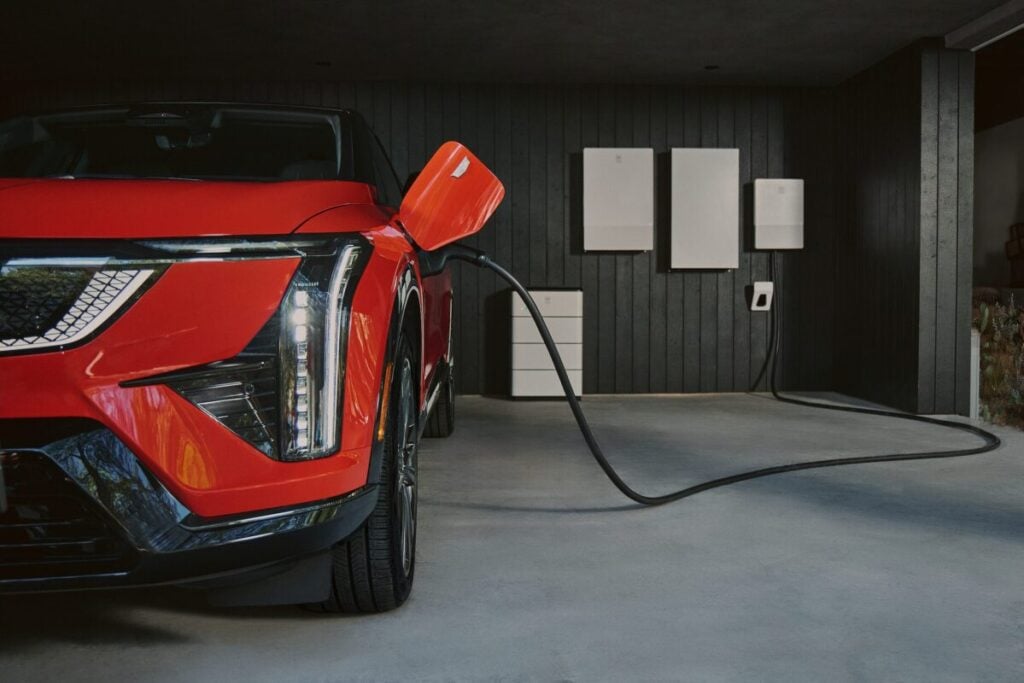
The company invited utilities across the US to collaborate with it on V2G, following the lead of California’s PG&E and DTE Energy in Michigan, which are already in pilot deployment and testing partnerships, respectively, with GM.
Additionally, GM chief product officer (CPO) Sterling Anderson announced that the company will deploy a 1.5MW/7.2MWh second-life BESS (a system that integrates used EV battery packs) at one of its Michigan factories.
Redwood Energy, the second-life BESS division of US materials recycler Redwood Materials, will deploy roughly 100 EV battery packs at the site in a project that is expected to save GM over US$3 million in electricity costs over its lifetime.
This builds on an existing partnership between the two companies that has seen GM battery packs used in a 12MW/63MWh system in Nevada, part of a microgrid that powers operations for data centre company Crusoe, first announced in July 2025. Redwood Energy VP of business development Claire McConnell spoke to ESN Premium in March about the microgrid, the company’s “chemistry agnostic” pack integration and why Redwood thinks that as much as half of US BESS demand could be met with repurposed second-life batteries by 2030.