The construction of battery cell factories catering specifically for stationary energy storage means competition for supply with the electric vehicle (EV) sector will cool off in the next couple of years.
That’s according to Cormac O’Laire, senior manager of market intelligence at Clean Energy Associates (CEA), who said a recent uptick in energy storage system (ESS) battery factories in China will ease the current situation.
EVs are on the rise around the world, with even the US now at a 5% rate of adoption for new car sales. Many governments are encouraging or mandating the phaseout of internal combustion engine (ICE) vehicles and the growth in demand means battery suppliers often prioritise higher volume long-term contracts with the automotive industry over ESS sector customers.
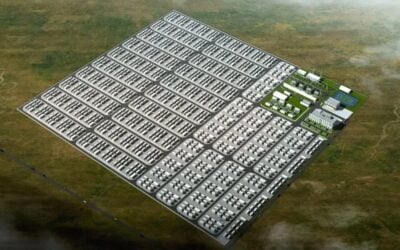
However, with renewable energy also growing rapidly around the world signaling a need for more stationary storage on the grid, CEA has tracked plans for Chinese manufacturers to add more than 200GWh of annual ESS-specific battery production capacity.
Try Premium for just $1
- Full premium access for the first month at only $1
- Converts to an annual rate after 30 days unless cancelled
- Cancel anytime during the trial period
Premium Benefits
- Expert industry analysis and interviews
- Digital access to PV Tech Power journal
- Exclusive event discounts
Or get the full Premium subscription right away
Or continue reading this article for free
This is likely to be enough to meet global demand in 2025, O’Laire said, and competition between the EV and ESS sectors for cell supply is expected to ease from 2024 onwards.
There is also about 5 million tonnes of LFP cathode active materials (CAM) production projected to come onstream in China by 2025, equivalent to more than 2TWh, which could far exceed expected demand. There is even a possibility that LFP could be a surplus market by 2024, according to CEA research.
That could alleviate current supply issues experienced by the sector, such as unfulfilled or cancelled supply agreements.
There are also various ESS-specific battery cell production plans progressing in Europe and the US, but to a much lesser extent, and not yet enough to meet demand expected even in the next three years.
After an ESS fire at a site in Beijing, China has banned the use of NMC cells in stationary grid-scale storage installations – as well as sodium-sulfur (NAS) batteries.
That decision will positively impact stationary storage manufacturing scale, because with prismatic format LFP cells now the de facto technology of choice for lithium-ion grid ESS, suppliers to the Chinese market “can focus on one format and single cathode chemistry”.
“For the international market, I anticipate China will predominantly export LFP based battery energy storage systems (BESS) moving forward,” O’Laire said, although CEA did not anticipate other countries following China’s lead and banning NMC, “unless it’s determined NMC is inherently dangerous for BESS applications”.
‘Woefully underfunded’ upstream industry
Cormac O’Laire pointed out that the technical needs of EV and grid storage applications are quite different. Even with lithium iron phosphate (LFP) chemistry batteries, which are used by manufacturers and integrators in both sectors, the cathode active materials (CAM) inside them differ in material performance, cell capacity and charge/discharge rate as well as electrolyte formation.
As such, cells “tend not to be used interchangeably,” the CEA analyst said, but ultimately both industry segments are competing for the same raw materials, particularly lithium carbonate equivalent, which represents a higher proportion of an LFP battery’s bill of materials than in higher power cell types such as nickel manganese cobalt (NMC).
The problem is that investment in battery raw materials mining projects is “woefully underfunded,” and CEA found that at current rates, only about US$5 billion will be invested in that area worldwide in 2022.
That compares very unfavourably to a projected need for US$15 billion lithium mining investment per annum required that O’Laire quoted from research by Battery Materials Review’s Matt Fernley to meet need from the EV sector alone.
CEA does think it likely that non-lithium battery technologies will be of growing interest for the BESS industry. Driven by high raw materials prices and limited availability, as well as other factors like safety concerns and changing technical requirements for longer-duration, more rugged energy storage systems, the industry is considering alternative technologies such as sodium-ion (Na-ion), flow batteries, NAS and others.
In the shorter term, O’Laire highlights that prices stabilised for some key battery metals during the second quarter of the year, and that big price spikes of the type seen in 2021 and earlier in 2022 for lithium, cobalt and nickel are unlikely for the time being. Lithium prices right now are relatively flat, although continuing supply-demand imbalances might drive prices up again towards the end of this year and into Q1 2023.
Cormac O’Laire is among contributors to an article on mitigating supply-demand mismatches in the battery storage industry, to be published in the journal PV Tech Power (Vol.32), for publication in September. Subscribe and access forthcoming and previous editions of PV Tech Power here.