
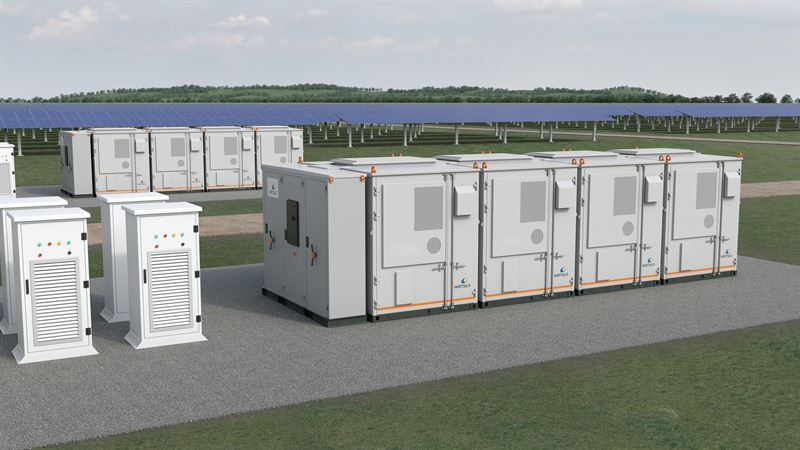
ESN Premium meets Peter Fath, CEO of Valo, about the newly launched energy storage joint venture’s next steps and broader strategy.
It has been Peter Fath’s life’s work to support the global energy transformation from centralised fossil fuel-based systems to decentralised, clean and renewable energy-run systems, he says.
The founder and CEO of Germany’s RCT Solutions has been working in the energy transformation sector for 35 years, starting the solar manufacturing solutions group to help customers set up factories along the solar PV value chain, including cells, ingots and wafers.
“I believe this global transformation has to happen, and it has to happen quickly because there are a lot of reasons behind it; we need electricity. We need electricity everywhere in all industries, in all sectors, and we should do it cleanly, with renewables.”
Try Premium for just $1
- Full premium access for the first month at only $1
- Converts to an annual rate after 30 days unless cancelled
- Cancel anytime during the trial period
Premium Benefits
- Expert industry analysis and interviews
- Digital access to PV Tech Power journal
- Exclusive event discounts
Or get the full Premium subscription right away
Or continue reading this article for free
That is his vision, Fath says. That transition to clean energy is, of course, linked with mitigating the climate crisis, he says, but the electrification of society is another “layer” of the energy transition not necessarily connected with climate.
Data centres, electric vehicles (EVs) and industrial electrification are all signposts of this global trend. The right way to pursue this growing need for electricity “in a proper way and in a cost-effective way,” to Fath and the companies he leads, means renewable energy with batteries, as well as with molecules.
“It’s not only green energy; it’s also the necessity to have electricity,” Fath says.
That is perhaps what has brought him to his next career step: he was recently appointed CEO of the energy storage joint venture (JV) Valo, formed by Wärtsilä’s energy storage business and RCT Solutions.
The future and fate of Wärtsilä Energy Storage, which had become one of the battery energy storage system (BESS) industry’s bigger names, certainly among non-Chinese system integrators, had hung in the balance for over a year as the parent company evaluated its future.
Though it had been consistently profitable and one of the few to achieve that, margins for Wärtsilä’s energy storage business remained thinner than for the Finnish marine and engine power solutions group’s other reporting segments.
Now, as a 50:50 JV with RCT Solutions, Wärtsilä has ceased reporting energy storage numbers as a segment in its financial results; existing financial targets have been scrapped, and guidance on demand has been suspended as the business begins afresh. While financial terms were not disclosed, Wärtsilä said the transaction represented less than 5% of its total assets.
Synergies between the two partner businesses brought them together, Fath says, while Valo (‘light’ in Finnish) will also benefit from a continuing relationship with Wärtsilä’s energy sector activities in data centres, engine-powered microgrids for islands and mining operations, which comprise “a very great global network that we have access to,” according to the CEO.
Adding to that is the Wärtsilä GEMS energy management system (EMS) software platform, which the company has claimed as a key differentiator since the acquisition of its initial developer, Greensmith Energy, in 2017.
“We can make big-sized, complex networks, energy systems governed by our Greensmith’s, now GEMS, now Valo, software, and we can make small integrated batteries. We can integrate photovoltaics (PV) with batteries. We can integrate generators with batteries,”
This integration expertise is a “very strong point” of Valo, and one that Fath says Wärtsilä has already proven to work in the field.
From the RCT Solutions side, the company has a stronger presence in Germany than Wärtsilä has, particularly in the renewable energy space. It is also involved in the “highly regulated” Indian market, and its background in manufacturing also means Valo will have built-in supply chain and production optimisation know-how from Day One. He claims that “to get a good deal and to be respected” in talks with big battery OEMs such as CATL or EVE, this manufacturing knowledge is essential.
‘Very complex’ US market
One region that proved problematic for Wärtsilä Energy Storage in its latter days was the US. The company, especially given Greensmith’s roots as a Silicon Valley software developer, was able to establish a market presence but was heavily exposed to tariffs, as were other BESS integrators sourcing lithium cells from Chinese players.
We already teased this interview a couple of weeks ago with Fath’s comments to the effect that to re-establish that foothold, a US-based factory, either owned or contracted, would be needed. Valo is already in talks with prospective parties, Fath said.
Typically, to overcome regulatory challenges and sudden changes in any given market, the first strategic option is to find a manufacturing partner capable of navigating them.
“When we don’t find a partner in our network, then we can set up factories ourselves and become integrated whenever it’s required. I don’t say we need to be totally fully integrated globally, because we have very good partners with whom we have been working for more than 10 years. But when those partners cannot satisfy our requirements, regulatory requirements, like in the USA, the USA is very complex now. Then, we can set up factories,” he says.
Today’s globalised market has a “huge sensitivity” to regulatory and policy changes, governing everything from who owns and controls batteries connected to the grid to where specific components can be sourced from.
Business model and strategy
The overall business model of Valo will not differ drastically from that of Wärtsilä’s, in that Valo will support customers from early-stage development milestones, such as finding suitable land and grid connections through the lifetime of the battery. This includes making sometimes quite significant adjustments to the operation of the BESS asset in response to market opportunity and regulation.
“For example, you provide a grid service and suddenly a lot of [other] people also provide it. Then you have to find a new function of your battery to make money, while regulations may change. Then you have a new grid code coming in and you have to adjust your software setup to the new grid code,” Fath says.
“It’s really a journey, from project development, setting up the battery asset, and then upgrading the battery asset regularly.”
Fath claims that even rival industry-leading system integrators have been “amazed” at Wärtsilä’s BESS asset performance and profitability. This has put Valo in a “strong position” in the industry, given its longevity, “pioneering projects globally,” and software expertise, the CEO says.
The software, Fath claims, is key in how it can be adapted to market conditions and upgraded in functionality. GEMS allows Valo to be able to tailor a customer project to meet the customer’s needs. That includes whether the client only requires support with AC integration or also requires help procuring the DC side of the BESS.
“We can integrate different types of hardware products, and then you have one holistic software governing your whole deployed batteries [portfolio] globally,” which he claims makes Valo “very agile.”
Goals and ambition
Maintaining profitability and growing margins are the biggest priority for the JV. There are a few factors to pull together for that to happen, according to Fath.
First is knowing the cost structure involved, including materials and production, and so on, followed closely by being selective about who to work for.
“For me, it’s useless to work with clients who have not understood what an integration means, what excellence in service means, what good software means.”
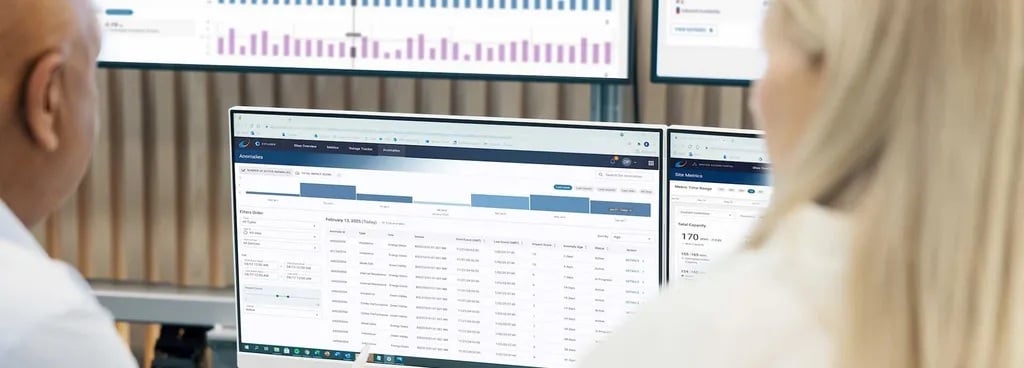
“The third one, which is the most important, is to make your work ‘correct.’ When you give promises on time, budget, KPIs, you have to meet them, because if not, you’re losing money all the time,” he says.
“We are doing long-term service agreements (LTSAs), so we are staying with a customer for 15 years and service the asset and of course we can upgrade it to add new functionality.”
“If you continue this journey, then you can be profitable. If you’re weak in one part, like cost, like project execution, lousy service, batteries are not running properly, then you cannot make a profit. You have to show excellence in all parts.”
Market and tech trends
As our conversation turns to a discussion of present of upcoming trends in the market, Fath returns to the subject of microgrids. That word may not be an apt description for the scale of self-contained, islanded or islandable energy systems that will likely provide power to data centres, big industrial operations, island communities, mines and, increasingly, even regulated retail electricity environments.
That trend, Fath believes, will become “bigger and bigger and bigger,” encompassing the integration of energy sources of varying sizes and governing whole portfolios of generation, storage and demand. That will likely include gigawatt-scale microgrids, in his view.
“It’s not a microgrid anymore. It’s an independent grid, and that’s one trend I see, and we feel very well positioned on that front,” Fath says.
“Decentralised microgrids serving a big data centre, serving a big industrial conglomerate, serving an island, serving a state, serving the mine.”
Another key trend he identifies is the “different approach” to technology that the need for long-duration energy storage (LDES) brings. Now that utility requests for proposals (RfPs) and energy system modelling are sometimes going to 8-hour and 10-hour duration requirements, that means new ways of thinking about “how a battery works, what you put into a battery,” and functionality including thermal management, balance of plant (BOP) and integration.
In terms of battery chemistries, Fath says he was sceptical about the potential of sodium-ion (Na-ion) in the past since lithium became “so cheap.” He has since recognised that Na-ion is coming to the market based on the added value it could bring in extending asset cycle life and easier thermal management properties.
Talks are currently underway about establishing a sodium-ion BESS project at a customer site, which Fath claims makes Valo “brave guys” for taking on, particularly when Chinese players like CATL are moving quickly on Na-ion.
Pathway to competitive European integration and domestic content
The first project announced since the JV launched at the start of October is the 400MW/1,600MWh Teebar BESS in Queensland, Australia, for which the integrator will provide the Wärtsilä legacy GridSolve Quantum2 BESS solution and GEMS software to developer Atmos Renewables.
With the project awarded prior to the transition, Fath went over to Australia to meet Atmos leadership to discuss the process and, in doing so, landed the single biggest project contract in the Wärtsilä energy storage portfolio to date.
Fath acknowledges that Asian system integrators and technology providers have laid a huge amount of groundwork for the industry, reducing costs and making capacity available, which he says he respects greatly.
However, the time is right for European industry to succeed in the energy storage space, he says, and being a Europe-based entity will give Valo a long-term presence to support customers in its home continent.
Fath also believes that Europe’s own industrial capabilities have progressed to the point that supplying battery storage produced with domestic content looks increasingly feasible. Indeed, the CEO expects that the repurposing of EV battery cell production lines, as seen in the US over the past year or two, will come to Europe too.
A few years ago, noted power systems expert Bo Normark told the site that while would never likely be the case a European battery market could be dominated by domestic players, it would conversely be unacceptable for European makers to not be involved at all. That was prior to the Northvolt bankruptcy, which for many signalled a crossroads for European battery makers.
Today, however, it is different, Peter Fath says. Europe has cell production capacity, and it has Chinese automakers producing EVs.
“You have to look very carefully. Does Europe also have the capability to serve energy storage? I say yes because look at the USA; Tesla is providing electric vehicles and is providing energy storage. If you are a car manufacturer without a hand in energy storage for battery cell production, you don’t have to make the whole product,” Fath says.
Energy storage enjoys steady growth in demand, “a beautiful thing,” Fath says, which has led US automakers Ford and GM into the energy storage space and more recently Germany’s Volkswagen. He anticipates seeing more carmakers, such as OEM Stellantis, move to open up energy storage businesses, much as Tesla and BYD have done.
That will move along the value chain, Fath believes.
“There should be European players to support European energy storage deployments. We have globe-leading inverter makers; we have globe-leading high-voltage integrators. We have one of the leading battery integrators, in Valo,” he says.
