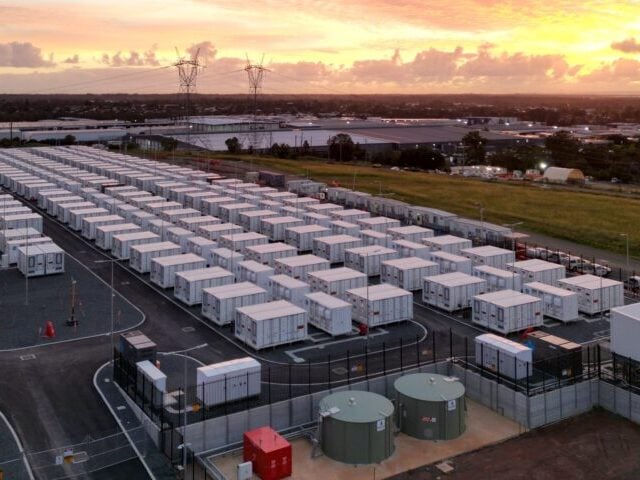
The Australian Energy Market Operator (AEMO) states that a record 9.1GW of new renewable energy and storage capacity connected to the National Electricity Market (NEM) in FY26, but its annual report makes clear that reliability depends on the investment pipeline delivering on time.
AEMO is the independent system and market operator for Australia’s electricity and gas systems, running real-time operations for the National Electricity Market (NEM), the Wholesale Electricity Market (WEM) in Western Australia and Victoria’s Declared Transmission System, while also providing the forecasting, planning and advice that guides investment decisions across the sector.
As detailed in its FY26 report, 9.1 GW of new generation and storage capacity reached full output in the NEM during FY26, more than double the volume achieved in FY25.
Registration and application approvals reached 7.4GW and 14.2GW, respectively, while the broader connections pipeline grew 42% over the year, from 53GW to 75.4GW.
Try Premium for just $1
- Full premium access for the first month at only $1
- Converts to an annual rate after 30 days unless cancelled
- Cancel anytime during the trial period
Premium Benefits
- Expert industry analysis and interviews
- Digital access to PV Tech Power journal
- Exclusive event discounts
Or get the full Premium subscription right away
Or continue reading this article for free
Capacity in the application stage more than doubled, and the developer-led implementation stage, which sits outside AEMO’s role in the connections process, grew by 30%.
Efficiency gains accompanied that volume. The average duration for an AEMO application review improved by 9% to 8.6 months, while commissioning reforms delivered a 10% reduction in commissioning time, to 4.5 months.
The report notes the WEM saw its own record volume of connections, with 835MW of new capacity commissioned during the year, including three new grid-scale battery storage projects, and 1.4GW of installed grid-scale battery capacity across the market.
Across the NEM, renewable energy generation, including rooftop solar, accounted for 46% of total generation over the year, exceeding 50% in Q2 of FY26 and setting a new instantaneous renewable energy contribution record of almost 80% for a half-hour period on 11 October 2025.
In the WEM, renewable energy generation accounted for 40.8% of total generation and reached an instantaneous record of 91% on 20 December 2025.
The report states that the expanding capacity of battery storage, both grid-scale and residential, is shifting excess renewable energy generated during the day into evening peak periods, reducing reliance on coal and gas-fired generation while providing essential system services.
Gas-fired generation on the east coast reached historically low levels during the first half of 2026, with the growing role of batteries in meeting evening peak demand cited as a key factor behind lower wholesale electricity prices and reduced price volatility.
System security investment framed as advance work, not catch-up
The report is explicit that investments in reliability and system security must be made ahead of, rather than in response to, known transition points.
In December, AEMO released the second annual Transition Plan for System Security (TPSS), which the report describes as identifying key transition points such as coal-fired power station retirement and outlining the requirements for the power system to remain stable and secure over the next decade.
“New investments and reforms are needed to maintain system security in advance of these transition points, with opportunities to co-optimise both reliability and system security investments to help keep costs as low as possible,” the report states.
Through its NEM Reform Program, AEMO progressed the implementation of the Australian Energy Market Commission’s (AEMC) Improved Security Framework, which became operational in December.
The report says this introduced “a more proactive approach to procuring essential security services, including system strength and inertia,” and states that the changes “have strengthened AEMO’s ability to manage system security in real time while reducing reliance on market intervention and supporting more efficient outcomes, better integration of renewable energy generation and enhanced overall system reliability.”
AEMO also lodged a rule change request during the year to evolve the planning and procurement frameworks for system security, stating this responds directly to “issues observed to date with the timely and efficient deployment of resources to meet system security needs over the energy transition.”
That framing connects to a specific technical question AEMO has separately flagged around grid-forming battery storage.
As reported by Energy-Storage.news, AEMO confirmed grid-forming BESS has not yet been proven to deliver protection-quality fault current, the highest tier of system strength service, at scale, and has launched a trial procuring Type 2 Transitional Services to test whether grid-forming inverters can meet that standard under real grid conditions.
In June 2026, AEMO released the 2026 Integrated System Plan (ISP) following two years of analysis and engagement with close to 2,000 stakeholders, testing more than 1,000 combinations of generation, storage, transmission and distribution investments across three future scenarios to identify its least-cost “optimal development path.”
The report states the 2026 ISP reaffirms that renewable energy, connected by transmission and distribution, firmed with storage and backed up by gas, presents the least-cost way to supply secure and reliable electricity as coal plants retire and electricity consumption doubles.
Indeed, the ISP set a storage requirement of almost 40GW, split between 35GW of short- and medium-duration storage for daily firming and 5GW of long-duration storage for seasonal reliability, with the Step Change scenario, considered most likely by AEMO at 46% probability, requiring AU$106 billion (US$73 billion) of investment by 2050.
The annual report also notes that, for the first time, the 2026 ISP identified investment opportunities in distribution networks to support forecast growth in consumer energy resources and provided a more integrated assessment of the role of east coast gas infrastructure in supporting electricity system reliability.
Delivery vehicles and the conditional nature of the improved outlook
AEMO’s FY26 capital investment programme, its largest to date at AU$216.6 million, directed AU$84.4 million toward reform initiatives to implement complex rule and policy changes, with the balance spent on modernising operational and business systems across the NEM, WEM and gas markets.
Through its subsidiary AusEnergy Services Limited (ASL), which delivers government-backed procurement schemes including the federal Capacity Investment Scheme (CIS), AEMO had by 30 June completed 17 tenders across three government schemes, supporting 142 projects representing around 25GW of generation and 100GWh of storage, with a further four tenders underway.
Within FY26 specifically, ASL completed seven CIS tender rounds across the NEM and WEM, five for renewable energy generation and two for dispatchable capacity, implementing a streamlined single-stage tender process intended to accelerate outcomes.
AEMO’s 2026 Electricity Statement of Opportunities, published separately in August, found a clearer pathway to maintaining reliable supply over the coming decade, while warning that continued investment in system security services would be needed as inverter-based resources grow.
AEMO chief executive Daniel Westerman said at the time that “beyond 2030, the next wave of investment will be critical to maintaining reliability.”
The annual report identifies data centres as one of the fastest-growing sources of electricity demand across Australia’s energy systems, now treated as a distinct category in AEMO’s planning and forecasting.
Data centre electricity consumption is forecast to grow from around 3% of NEM operational consumption today to approximately 8% by 2030, with 17 proposed data centre projects representing a combined maximum connection capacity of 9GW progressing through the transmission connection process as at 30 June.
That growth has already begun shaping national policy, with an AEMC framework requiring large data centres to offset consumption with new renewable energy generation and contract for firming capacity.
Looking ahead, the report cautions that “increasing control room complexity, implementation of market reforms, evolving cyber threats and broader operational risks will require AEMO to balance cost discipline with maintaining operational readiness and resilience,” with targeted investment in capability, training and systems required to continue operating the system safely as its responsibilities expand.
Never miss an Australian energy storage story. Sign up for our Australia newsletter and get the latest project announcements, policy updates and market analysis delivered directly to you.