South Korea’s Ministry of Climate, Energy and Environment (MCEE) has unveiled its KRW1,000 trillion (US$747 billion) Korean Green Transformation (K-GX) industrial strategy.
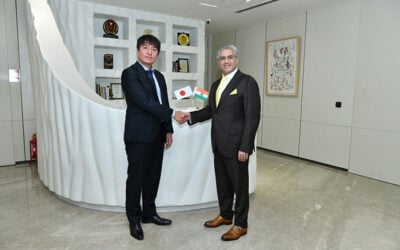
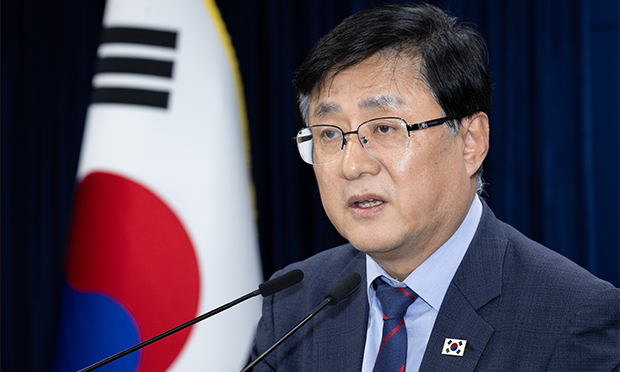
A national briefing was held on 7 October at the Korean Chamber of Commerce and Industry in Seoul, with key contents of the strategy presented by speakers, including the Korean Republic’s Deputy Prime Minister Lee Hyung-Il and MCEE minister Kim Sung-Hwan.
Aimed at driving investment and competitiveness in the manufacture and supply chain development of low-carbon technologies, the K-GX strategy also supports the government policy goal of reaching 100GW of renewable energy generation capacity in South Korea by 2030.
The strategy’s launch follows two other recent policy announcements relevant to the solar PV and battery energy storage system (BESS) sectors: an overhaul of the transmission and distribution network to enable the integration of renewables and more effective grid management and the next Central Contract Market procurement of energy storage capacity.
Try Premium for just $1
- Full premium access for the first month at only $1
- Converts to an annual rate after 30 days unless cancelled
- Cancel anytime during the trial period
Premium Benefits
- Expert industry analysis and interviews
- Digital access to PV Tech Power journal
- Exclusive event discounts
Or get the full Premium subscription right away
Or continue reading this article for free
What it means for BESS and batteries at a glance
K-GX Industrial Strategy (US$747 Billion Plan)
- Strategic Sector Selection: Batteries identified as one of 10 priority green industries for strengthened domestic production and enhanced national competitiveness
- Investment Scale: KRW1,000 trillion (US$747 billion) allocated through 2035, combining fiscal spending and climate finance
- Renewable Energy Target: 100GW of renewable energy capacity by 2030, with ESS playing crucial role in grid integration
Power Grid Innovation Plan
1. Grid Congestion Solutions
- Strategic ESS Deployment: Energy storage systems to be installed at distribution networks and substations to mitigate grid congestion from daytime solar generation
- Additional Solar Capacity: ESS deployment enables connection of 3GW additional solar via distribution networks in grid-constrained areas and 1.6GW at substations
2. Grid Connection Reforms
- Priority Dispatch: Renewables (including ESS) given priority dispatch over fossil fuels, reversing current paradigm
- Capacity Addition: Grid reforms could enable 20GW additional renewable energy capacity
- Non-Firm Access: Solar PV output can be temporarily curtailed for system management, creating need for storage solutions
Central Contract Market BESS Procurement
2026 Auction Details
- Capacity Target: 1,180MW total procurement (1,000MW mainland + 180MW Jeju Island)
- Deployment Timeline: Resources to be operational by February 2029
- Contract Duration: 15-year fixed-capacity contracts for grid support services
Market Track Record
- Previous Rounds: Three Central Contract Market procurements held since 2023
- Awarded Capacity: 1,196MW already contracted through previous auctions
(Summarised from article with our in-house AI tool, continuing reading for more details)
The government has selected 10 green industries in which to strengthen domestic production and enhance national competitiveness in those fields. Presentations were given on each industry, followed by presentations from four major domestic companies participating in those sectors.
Sectors:
- Electric vehicle
- Battery
- Solar power
- Wind power
- Small modular reactor (SMR)
- Power equipment
- Power semiconductor
- Heat pump
- Hydrogen
- Carbon capture utilisation and storage (CCUS)
Government promises ‘bold tax incentives and regulatory improvements’
The K-GX-invested projects’ aims are to enhance self-reliance in clean energy supply chains, decarbonise national industries, electrify all modes of transportation and increase residential-scale adoption of clean energy technologies.
The companies:
Hanwha QCELLS – tandem perovskite solar cell technology
POSCO Holdings – steel industry decarbonisation
LG Electronics – expansion of ‘GX’ strategy into residential sector
Samsung Electronics – expansion of ‘GX’ strategy into residential sector
Public money will be invested over a 10-year period, while private-sector investments totalling KRW220 trillion will be committed to the signature projects. Public money comprises KRW200 trillion in fiscal funds and KRW790 trillion in climate finance, MCEE said.
According to MCEE announcement materials seen by Energy-Storage.news, “bold tax incentives and regulatory improvements will be implemented in parallel” in the early stages of the K-GX strategy’s implementation.
Domestic production tax credits will be introduced for technologies including solar PV, wind and battery storage, leveraging the expansion of climate finance funding. Special regulatory zones and fast-track licensing support will be established for core GX technology companies.
Transmission upgrades and redesign to accommodate 100GW renewables by 2030
The government recognises that grid constraints have held back a rapid expansion in renewable energy adoption that Korea is otherwise seeing.
The southwestern Honam region, for example, will not be able to offer hosting capacity on transmission and distribution (T&D) networks for new grid-connected energy projects until after 2034.
Just before the end of September, Minister Kim Sung-Hwan announced the MCEE’s Power Grid Innovation Plan at a State Council Meeting.
The plan would see the Korea Republic’s electricity grid and corresponding regulation undergo redesign through five strategies:
Flexible grid connections, where new generators will be prioritised based on available grid capacity and not the rated capacity. Non-firm access rules will be implemented, under which solar PV output can be temporarily curtailed to manage the system.
Currently, distribution lines may only host 14MW of solar capacity. This will increase to 16MW for non-firm access, while the hosting capacity at substations can be increased from 50MW to 60MW. In Honam, this could result in a 2.6GW expansion of grid hosting capacity without the need for T&D expansion, MCEE said.
Non-wires alternatives (NWA), whereby battery energy storage systems (BESS) play a role in deferring the need for T&D upgrades, will also be pursued. A familiar term for regular readers of Energy-Storage.news, this has been seen in various other markets, particularly at the distribution level, but also on a grand scale with projects like Germany’s transmission system ‘GridBoosters’.
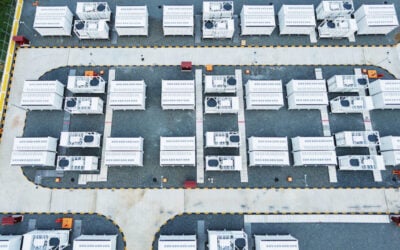
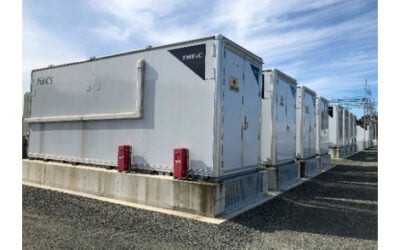
Energy storage systems (ESS) will be deployed at strategic locations on distribution networks and at substations to mitigate grid congestion resulting from abundant daytime solar generation.
An additional 3GW of solar could be connected via distribution networks in grid-constrained areas and around 1.6GW at substations through this initiative, MCEE claimed.
Managing ‘fictitious and delayed’ projects awaiting connection through inspections of queues has already enabled 9GW of reserved grid capacity to be reclaimed, the Ministry said. Grid connection rights for delayed projects, including offshore wind, will also be deferred until the projects are ready for construction and connection, in an initiative that could free up a further 10 GW of hosting capacity in Honam alone.
Overhaul of grid connections for renewable energy will result in renewables being given priority dispatch over fossil fuels, reversing the current paradigm. The national grid could add a further 20GW of renewable capacity as a result. Meanwhile, as has also been seen recently in European markets such as Germany, grid connection rights will move from being issued on a first-come, first-served basis to prioritise to a competitive bidding process from January 2027, enacted in tandem with reforms to the Renewable Portfolio Standard (RPS).
The cost-sharing system for renewable energy grid connections is also changing: developers connecting projects to the distribution grid currently pay for necessary network upgrades. Subsequent developers’ projects benefit from that initial investment.
Going forward, national power and grid company KEPCO will instead make the initial infrastructure upgrade investments. Subsequent developers then share the ongoing costs of upgrades.
“This plan is about making the most efficient use of the power grid we have now, rather than waiting for new grid infrastructure to be built,” Minister Kim Sung-Hwan said.
Central BESS tender
Also last month, the MCEE opened its latest Central Contract Market procurement for energy storage, seeking resources totalling 1,180MW. To date, three Central Contract Market procurements have been held since 2023, resulting in 1,196MW of capacity awards.
Opened on 22 September, the procurement aims to support the deployment of 1,000MW of storage on the South Korean mainland and 80MW on Jeju Island by February 2029.
The tenders align with the national 2025 Basic Plan on Electricity Supply and Demand, which targets a generation capacity of 157.8GW, incorporating a 22% reserve margin, by 2038. That includes 115GW to 121GW of renewable energy.
By that time, Korea’s peak electricity demand is projected to reach 129.3GW by 2038 and the government aims for the share of carbon-free electricity to have reached 70.7% by that time, according to the Institute for Energy Economics and Financial Analysis (IEEFA).
This story was first published on PV Tech.