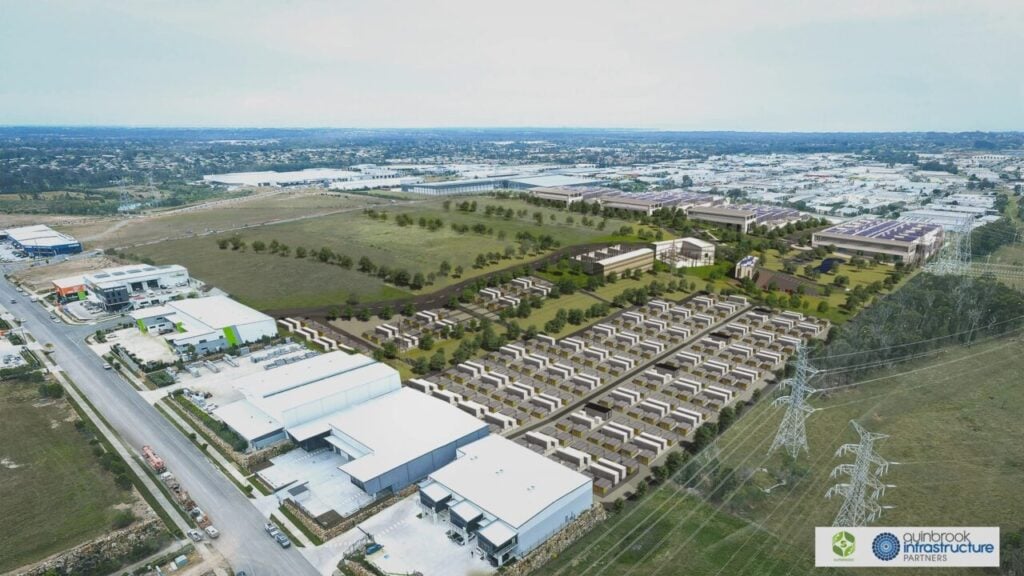
910MWh of battery energy storage systems (BESS) in Queensland, Australia, have been added to AEMO’s Market Management System, signalling readiness for commissioning.
According to Geoff Eldridge, National Electricity Market (NEM) and energy transition observer at consultancy Global Power Energy, the two utility-scale BESS include the Supernode Stage 1 and the Brendale BESS.
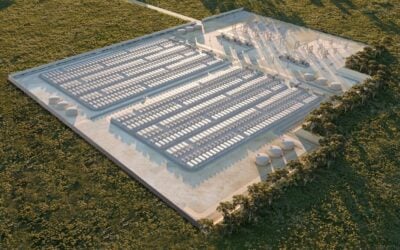
The larger of the two battery storage systems, Supernode Stage 1, is being pursued by global investment manager Quinbrook Infrastructure Partners and is a 250MW/500MWh system. Quinbrook closed financing on the first stage of the Supernode project in April 2024, with Australian utility Origin Energy contracted as its exclusive offtaker.
The Supernode BESS comprises three stages. When fully completed, the site will be sized at 760MW/3,096MWh, making it one of the largest batteries connected to the NEM.
Try Premium for just $1
- Full premium access for the first month at only $1
- Converts to an annual rate after 30 days unless cancelled
- Cancel anytime during the trial period
Premium Benefits
- Expert industry analysis and interviews
- Digital access to PV Tech Power journal
- Exclusive event discounts
Or get the full Premium subscription right away
Or continue reading this article for free
In July 2024, Quinbrook and Origin signed an agreement to encompass full capacity from stage two, which will increase the total size to 520MW/1,856MWh. BESS solutions provider GE Vernova has been tapped to provide the BESS for stages one and two of the project.
Meanwhile, the third stage of the Supernode BESS, which will bring the total size to 760MW/3,096MWh, was confirmed earlier this year when Quinbrook inked an offtake agreement with Queensland government-owned energy company Stanwell.
David Scaysbrook, co-founder and managing partner of Quinbrook, said at the time that the deal with Stanwell represented a “sell-out” on the Supernode BESS, which is located at the “highly strategic” South Pine site in the Brisbane suburb of Brendale.
Supernode BESS is located near Powerlink Queensland’s South Pine substation, approximately 17km north of the Brisbane CBD. It serves as the central node of Queensland’s transmission network, through which about 80% of the state’s electricity is transmitted daily.
It is worth noting that the Supernode BESS is part of a broader development that aims to integrate a low-carbon data centre complex.
Akaysha Energy’s 410MWh Brendale BESS
In the same suburb of Brisbane, developer Akaysha Energy has seen its 205MW/410MWh 2-hour duration Brendale BESS added to the AEMO’s Market Management System.
Construction on the Brendale BESS started in August last year, and commercial operations are expected to commence in 2026. Similar to the Supernode BESS, it will be located next to the South Pine substation.
As reported by Energy-Storage.news earlier this year, Akaysha Energy secured a long-term offtake agreement, confirmed to be a battery revenue swap arrangement, with commodities trading company Guvnor Group.
This agreement helps provide revenue certainty for the Brendale BESS while allowing BlackRock-backed Akaysha Energy to optimise operations and respond to market signals. The developer confirmed at the time that it is exploring similar deals for its Japanese BESS assets with Guvnor Group.
Akaysha, which last month switched on Waratah Super Battery, the “world’s most powerful battery storage system,” has incorporated Tesla Megapack technology for the Brendale BESS. This is the first time the company has employed the technology, after using Powin battery technology for the Waratah Super Battery and 300Wh Ulinda projects in New South Wales.
Earlier this year, Powin filed for Chapter 11 bankruptcy after admitting it struggled to compete with Chinese OEMs’ integrated BESS offerings. In an exclusive interview with ESN Premium last month, Nick Carter, CEO of Akaysha Energy, modestly said that this was “not optimal”, but the situation had gone “incredibly smoothly” so far.
Our publisher, Solar Media, will host the Energy Storage Summit Asia 2025 on 7-8 October 2025 in Manila, the Philippines. The official website has more information about the event, including how to book your ticket.