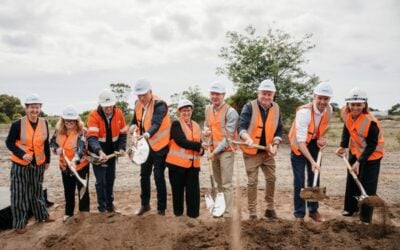
The government of Western Australia has begun a drive to deploy at least 1,000 renewable energy off-grid power systems aimed at bringing resilient electricity supplies to communities and customers.
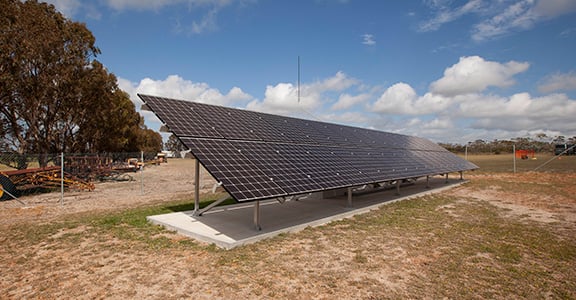
Called standalone power systems (SAPS), the technology combines equipment including battery storage and solar PV. The state government today announced its rollout will commence with 180 installations and a funding commitment of A$37 million (US$25.63 million) for the distributed resources.
While SAPS are growing in popularity in Australia, particularly in rural areas, the Western Australian push is thought to be the largest initiative of its type in the country to date.
Rather than stretching power lines over long distances, customers can use on-site generated power and are likely to experience far fewer outages – up to 90% fewer, in some cases – according to Western Power, the state-owned energy company which will administer the programme.
Try Premium for just $1
- Full premium access for the first month at only $1
- Converts to an annual rate after 30 days unless cancelled
- Cancel anytime during the trial period
Premium Benefits
- Expert industry analysis and interviews
- Digital access to PV Tech Power journal
- Exclusive event discounts
Or get the full Premium subscription right away
Or continue reading this article for free
They also reduce emissions associated with electricity production and use, enabling nearly all of the site’s demand to be met with solar PV. Systems will often have generators too, but purely as backup.
WA energy minister Bill Johnston said the government will seek to deploy its 1,000 systems over the next four years.
Johnston also said installation will create 90 jobs, including 15 apprentice positions, as well as supporting local businesses which will manufacture, install and commission the units.
Energy-Storage.news spoke today with one of the companies selected to provide the SAPS, Boundary Power. Boundary Power is a joint venture between another state-owned energy company, Horizon Power and electrical engineering company Ampcontrol, set up to focus on the SAPS market.
Boundary Power will provide 101 of the SAPS units, while green energy installer Hybrid Systems Australia will deliver the remaining 79.
Boundary Power’s modular R-Series brand SAPS solution will be used at the sites, a representative told Energy-Storage.news today. The sizing and capacity of batteries and generation equipment will vary at each site to some extent, based on customer requirements, the representative said.
At this stage, Boundary Power said it couldn’t yet provide specific information on the sizing and duration of battery systems.
However, for a general idea, the R-Series spec sheets show that the systems range from 10kVA systems using 7.92kW solar arrays with 6kW solar inverter, coupled with 16kW battery inverter and 16.8kWh battery capacity up to 31.68kW solar arrays with 24kW solar and battery inverters, and 67.2kWh battery energy storage on the 25kVA models, with sizes and capacities in between.
The systems are tested within Boundary Power’s workshop before being taken to the field
According to Western Power, the process of installing SAPS begins with assessments of the customers load and energy usage patterns, to which their new off-grid solution is then designed to match.
The initial rollout seeks to replace reliance on about 762km of overhead power lines, in the process freeing up land for agricultural use and crucially reducing the risk of bushfires caused by problems with power infrastructure going to remote areas.
Systems will be deployed in WA’s south-west, eastern and north-west regions.
Elsewhere in the state, the government said in announcing its annual budget earlier this month that it has committed to closing its two remaining state-owned coal power plants by 2030 and will invest A$3.8 billion into a transition plan, including the installation of large-scale battery storage. The budget also pledged money to the local battery manufacturing value chain.
SAPS can increase renewable energy usage, reduce costs, outages and bushfires
According to Boundary Power’s representative, the SAPS contracts it has signed with Western Power include a number of key performance indicators (KPIs) that the companies are bound by their commercial terms not to disclose.
They did note however that the SAPS can provide “a renewable percentage over 90%”, which is in line with Western Power’s own claims on the clean energy aspect of standalone power systems.
While the government said only that the SAPS will begin to be switched on in early 2023, Boundary Power’s spokesperson offered a few more details into the project timelines.
“The team will be commencing site visits by the end of June 2022 with onsite deployment in early 2023. It is anticipated that all sites will be commissioned by the end of 2023,” the representative said but also pointed out that the timeframe is “indicative only and depends on several factors”.
“Each individual system is commissioned individually; thus “power on” will happen all throughout the year,” according to the representative.
“Western Power’s traditional network of poles, wires and substations spread is now transitioning to standalone power system technology as a modern generation mix that better meets the needs of customers,” energy minister Bill Johnston said.
In February, the Australian Energy Market Commission (AEMC) which has a regulatory role over the country’s National Electricity Market (NEM), ruled that standalone power systems can participate in the market. Staged introduction will begin in August although states can opt-in or out.
“This [decision] allows electricity distributors to establish SAPS in communities where stand-alone power may be cheaper, safer and more reliable than grid supply, in jurisdictions that have opted into the new framework,” AEMC chair Anna Collyer said at the time.
“Particularly in remote, bushfire-prone areas, SAPS do away with the need to replace damaged grid connections at significant expense. In fact, the power infrastructure that connects communities to the grid can also cause bushfires, which is another reason SAPS are attractive alternatives to traditional network connections in those areas.”
Collyer said standalone power systems – including microgrids and individual customer installations — are becoming more viable as costs decrease and technology improves. Maintaining and replacing older power lines and other infrastructure comes at huge cost to a country as big as Australia, according to the AEMC chair.
“This is a timely rule change as we continue to transition to a renewable energy future. It increases the reliability and resilience of energy supply in remote areas, as well as reducing network costs for all customers.”