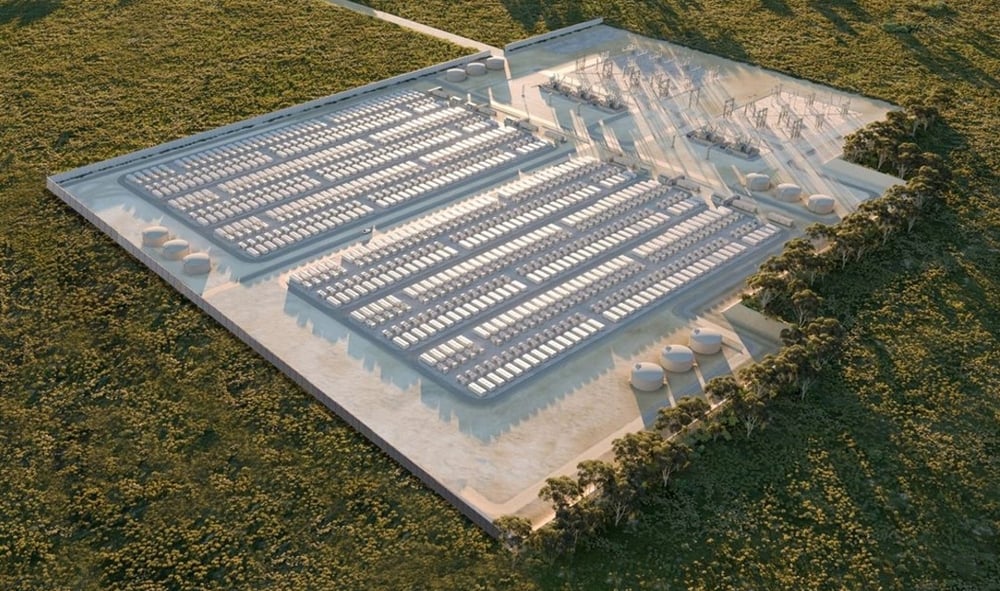
Delta and partner Samsung Vista C&I Australia have lodged an environmental impact statement (EIS) for an 800MWh BESS at the Vales Point Power Station site in New South Wales (NSW).
Separately, the federal government has approved Recurrent Energy’s Sundown solar-plus-storage project in northern NSW, which pairs 443MWdc of solar PV with a 600MWh BESS, under Australia’s Environment Protection and Biodiversity Conservation (EPBC) Act.
Vales Point BESS enters NSW planning assessment
Delta said on 10 November that it and Samsung Vista C&I Australia had lodged the State Significant Development Application (SSDA) and supporting EIS for the Vales Point BESS with the NSW Department of Planning, Housing and Infrastructure for assessment.
Samsung Vista C&I Australia is a wholly owned subsidiary of South Korea’s Samsung C&T Corporation, providing engineering, procurement and construction (EPC) services for large-scale renewable energy generation, storage and transmission projects.
Try Premium for just $1
- Full premium access for the first month at only $1
- Converts to an annual rate after 30 days unless cancelled
- Cancel anytime during the trial period
Premium Benefits
- Expert industry analysis and interviews
- Digital access to PV Tech Power journal
- Exclusive event discounts
Or get the full Premium subscription right away
Or continue reading this article for free
An EIS sets out a project’s likely environmental, social and economic impacts and how the developer plans to manage them.
In NSW, the largest projects are assessed as State Significant Development, with the planning department or the Independent Planning Commission (IPC) determining the application.
The IPC approved ACEnergy’s 1,100MWh Yanco BESS in October 2025, one of the larger standalone BESS projects to go through that route in the state.
The Vales Point BESS would be sized at up to 400MW/800MWh, a 2-hour duration, and would sit on the Vales Point Power Station site in the Hunter-Central Coast Renewable Energy Zone (REZ).
Delta said the project would repurpose an established energy site, drawing on existing infrastructure, a skilled workforce and its proximity to Sydney and Newcastle.
Other NSW power station sites are already hosting large BESS. Origin Energy’s Eraring site is home to a 460MW/1,770MWh first stage that began commercial operations in January, with a 240MW/1,030MWh second stage to follow, while AGL’s 500MW/1,000MWh Liddell BESS has produced lessons on island commissioning, BESS oversizing and generator performance standards.
Delta said the lodgement followed 18 months of technical and environmental studies, alongside engagement with residents, businesses, community groups and stakeholders, with feedback on the concept design shaping the project.
The department will place the EIS on public exhibition and invite submissions as part of its assessment. Delta has not given a date for the exhibition to open.
Sundown clears federal environmental review
Meanwhile, the Sundown solar-plus-storage project has cleared the federal government’s EPBC Act.
The EPBC Act is Australia’s main federal environmental law. Projects that could have a “significant impact” on matters of national environmental significance, such as threatened species, are referred to the federal government, which decides whether they need assessment and approval.
BESS and solar PV projects come under the Act mainly because clearing land for sites and grid connections can affect protected habitat.
The decision covers the construction, operation and decommissioning of a large-scale solar PV plant with onsite battery storage, transformers and inverters, 30km east of Inverell. The approval holder is Sundown SF Subco Pty Ltd as trustee for the Sundown SF Unit Trust.
Most conditions tie the federal approval to the project’s NSW development consent. The approval holder must publish its NSW-approved biodiversity management plan before construction, retire biodiversity credits as offsets before clearing begins, and start the project within 5 years of the decision.
It must also commission independent audits and publish annual compliance reports.
Recurrent Energy, the utility-scale solar and storage development platform of Canadian Solar, received grid connection approval for the project from the Australian Energy Market Operator (AEMO) in April, under clause 5.3.4 of the National Electricity Rules, under the name Sundown Energy Park.
The project sits in the New England REZ and will connect to an existing 330kV transmission line that crosses the site. Recurrent expects a 35-year operating life, with sheep grazing parts of the site, which will be returned to agriculture after decommissioning.
Developers have described Australia’s connection process as one of the toughest they face. Tom Best, chief operating officer of BESS developer Eku Energy, said in an interview with ESN Premium that it is one of the longest and most costly grid compliance processes among the markets his company operates in.
The Sundown decision follows a run of BESS submissions to the EPBC Act. This month, a 300MW/1,200MWh BESS in South Australia’s Riverland and ACEnergy’s Little River BESS in Victoria were both referred to the federal government for review.
Never miss an Australian energy storage story. Sign up for our Australia newsletter and get the latest project announcements, policy updates and market analysis delivered directly to you.