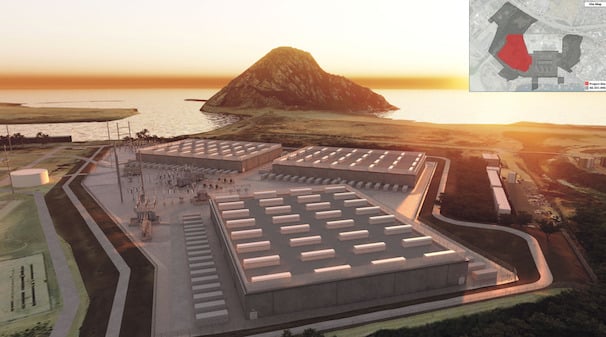
Texas-based IPP Vistra Energy has informed the California Energy Commission (CEC) that it will not be advancing its 600MW Morro Bay battery energy storage system (BESS).
The news was reported by the California news outlet KSBY, and a representative for the CEC told Energy-Storage.news, “Vistra has informed the CEC that they will not be advancing the project and will not be seeking certification through the CEC’s Opt-In Certification programme.”
Vistra proposed the Morro Bay facility in 2021, which was set to be double the output of the 300MW/1,200MWh Moss Landing Energy Storage Facility it had recently completed.
The project was planned to be located approximately 150 miles south of Vistra’s Moss Landing project. MOSS300, the first 300MW/1,200MWh phase of the 750MW/3,000MWh Moss Landing BESS project, caught fire in January, one of the largest fire events we’ve ever covered.
Try Premium for just $1
- Full premium access for the first month at only $1
- Converts to an annual rate after 30 days unless cancelled
- Cancel anytime during the trial period
Premium Benefits
- Expert industry analysis and interviews
- Digital access to PV Tech Power journal
- Exclusive event discounts
Or get the full Premium subscription right away
Or continue reading this article for free
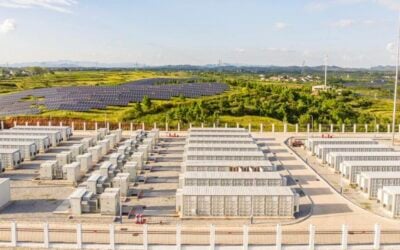
Morro Bay aimed to “revitalise” an existing natural gas power plant site, covering 22 acres of the 107-acre complex. The facility would include around 180,000 lithium-ion (Li-ion) batteries stored in three specially designed, 30-foot tall “low profile” buildings.
According to Vistra representatives, another benefit of the site selection is that it would have connected to Pacific Gas & Electric’s (PG&E’s) active transmission lines. Three new project-level substations would link to PG&E’s existing substation, which was originally built to draw electricity from the existing gas power plant.
After facing delays with the local municipal permitting process, Vistra Energy decided to seek approval from the CEC to build the BESS under the provisions of Assembly Bill (AB) 205.
On 28 October 2024, Vistra issued the Morro Bay City Council with a letter requesting a pause on municipal review of the standalone BESS project, opting instead to use the CEC’s streamlined certification process.
AB 205, signed into law by California Governor Gavin Newsom in 2022, expanded the CEC’s authority to include permitting BESS facilities exceeding 200MWh, offering developers an alternative pathway for approval through the ‘Opt-In’ programme – effectively bypassing the need for local authority permitting.
Earlier this year, CPUC established new standards for the maintenance and operation of battery energy storage facilities.
The CPUC modified General Order 167, which provides a method for implementing and enforcing maintenance and operation standards for electric generating facilities.
Additional changes to operating BESS in California were quickly introduced the week following the Moss Landing fire. Local politician Dawn Addis, California Assembly member for the 30th District which includes part of Monterey County, introduced AB 303, also known as the ‘Battery Energy Safety & Accountability Act’.
The Act proposed removing rules that allow the ‘Opt-In’ programme. Addis’ bill failed to make it past the first reading and missed the house of origin deadline.
In March, ESN published an article about a solar-plus-storage project with a 4.6GWh BESS that progressed through the Opt-In programme, in which we included a roundup of all eight projects making use of the programme at the time (Premium access).
It is unclear why exactly Vistra will not be advancing the project; the company has not responded to requests for comments from multiple publications.
In February, Vistra, wrote off the value of the Moss Landing BESS facility for US$400 million. Recently, American Battery Technology Company (ABTC) announced that it has been contracted to recycle batteries from the facility, in the cleanup process being overseen by the US Environmental Protection Agency (EPA).