Further developments from the California Independent System Operator (CAISO) market including new standards for BESS maintenance and operation and new BESS capacity announced by SDG&E.
California Public Utilities Commission establishes new BESS standards
The California Public Utilities Commission (CPUC) has established new standards for the maintenance and operation of battery energy storage facilities within the state.
Announced 13 March, the CPUC modified General Order 167, which currently provides a method to implement and enforce maintenance and operation standards for electric generating facilities.
This is in order to add new safety standards for the maintenance and operation of battery energy storage systems (BESS), as required by Senate Bill 1383 (SB 1383).
Try Premium for just $1
- Full premium access for the first month at only $1
- Converts to an annual rate after 30 days unless cancelled
- Cancel anytime during the trial period
Premium Benefits
- Expert industry analysis and interviews
- Digital access to PV Tech Power journal
- Exclusive event discounts
Or get the full Premium subscription right away
Or continue reading this article for free
This move follows the fire at the Moss Landing Energy Storage Facility, owned by utility Vistra Corp, which took place on the afternoon of 16 January 2025. Dr Erdal Kara, director of power fundamentals CAISO/MISO for Vistra, will speaking at the Energy Storage Summit USA 2025 next week in Dallas (26 and 27 February).
Shortly after the Moss Landing incident, the CPUC issued a proposal to ‘enhance the safety of battery energy storage facilities’ as its staff began investigating the fire.
The regulator announced on 27 January that its proposal would include the implementation of SB 1383, which requires the CPUC to implement and enforce standards for the maintenance and operation of electricity storage facilities ‘owned by an electrical corporation or located in the state.’
With its newest announcement, the CPUC also made explicit that battery storage facility owners must develop emergency response and emergency action plans, as required by SB 38, a separate bill.
Additionally, the CPUC made updates including establishing technical logbook standards for BESS and expanding requirements for emergency plans relating to all electric generating facilities.
State-wide move follows local initiatives
On 25 February, the Monterey County BoS met to discuss the recommendations from the Ad Hoc Committee established in response to the Moss Landing incident.
The committee recommended opposing future indoor battery storage facilities within the county, citing safety concerns. Additionally, the committee recommended requiring existing facilities in the county “to be brought up to the highest industry standards.”
At the San Diego County BoS meeting, also on 25 February, Supervisor Desmond’s item to support Assembly Bill 303 (AB 303) was considered – the bill is explored next.
New, potentially more impactful state-wide bill proposed
In the week following the Moss Landing fire, California Assembly member Dawn Addis introduced AB 303.
The ‘Battery Energy Safety & Accountability Act’ proposes removing rules that allow persons proposing battery energy storage facilities of 200MWh capacity or more to apply for certification with the California State Energy Resources Conservation and Development Commission – the ‘Opt-In’ programme – effectively bypassing the need for local authority permitting.
The San Diego County BoS saw the California Energy Storage Alliance (CESA) and other organisations submit comments opposing AB 303. The motion to support was denied by a 3 to 1 vote.
Recently, Energy-Storage.news published an article about a solar-plus-storage project with a 4.6GWh BESS that has progressed through the California Energy Commission’s Opt-In programme, in which we included a roundup of all eight projects using it (Premium access).
SDG&E adds 100MW of energy storage to Westside Canal
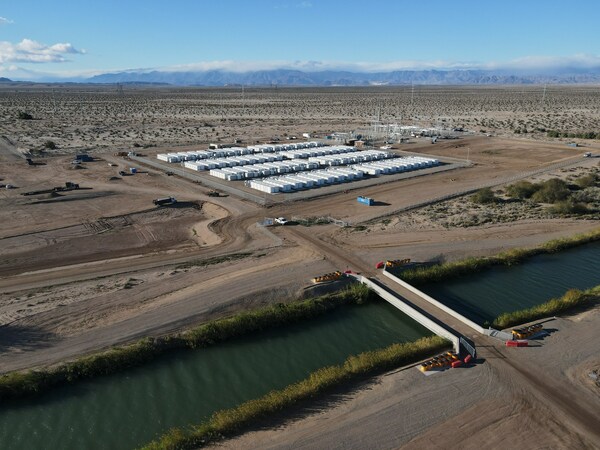
The CPUC meanwhile has approved an expansion of California utility San Diego Gas & Electric’s (SDG&E’s) Westside Canal Battery Energy Storage Facility.
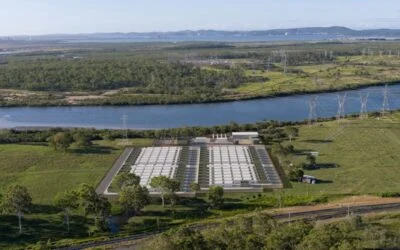
Located in the state’s Imperial Valley, the expansion will add 100MW of energy storage capacity to the facility’s existing 131MW of storage capacity.
SDG&E expects the project to be operational by June 2025, adding that the complex’s then 231MW of energy storage will be the largest asset in its utility-owned battery storage portfolio.
The utility also noted that the facility will provide four primary services for the grid:
- “Generation Capacity – Acting as an additional energy resource, the storage system will provide backup power when needed, helping to ensure sufficient electricity supply during peak-demand periods.
- Ancillary Services – The system will help maintain a stable and reliable power supply by supporting grid functions such as frequency regulation and voltage control.
- Energy Balancing – The system will store excess energy when demand is low and discharge it when demand is high, facilitating more efficient energy use and helping to stabilise electricity prices.
- Congestion Management – The system will improve power flow efficiency and support overall grid stability, by absorbing energy near generation sources and releasing it when transmission line congestion is lower.”
One of SDG&E’s other projects was also in the headlines for the wrong reasons recently. On 5 September 2024, the City of Escondido issued Mandatory evacuation orders in a Civic Alert, citing an active fire incident at a 30MW/120MWh BESS project, located at the Northeast Operations Yard of SDG&E.
Notably, following the incident, expert Nick Warner, founding principal at Energy Safety Response Group (ESRG), a consultancy which specialises in providing fire safety services for BESS industry stakeholders, said that the situation was dealt with effectively and in an exemplary manner.
In announcing its expansion for the Westside Canal Battery Energy Storage Facility, SDG&E highlighted its dedication to safety.
As noted above, the CPUC and other state bodies are doubling down on enforcing some of these safety standards and commitments.
For more information on the California market and all the latest developments in the US energy storage industry, join others at the Energy Storage Summit USA 2025 in Dallas, Texas, US, next week on the 26-27 March.