1414 Degrees, an Australian thermal energy storage company, has signed a head of agreement with an unnamed data centre operator to develop up to 1GW of AI data centre infrastructure at its Aurora Energy Precinct near Port Augusta in South Australia.
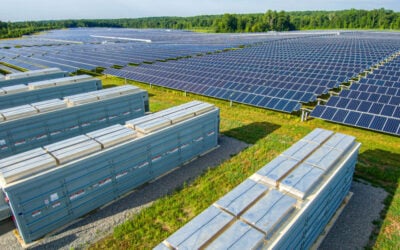
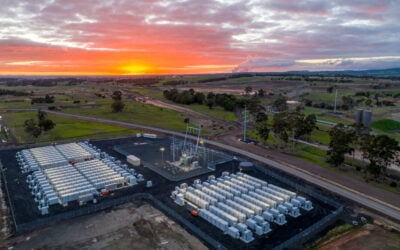
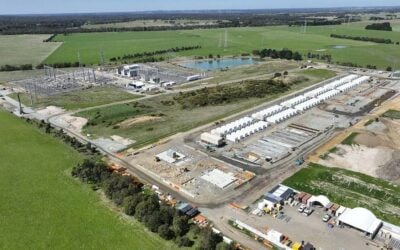
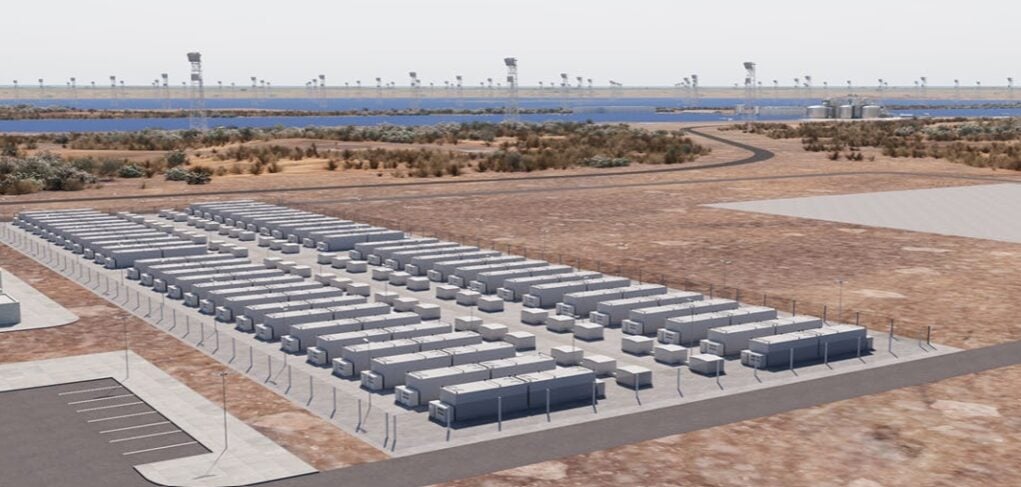
Under the proposed structure, the unnamed operator has been granted exclusivity over an initial 40-hectare parcel within Aurora’s 15.8-square-kilometre landholding. The site offers long-term tenure, up to 900MW of solar generation potential, an approved 140MW/280MWh battery energy storage system (BESS), high-voltage connection infrastructure, and access to fibre and water.
The development is proposed across three stages. The first is an indicative 17MW starter campus using an existing 33kV connection.
The second is a 200MW anchor campus once a 275kV transmission line is connected. The third is a longer-term pathway to the gigawatt scale as Aurora’s renewable energy generation is progressively built out.
Try Premium for just $1
- Full premium access for the first month at only $1
- Converts to an annual rate after 30 days unless cancelled
- Cancel anytime during the trial period
Premium Benefits
- Expert industry analysis and interviews
- Digital access to PV Tech Power journal
- Exclusive event discounts
Or get the full Premium subscription right away
Or continue reading this article for free
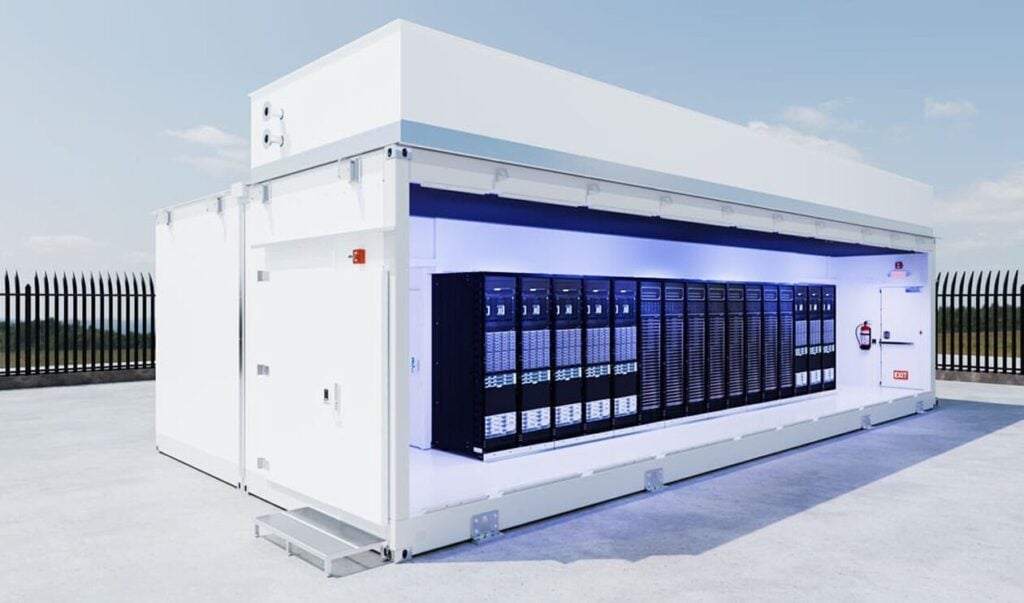
The modular data centre technology is designed to integrate with renewable energy generation and storage and can be relocated or replaced as technology evolves.
1414 Degrees would provide the development parcel, power, and connectivity under the proposed structure, while the data centre partner would bring the capital, technical expertise, and operating capability to deploy and operate the infrastructure.
The company intends to negotiate definitive agreements covering land access, behind-the-meter renewable energy, battery storage, grid connection and precinct services. It will continue working with SA Power Networks, ElectraNet and other stakeholders to progress connection arrangements.
Executive chairman Dr Kevin Moriarty said the agreement validated Aurora’s strategy.
“This agreement validates Aurora’s strategy of attracting energy-intensive industries to a site purpose-built for renewable energy generation, storage and grid connectivity. The 33kV connection lets us start generating value from part of the precinct now, while the 275kV build-out and Aurora’s solar and battery storage development continue in parallel,” he said.
The announcement follows AEMO’s acceptance of the Generator Performance Standards for Aurora’s 140MW/280MWh BESS in January 2026, a regulatory milestone that gave 1414 Degrees authorisation to connect the battery system to the grid, finalise transmission connection agreements, and begin commercial negotiations for power purchase agreements.
The GPS approval was granted, with ElectraNet also confirming acceptance of the full standards package, clearing the technical hurdle needed to advance the project toward commercial operation.
The Aurora site has been the focus of 1414 Degrees’ development work for several years. In 2019, 1414 Degrees acquired SolarReserve Australia II Pty Ltd, which holds the Crown Lease over the site near Port Augusta, with the intention of combining large-scale solar PV with its proprietary thermal energy storage technology to deliver firm power to the grid and industrial heat to nearby industries.
It should be noted that the 280MWh battery storage system supplying power to the 1GW data centre infrastructure, and which 1414 Degrees describes as the site’s “anchor,” will not use the company’s proprietary thermal energy storage technology. 1414 Degrees said Aurora is currently seeking an offtake partner for the BESS output and that it is open to “co-investment structures with the right partner,” according to the project website.
However, the wider Aurora Energy Project is set to include a pilot of the SiBox thermal energy storage technology. According to the project website, thermal storage is part of the Crown Sponsorship’s approved development pathways for Aurora.
Policy context accelerates site positioning
The heads of agreement arrive as the regulatory framework governing large data centres in Australia takes shape.
The Australian federal government moved to legislate a net-generator requirement for large-scale data centres on 15 July 2026, requiring facilities to underwrite new renewable energy supply, pay their full share of connection costs, and reduce demand when the grid is under strain.
The Energy and Climate Change Ministerial Council subsequently backed nationally consistent standards at its meeting on 28 July, with Queensland and the Northern Territory the only jurisdictions to oppose the framework.
At the Australian Clean Energy Summit 2026 in Sydney, Sabooh Whitelaw, associate vice-president, energy and utilities at data centre operator AirTrunk, argued that data centres should function as anchor tenants for new renewable energy infrastructure, providing the long-term demand certainty needed to bring generation and storage investment forward rather than waiting for supply to arrive.
1414 Degrees noted in its announcement that major AI infrastructure companies, including Anthropic, have publicly flagged requirements for 500MW-plus sites in Australia, and that other global technology companies have recently signed renewable energy agreements to support their own data centre operations in the country.
Data centres require an extremely reliable power supply with minimal downtime, making the combination of battery storage and thermal storage particularly attractive for such applications. Energy-Storage.news has been tracking several major data centre developments featuring energy storage.
1414 Degrees’ thermal energy storage system technology
Thermal energy storage systems, such as those developed by 1414 Degrees, offer an alternative to traditional lithium-ion battery storage, using heat as the storage medium rather than electrochemical processes.
The company’s proprietary SiBrick technology harnesses the exceptionally high latent heat capacity of silicon, which melts at 1,414°C, to store renewable energy as thermal energy that can be converted back to electricity or used directly as industrial heat.
This approach offers particular advantages for long-duration energy storage (LDES) applications and industrial processes requiring high-temperature heat, positioning the technology as complementary to conventional battery systems rather than directly competitive.
The SiBox system, 1414 Degrees’ complete thermal energy storage solution, integrates heating elements with SiBrick storage media within an insulated heat store, coupled with an energy recovery system.
This technology can deliver temperatures ranging from 700°C to 1,000°C, making it suitable for high-temperature industrial applications that currently rely on fossil fuels, including cement production, alumina processing and steel manufacturing.
The system’s ability to provide both electricity and industrial heat represents a key differentiator from conventional battery storage technologies, which can only provide electrical output.
1414 Degrees has reached several major milestones in the energy storage landscape. In the third quarter of 2022, the company joined the Long Duration Energy Storage Council, and in 2018, the organisation kicked off a molten silicon storage project in Australia.
Never miss an Australian energy storage story. Sign up for our Australia newsletter and get the latest project announcements, policy updates and market analysis delivered directly to you.
Solar Media (part of Informa Group) will host the Battery Asset Management Summit Australia 2026 on 25-26 August at the Amora Hotel Jamison in Sydney, bringing together asset owners, operators, trading teams and optimisers to address revenue strategy, lifecycle management and operational performance across Australia’s fast-growing battery storage fleet.
Readers of Energy-Storage.news can get 20% off their tickets using the code ESN20 at checkout. Find out more about the Summit on the official website.