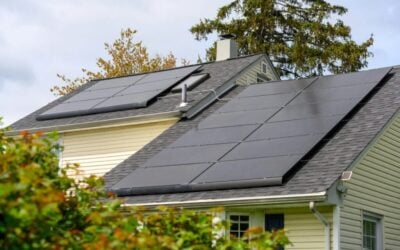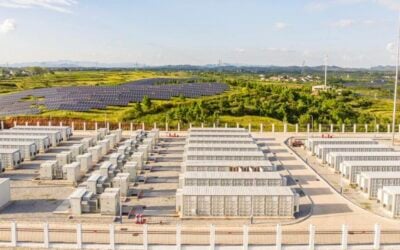
US residential solar and energy storage installer Sunrun, energy management platform Renew Home, and Tesla have announced an agreement to deliver more than 16GW of flexible energy capacity to US hyperscalers and utilities.
Announced 24 June, the framework would aggregate “hundreds of thousands” of home battery systems operated by Sunrun and Tesla with more than 8 million smart thermostats and devices managed by Renew Home, into a virtual power plant (VPP).
The companies describe the arrangement as creating the largest VPP in the country, utilising existing residential infrastructure without requiring additional hardware, software, interconnection, water, or land usage from offtaking parties.
Immediate capacity available in Virginia
In Virginia, home to ‘Data Centre Alley,’ the companies report having more than 300MW of capacity available for immediate deployment.
Try Premium for just $1
- Full premium access for the first month at only $1
- Converts to an annual rate after 30 days unless cancelled
- Cancel anytime during the trial period
Premium Benefits
- Expert industry analysis and interviews
- Digital access to PV Tech Power journal
- Exclusive event discounts
Or get the full Premium subscription right away
Or continue reading this article for free
This figure is projected to reach at least 500MW by 2030 as installations of home batteries and smart thermostats increase.
“The grid of the 1800s cannot power the innovation of 2026,” said Mary Powell, CEO of Sunrun.
“Americans deserve innovation that does not create unnecessary energy costs. When data centres are asked to throttle down operations during the most expensive and stressful hours of the day, we can activate our distributed power plants to help provide them the power they need while also protecting American families from footing the bill for costly new infrastructure.”
The companies state they can build multiple gigawatts of additional capacity across the country and indicate that available capacity will be allocated on a first-come, first-served basis.
PJM capacity commitment
The three companies have committed to providing capacity to PJM’s proposed Reliability Backstop Procurement. If accepted, they claim this would immediately unlock over 1GW of capacity, with additional resources deployable in subsequent years for peak shaving, locational grid relief, and fast-responding ancillary services.
The companies cited analysis from consultancy firm The Brattle Group indicating that improved utilisation of existing power grid infrastructure could reduce US electricity bills by US$110 billion to US$170 billion over the next decade and accelerate data centre interconnection by several years.
The agreement establishes a structure for aggregating demand-side and energy-exporting devices across multiple states. The combined resource would draw dispatchable capacity from residential battery systems while simultaneously shifting household load during peak demand hours.
Key elements of the framework include aggregating existing residential energy infrastructure, providing a single procurement point for utilities and data centres, and offering national coverage across major electricity markets through the companies’ combined residential energy footprint.
The companies indicate that residential customers participating in grid-supporting programmes would receive compensation and rewards, while the framework aims to reduce overall energy costs for all ratepayers through improved grid utilisation.
The arrangement comes as electricity demand increases and interconnection queues lengthen, with hyperscalers seeking faster paths to secure power for AI computing infrastructure. The companies position distributed residential resources as deployable in months rather than years, compared to traditional generation and transmission infrastructure projects.
Earlier this month, VPP operator and distributed energy resource (DER) platform Voltus and tech giant Google signed a three-year 100MW agreement for the PJM region.
It sees Voltus aggregate up to 100MW of DERs each year from local businesses and homes into a Google-funded VPP. Voltus will then pay customers who participate in the VPP, “turning Google’s capacity demand into real economic benefits for PJM customers.”
Sunrun and Tesla also worked to increase VPP enrollment in Puerto Rico earlier this year, when the two companies and residential solar installer SunStrong Management had their motion to auto-enroll participants in an emergency capacity resource programme approved by the Puerto Rico Energy Bureau (PREB).