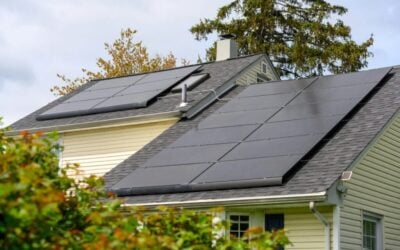
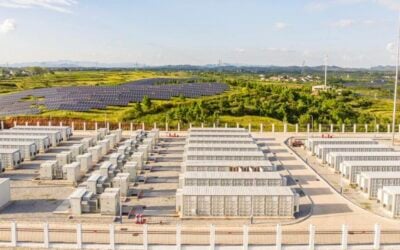
Virtual power plant (VPP) operator and distributed energy resource (DER) platform Voltus and tech giant Google have signed a three-year 100MW agreement for the PJM region in the US.
Announced 2 June, Voltus will aggregate up to 100MW of DERs each year from local businesses and homes into a Google-funded VPP in PJM. Voltus will then pay customers who participate in the VPP, “turning Google’s capacity demand into real economic benefits for PJM customers.”
The companies highlight this as a ‘bring your own power’ (BYOP) or ‘bring your own capacity’ (BYOC) deal, which have been encouraged by the US government, through such actions as the White House’s largely symbolic “Ratepayer Protection Pledge”, signed by multiple major tech companies including Google.
PJM is the country’s largest Regional Transmission Organisation (RTO), covering parts of 13 US states and the District of Columbia. It is also the location of Virginia’s “Data Centre Alley”, the world’s biggest cluster of data centres, which has generated significant demand for power.
Try Premium for just $1
- Full premium access for the first month at only $1
- Converts to an annual rate after 30 days unless cancelled
- Cancel anytime during the trial period
Premium Benefits
- Expert industry analysis and interviews
- Digital access to PV Tech Power journal
- Exclusive event discounts
Or get the full Premium subscription right away
Or continue reading this article for free
In October 2025, the US Energy Storage Coalition (ESC) published a study, which showed, assuming that all forecasted demand in PJM’s 2025 Load Forecast Report materialises, that by 2028, PJM’s summer peak would increase by 16GW, and by 2032, by an additional 30GW.
The projected load increase and interconnection queue backlogs have led to calls for reform from local leaders and the federal government. PJM is currently considering multiple paths for reform, which Energy-Storage.news Premium recently discussed with wholesale electricity policy expert, Andrew Levitt, and Dr Long Lam, managing energy associate at the Brattle Group.
Google has been active in the data centre market this year. In March, the company announced plans with utility DTE Energy to develop a new data centre in Michigan, including 1,600MW of solar paired with 450MW of energy storage.
Under the terms of Google and DTE’s clean capacity accelerator agreement (CCAA), the tech giant will fund the solar and storage resources, while DTE will operate these resources over the 20-year duration of the contract, with options to extend subject to mutual agreement.
In February, utility Xcel Energy announced it would install 30GWh of US startup Form Energy’s iron-air batteries at a Google-owned data centre in Pine Island, Minnesota.
Looking to DERs to decrease the burden large loads place on consumers has also been a popular topic in the industry lately.
Last month, ESN Premium spoke with Pat Wood III, co-chair at Pew Charitable Trusts, about the non-profit’s DER Policy Playbook, which outlined approaches to incentivising DERs in the US.
To lower barriers to entry, Pew recommends implementing automated permitting for residential installations and streamlining interconnection procedures for commercial providers. These administrative changes aim to cut costs and reduce delays that hinder deployment.
On the implementation side, the report stressed the importance of aggregating DERs into VPPs.
On 16 April, developer-operator Lightshift Energy announced a five-project, distribution-scale battery storage portfolio across Virginia.
Rather than pursuing 200MW-500MW transmission-scale projects that require years of PJM interconnection studies and tens of millions in upgrade costs, Lightshift is deploying smaller batteries, typically 20MW or less, at existing distribution substations, in an effort to reduce the impact placed on regular energy consumers.