Home energy management company Plentify will put over 160,000 connected home battery storage systems in South Africa into a virtual power plant (VPP).
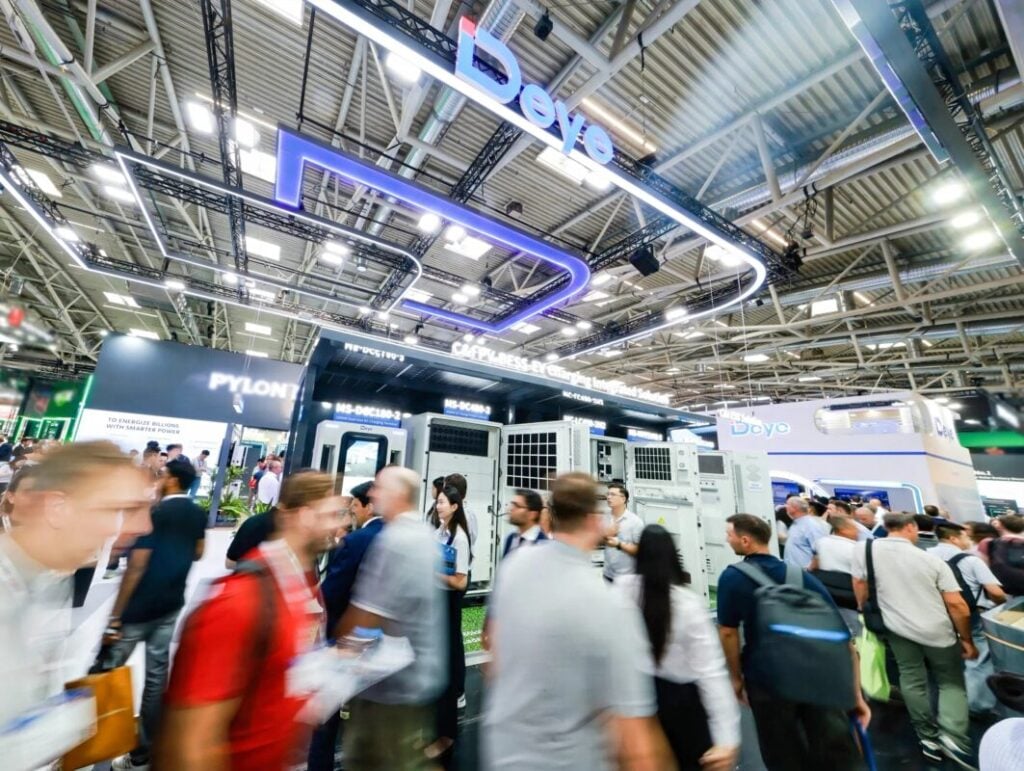
The South Africa-headquartered company said last month (20 July) that it has been appointed the exclusive VPP partner by Chinese solar PV inverter and battery storage system manufacturer Deye.
Deye has already deployed more than 160,000 residential battery storage systems in South Africa. Totalling 2.7GWh, their charging and dispatch will be coordinated through Plentify’s VPP platform.
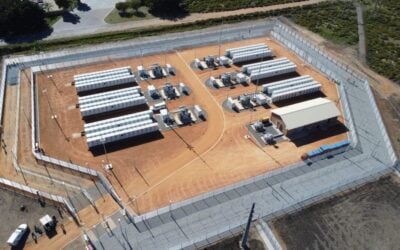
Plentify CEO and co-founder Jon Kornik said the VPP’s capacity will therefore be “almost twice the capacity” of the 1,440MWh of large-scale battery energy storage systems (BESS) invested in by South Africa’s state utility and transmission operator, Eskom, through its Battery Energy Storage Programme.
Try Premium for just $1
- Full premium access for the first month at only $1
- Converts to an annual rate after 30 days unless cancelled
- Cancel anytime during the trial period
Premium Benefits
- Expert industry analysis and interviews
- Digital access to PV Tech Power journal
- Exclusive event discounts
Or get the full Premium subscription right away
Or continue reading this article for free
“It shows how distributed energy resources can complement traditional infrastructure investments by rapidly unlocking value at scale from assets that are already in place,” Kornik said.
The Eskom programme Kornik mentioned was run in 2022, when the utility selected 343MW of large-scale BESS bids, each of 4-hour duration. As of September last year, through various procurement programmes, the government of South Africa had secured nearly 1.7GW/11GWh of grid-scale BESS capacity.
This included projects Eskom would own directly, as well as third-party-owned assets under contract. It should be noted, however, that as of the time Energy-Storage.news published a special report on South Africa’s BESS procurements last year, some 45.1% of projects with awarded contracts had not yet reached financial close.
That said, while large-scale energy storage has gathered the most attention internationally, within South Africa, significant growth in small-scale renewable energy and energy storage uptake has been just as visible.
Value beyond protection from outages
Yesterday, President Cyril Ramaphosa highlighted the progress of South Africa’s ‘Just Energy Transition,’ noting in a weekly newsletter to constituents that while coal dominates the energy mix, renewable energy generation grows rapidly.
According to figures from state agency Statistics South Africa that Ramaphosa quoted, renewable energy went from 2% of domestically generated energy in 2016 to 9% in 2024. The country has nearly 16GW of installed renewable energy capacity and a further 32GW in grid connection queues.
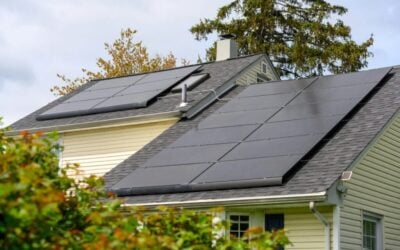
Rooftop solar uptake saw an 86% increase over a three-year period to 2025, when it reached 675,000 households. Plentify CEO Jon Kornik said that batteries are included with over 90% of solar PV systems sold to residential customers in South Africa.
A major motivator for home energy system purchases or leases has been the instability of the Eskom grid, which has seen frequent load-shedding events that leave customers without power.
However, those batteries are “sitting idle for large portions of the day,” Kornik said, with the load-shedding events that drove South Africa’s “unique” energy transition having receded.
“For years, South African households invested in Deye solar storage to protect their homes from disruptive power outages,” Deye Cloud Director Colin Chang said.
“Today’s partnership with Plentify transforms that resilience investment into an asset that can deliver ongoing returns. Deye has always stood for household energy independence.”
Plentify’s energy management suite also controls electric hot water geysers, which are commonly used in South African homes. Through the partnership, Deye will also market Plentify’s intelligent geyser controller, HotBot, which will give customers additional opportunities to make savings while contributing to grid flexibility.