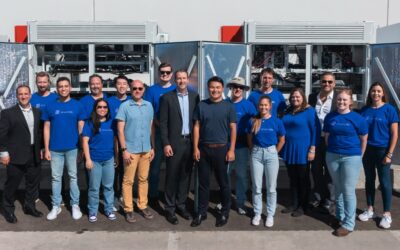
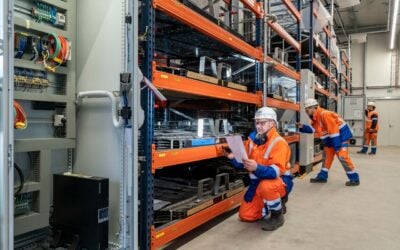
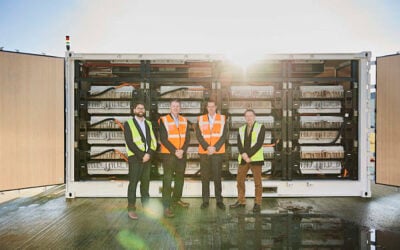
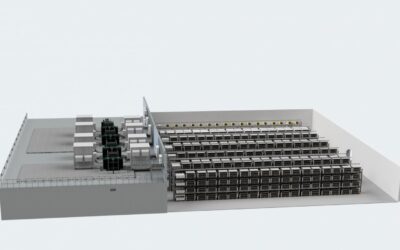
Finland and California-based second life energy storage firms Cactos and Smartville Inc have raised nearly US$10 million to commercialise systems using repurposed Tesla EV batteries – we talk to both company founders.
While battery storage growth in the US continues to vastly outpace that of Europe, the repurposing of used EV batteries into second life stationary storage systems is far more developed in the latter.
Nissan, Renault and Mercedes-Benz are at the forefront of providing EV batteries for companies developing second life battery energy storage systems (BESS), but the market for such batteries is still thinly-traded.
Automotive group Toyota and utility JERA have commissioned a battery storage system made up of lithium-ion, nickel metal-hydride and lead acid cells, something relatively novel in the sector.
A 25W battery energy storage facility in Germany with used battery cells from EVs including forklifts has been completed by developer JT Energy Systems.
A prototype system that can test and sort used battery cells for second life applications has been developed by four companies in the UK in a government-funded initiative.
UK-based Connected Energy has raised £15 million (US$18.4 million) from five new investors to help scale up its second life-based battery energy storage system (BESS) solution.
Energy group Enel has started operating a 4MW/1.7MWh backup power storage system at a plant in Spain’s North African territory using 78 repurposed Nissan electric vehicle (EV) batteries.