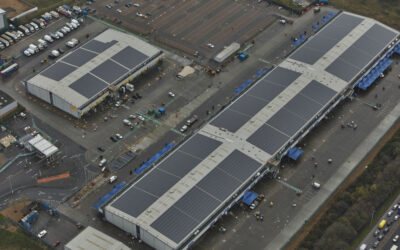
The UK’s government has shied away from supporting large volumes of solar and other distributed energy technologies through subsidies, but commercial and industrial energy storage and solar-plus-storage could be a huge market opportunity in Britain and abroad.
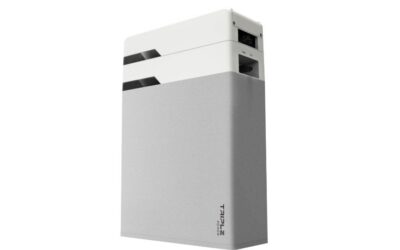
The rise of grid trading and off-peak tariffs, rather than the closure of the feed-in tariff and potentially the export tariff, will see the domestic storage market experience “huge growth” over 2019 according to SolaX’s European product manager ahead of next week’s Solar & Storage Live conference and exhibition in England.
Luxury car brand Rolls Royce, yet to make significant strides towards electrification of its vehicles, has nonetheless made an investment in the clean and distributed energy sectors, acquiring a stake in a microgrid solutions developer.
It’s Solar Power International this week and bigger than ever is its co-located sister show Energy Storage International in Anaheim, California. Here are some of the reasons why we’re excited to attend.
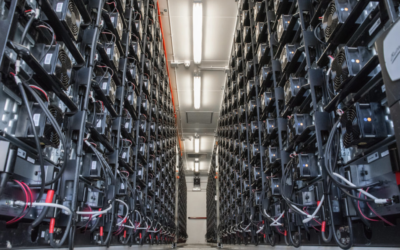
Scotland’s first utility-scale battery storage facility has been officially opened today, having begun delivering sub-second balancing services to National Grid at the end of June under a bespoke agreement secured before the hotly contested Enhanced Frequency Response (EFR) auction of 2016.
California’s Governor Jerry Brown has passed the state’s 2045 zero-carbon electricity target into law, offering a major boost to the energy storage sector in the process.
Up to 140MW of capacity will be procured under the first ever tender for Ireland’s new frequency response and balancing programme, with projects to go live by September 2021.
Over 370MW of energy storage projects, along with 1.25GW of solar, have been successfully moved into the ‘first batch’ of projects to be processed under a new connections procedure, brought in to tackle the surging levels of smaller projects aiming to connect.
Known historically for its oil and in the present day for deploying large amounts of wind energy and latterly for deploying batteries at wind farms, the US state of Texas is less well known for solar-plus-storage projects.