What does the combination of regulatory, supply chain and market pressures mean for the cost of building large-scale BESS this year?
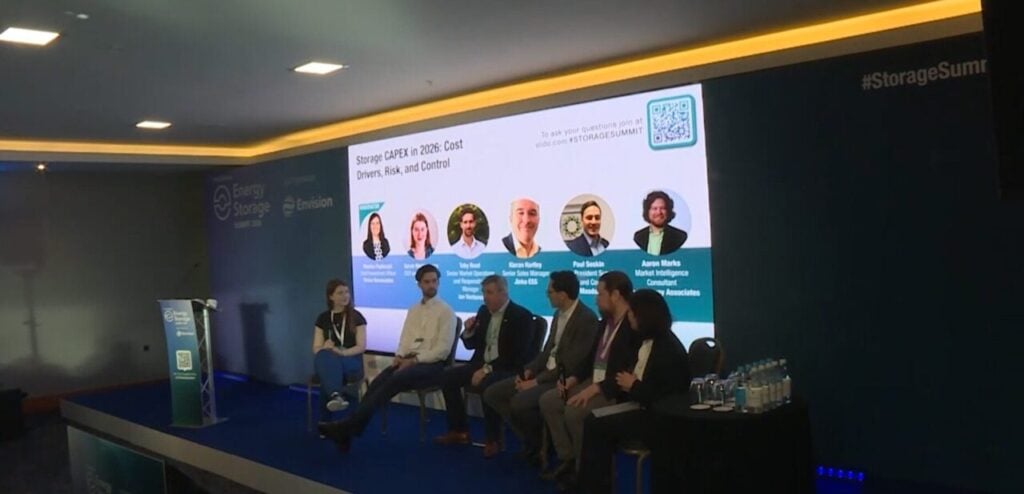
The ‘Storage CAPEX in 2026: Cost Drivers, Risk, and Control’ panel discussion at the Energy Storage Summit 2026 in London in February dived into all of the above and more, featuring:
- Monika Paplaczyk, Chief Investment Officer, Thrive Renewables (moderator)
- Sarah Montgomery, CEO & Co-Founder, Infyos
- Toby Read, Senior Market Operations & Responsibility Manager, ion Ventures
- Kieran Hartley, Senior Sales Manager, Jinko ESS
- Paul Soskin, Vice President of Supply Chain and Contracts, Masdar
- Aaron Marks, Market Intelligence Consultant, Clean Energy Associates
The Summit is the flagship event in our publisher Solar Media’s series of energy storage events globally, which now totals 16, all of which you can learn more about here. Last week, we published sessions looking at the German and Italian markets as well as BESS product selection. Expect more in the coming weeks and months.
Try Premium for just $1
- Full premium access for the first month at only $1
- Converts to an annual rate after 30 days unless cancelled
- Cancel anytime during the trial period
Premium Benefits
- Expert industry analysis and interviews
- Digital access to PV Tech Power journal
- Exclusive event discounts
Or get the full Premium subscription right away
Or continue reading this article for free
Note that the event took place before the US war on Iran.
Panellists discussed that capex alone is not the only determinant of a project’s economics, since it is only part of a larger formula that also involves opex, long-term revenue forecasts and product warranties.
The impact of government policy, both from the US, Europe and China, on BESS prices and capex also came up several times from different speakers. The key is to have good relationships and transparency into your supply chain to best mitigate against this kind of risk in the long-term, it was agreed.
On the topic of transparency, an interesting point was made about the lack of clarity over how much a lithium carbonate price increase (which recently happened) translates into BESS cost increase. Overall, a ‘shifting of prices’ is expected this year, though how far or who would ultimately be picking up the bill is not yet clear.