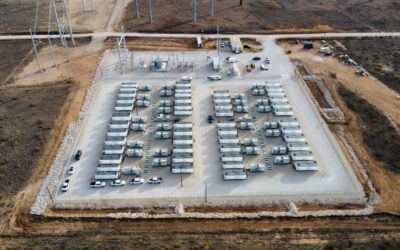
Up to 140MW of capacity will be procured under the first ever tender for Ireland’s new frequency response and balancing programme, with projects to go live by September 2021.
The DS3 programme was established in 2011 to meet the challenges of operating the electricity system in a safe, secure and efficient manner while Ireland seeks to increase its renewable energy capacity.
Ireland’s transmission system operator (TSO) Eirgrid, alongside that of Northern Ireland SONI, has today released details of the first procurement exercise to be carried out under DS3, which will begin in February 2019 following a contracts consultation starting in October 2018.
When contracts are awarded in 1 September next year, the TSOs will procure between 91-140MW of projects which will be required to go live by 1 September 2021.
Try Premium for just $1
- Full premium access for the first month at only $1
- Converts to an annual rate after 30 days unless cancelled
- Cancel anytime during the trial period
Premium Benefits
- Expert industry analysis and interviews
- Digital access to PV Tech Power journal
- Exclusive event discounts
Or get the full Premium subscription right away
Or continue reading this article for free
The contracts will offer a fixed term of six years as set by the decision making authority for the Single Electricity Market (SEM). The document stipulates that applicants must provide a valid legally binding connection agreement, or be in receipt of a connection offer, that ‘will end no later than 1 September 2027’.
Projects up to 50MW will be awarded a contract, higher than the 30MW suggested by the TSOs after the SEM Committee overruled the recommendation. They will have to deliver a ‘bundle’ of services rather than individual contracts being awarded across different requirements, all to the same contracted volume length.
The DS3 services will range from fast frequency response (FFR), requiring capacity delivery between 0.1 and 10 seconds, up to Tertiary Operating Reserve 2 (TOR2) requiring delivery of up to 20 minutes.
On top of these duration periods, a required minimum speed of response of 150-300 milliseconds will be required. While Eirgrid has not stipulated that only battery projects can apply to deliver DS3, only projects meeting these requirements will be accepted which are essentially only battery or hydrid storage systems.
For more on Ireland’s first DS3 procurement exercise, including contract terms and tariff rates, click here for the full story at sister site, Current±.