The European Union (EU) looks set to introduce the “most extensive product legislation in the world for batteries,” but its potential shortcomings include the risk that battery prices could go up and that established manufacturers from Asia might be better positioned to benefit from the rules than the new European value chain.
A €105 million (US$127.6 million) push to develop low-cost, environmentally-friendly lithium-ion battery technology by Sunlight, a designer and manufacturer of batteries headquartered in Greece, will receive €49.9 million in grant funding.
Proposed updates to EU legislation on batteries that aim to address some of the issues associated with Europe’s supply chain have been welcomed by trade industry association RECHARGE, albeit with the suggestion that they may be too complex in their current form.
While European power markets outpace the US and China for renewable energy deployment, the continent’s policymakers are yet to recognise the importance of energy storage for integrating that capacity onto the grid, new research from Wood Mackenzie Power & Renewables finds.
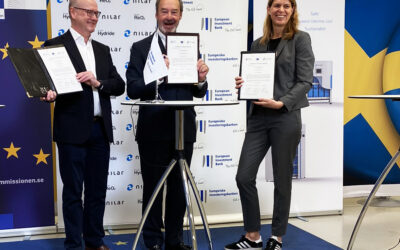
Nilar, a Sweden-headquartered producer of nickel metal hydride chemistry batteries aimed to compete with lithium-ion and lead acid, will receive €47 million (US$55.45 million) in funding from the European Investment Bank (EIB).
Batteries, hydrogen and other energy storage should be a “key topic of energy policy,” in the EU, Members of European Parliament (MEP) that worked together on formulating a report into the role of storage in a decarbonised, fair and secure energy system have said.
The company behind what looks set to be Norway’s first gigawatt-scale manufacturing facility for lithium-ion battery cells has secured pre-construction financing of NOK130 million (US$13.85 million) which it said will “enable rapid development” of the plant.
Calls have been made across Europe for recognition and support for the vital role that energy storage can play in decarbonisation, reducing air pollution and contributing to a ‘green recovery’, both through legislation and industry sector activity.