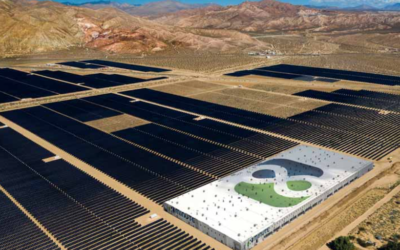
The US Federal Energy Regulatory Commission (FERC) hosted a technical conference on hybrid resources – pairing storage with generation – examining in order to overcome barriers that exist to the otherwise fastest-growing phenomenon of the grid.
While we do acknowledge the challenges faced as a result of COVID-19, we cannot afford to lose sight of the opportunity renewable energy and energy storage solutions, such as the Vanadium Redox Flow Battery (VRFB) present, argues Paul Vollant, Director of Sales and Trading at vanadium supplier Largo Resources.
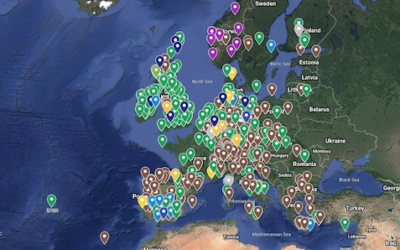
France, Italy, Spain and Belgium are among the regions of most interest for energy storage stakeholders in Europe, analysis firm Clean Horizon has told Energy-Storage.news.
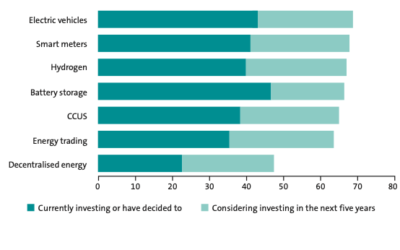
A survey of over 2,000 “senior business leaders” in G20 countries has found that electric vehicles and battery storage are the most popular assets to invest in among non-power generation technologies in the energy sector.
Dimitrios Pappas, analyst at new energy consultancy Delta-EE, considers the impact the novel coronavirus (COVID-19) could have on the energy transition, particularly for batteries used in EVs and ESS, while Energy-Storage.news editor Andy Colthorpe adds his own take.
For Japan, the famous 4Ds of the energy transition – creating a distributed, decarbonised, decentralised and digitised grid – will involve a huge scaling up of smart solutions on a market basis, various sources have told Energy-Storage.news.
EU decision-makers have recognised the key role energy storage can play, integrating it into the EU’s Clean Energy Package (CEP) in some critically important ways. Valeska Gottke at BVES looks at how Germany’s industry is working towards these same goals.
Plans for what is being billed as “Europe’s largest solar plant” have been put forward in Spain as the UN climate negotiations came to a close in Madrid.