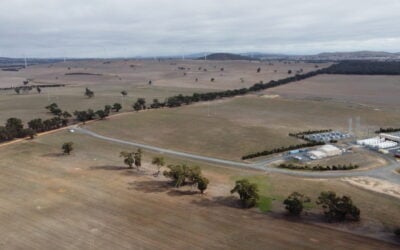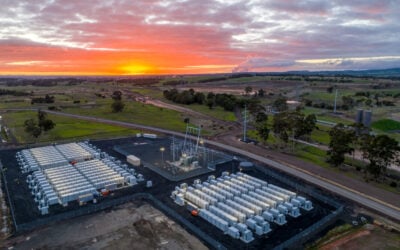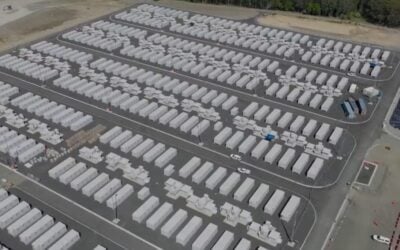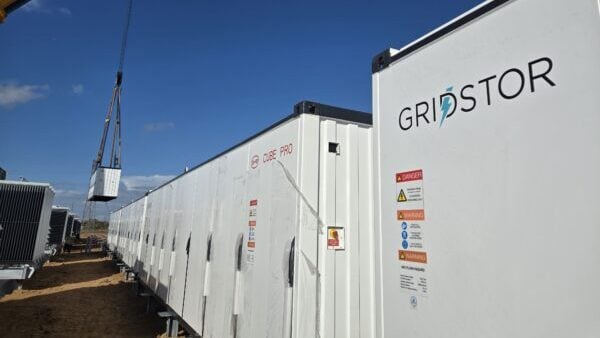
US tax equity syndicator Foss & Company has closed a US$58 million partnership flip transaction to finance an energy storage project in Hidalgo County, Texas, developed by GridStor.
The transaction for the utility-scale battery energy storage system (BESS), which generates Section 48 Investment Tax Credits (ITCs), marks the second deal between Foss & Company and US-based developer-operator GridStor.
The BESS project remains on schedule to be placed in service this month (October).The deal adds another utility-scale BESS to Foss & Company’s growing renewable energy tax equity portfolio.
The Hidalgo County transaction comes amid accelerating activity for both Foss & Company and GridStor across the US.
Try Premium for just $1
- Full premium access for the first month at only $1
- Converts to an annual rate after 30 days unless cancelled
- Cancel anytime during the trial period
Premium Benefits
- Expert industry analysis and interviews
- Digital access to PV Tech Power journal
- Exclusive event discounts
Or get the full Premium subscription right away
Or continue reading this article for free
For Foss & Company, the deal reinforces its continued conviction in utility-scale BESS, a sector the firm moved into quickly following the passage of the Inflation Reduction Act (IRA).
Speaking to Energy-Storage.news Premium in July, Bryen Alperin, managing director, and Sophie Brkovic, vice president of energy & infrastructure project finance at Foss & Company, explained that the firm has historically entered emerging technologies as they mature, with standalone BESS marking one of its earliest post-IRA moves.
That same month, Foss & Company closed its first microgrid transaction—a US$30 million Section 48 tax equity investment in a solar-plus-storage microgrid developed by energy-as-a-service provider AlphaStruxure in Montgomery County, Maryland.
Alperin noted at the time that the firm typically transacts in the US$20 million-and-above tax credit range, with BESS offering portfolio diversification benefits alongside solar, given its relative resilience to weather-related risks such as hail and windstorms.
“We’re looking now at expanding that beyond what was primarily solar into other technologies,” Alperin said. “Obviously, there’s a lot of energy storage that’s going to get built in this country.”
For GridStor, the Hidalgo County financing follows a separate, larger deal in Arizona. On 21 September, the company closed a US$220 million tax equity bridge, construction, and term debt financing agreement to complete its 100MW/400MWh White Tank BESS project.
GridStor acquired White Tank from Strata Clean Energy in September 2025, with the project originally awarded through Arizona Public Service’s (APS) 2023 all-source request for proposals. White Tank will operate under a 20-year tolling agreement with APS and is expected to enter service in the first half of 2027.
The White Tank deal also followed GridStor’s acquisition of the 199MW/796MWh Birdseye BESS project in Adams County, Colorado, from developer Accelergen in May—the company’s fifth acquisition in 18 months.