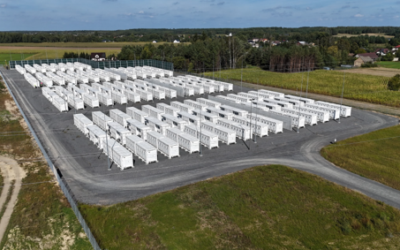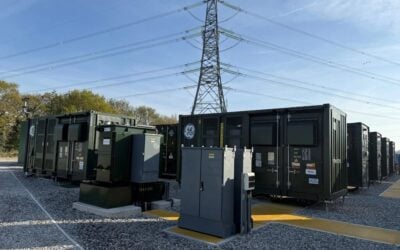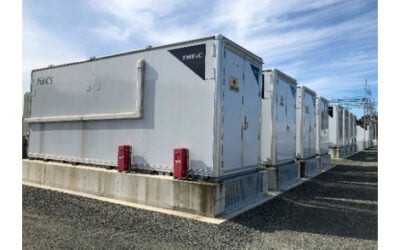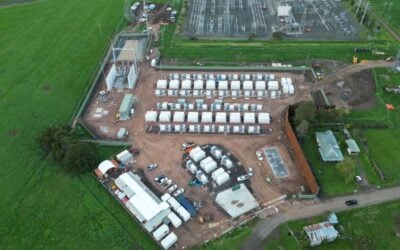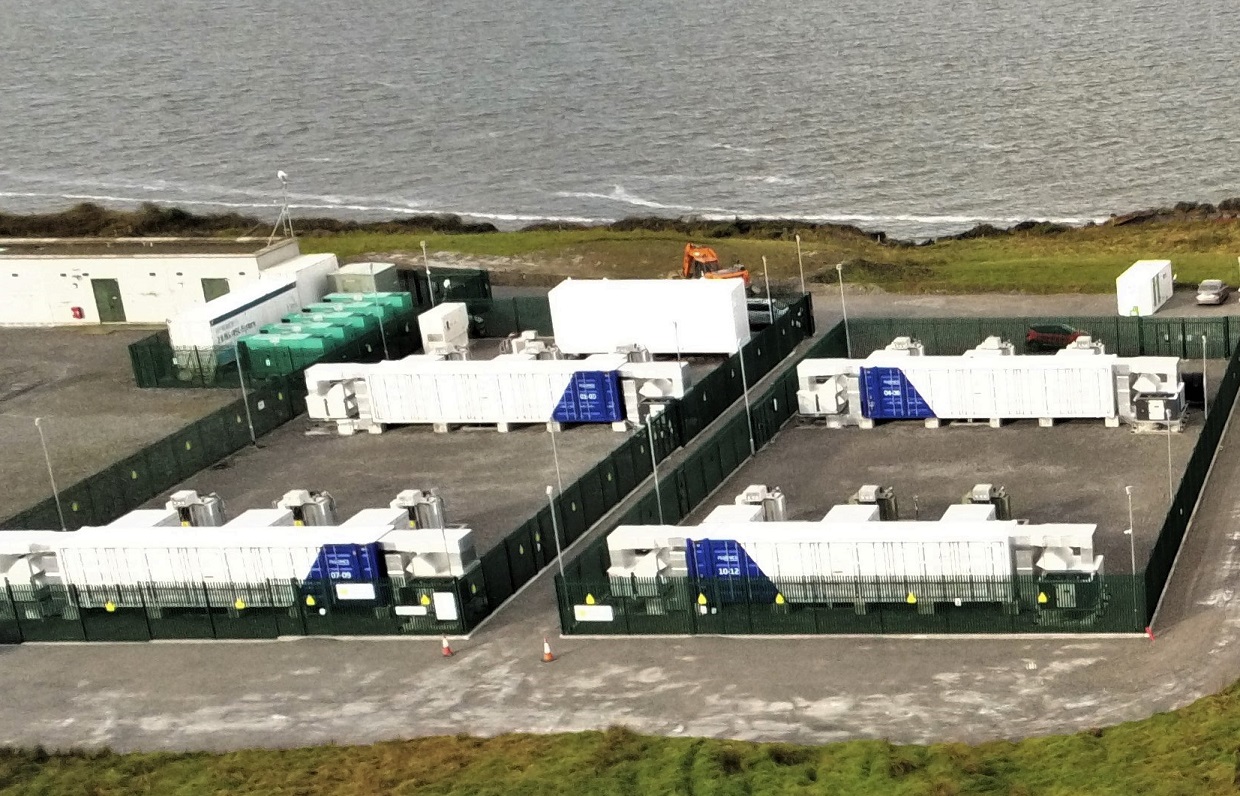
Norwegian utility Statkraft has completed the construction of its second large-scale battery storage project in the Republic of Ireland.
The 26MW Kelwin-2 installation is located in Tarbert, County Kerry, and will be used to respond instantly to the electrical frequency fluctuations that result from increasing amounts of intermittent power generation.
Statkraft has entered a contract with grid operator EirGrid and has started providing reserves to the national electricity grid in the event of a sudden drop-off in supply.
Similar to the utility’s 11MW Kilathmoy battery project, which began operations last year, Kelwin-2’s battery storage system shares a grid connection with a wind farm.
Try Premium for just $1
- Full premium access for the first month at only $1
- Converts to an annual rate after 30 days unless cancelled
- Cancel anytime during the trial period
Premium Benefits
- Expert industry analysis and interviews
- Digital access to PV Tech Power journal
- Exclusive event discounts
Or get the full Premium subscription right away
Or continue reading this article for free
During three grid capacity alerts in January, the Kilathmoy battery was able to generate power in critical periods to support the grid, according to Statkraft Ireland’s managing director Kevin O’Donovan.
“On numerous occasions over the past year, the unit has also responded to short-term frequency drops to inject electricity into the national grid in a fraction of one second,” he said. “Irish batteries are providing the fastest active power reserves responses anywhere in the world today.”
Alongside its own storage installations, Statkraft recently revealed plans to provide market access and trading optimisation for battery assets being developed in Ireland by German utility RWE. The assets, totalling more than 68MW of capacity, will provide rapid frequency response and reserves to the national electricity grid.
A similar deal announced last month will see Statkraft provide market access and optimisation services for 100MW of battery energy storage projects in Northern Ireland on behalf of Gore Street Energy Storage Fund and asset management company Low Carbon. As well as providing rapid frequency response, the projects will have the ability to trade in the wholesale energy markets, using Statkraft’s automated trading platform, UNITY.
This article first appeared on Solar Power Portal.