
We catch up with James Mills, managing director of UK BESS investor Adaptogen Capital, about UK market dynamics, its expansion into Europe, and BESS capex in 2026 and beyond.
Balancing mechanism using batteries more
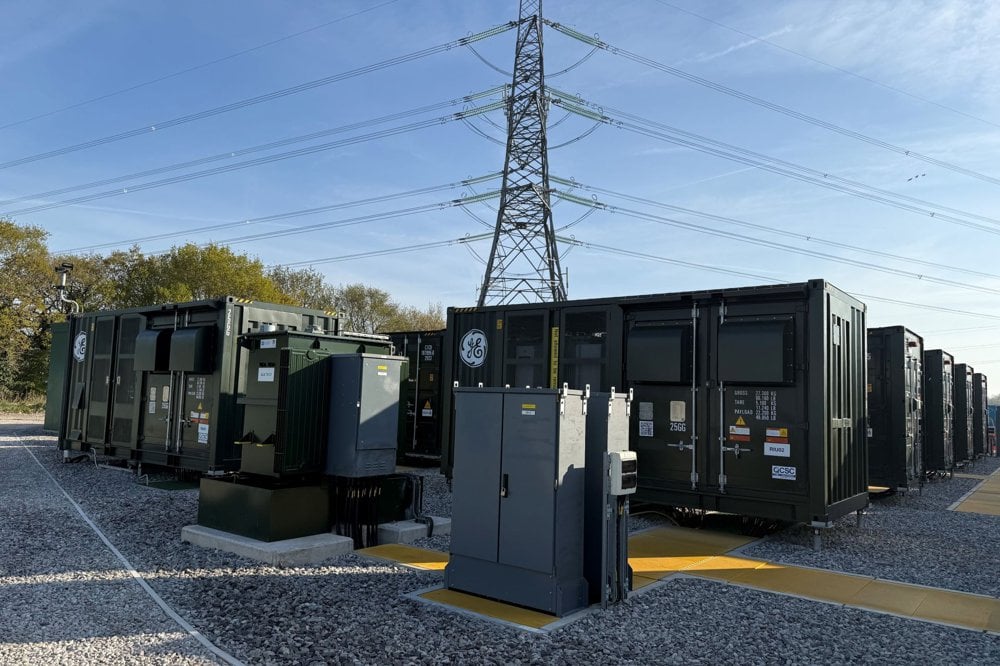
Adaptogen-owned battery energy storage system (BESS) platform Varco Energy has two large-scale operational projects in the UK: the Native River and Sizing John projects, both 2.4-hour, 57MW/138MWh systems near Liverpool.
It is deploying other projects with a capital investment of £250 million (US$340 million), which includes an augmentation of Sizing John that will increase its capacity by 40-45%.
The company has focused on constrained parts of the electricity network in demand centres, with a long term view that the system constraints that are currently being seen around Scotland will come down to England.
Try Premium for just $1
- Full premium access for the first month at only $1
- Converts to an annual rate after 30 days unless cancelled
- Cancel anytime during the trial period
Premium Benefits
- Expert industry analysis and interviews
- Digital access to PV Tech Power journal
- Exclusive event discounts
Or get the full Premium subscription right away
Or continue reading this article for free
The balancing mechanism (BM) is effectively the only way that location is rewarded in the UK, and the BESS industry had challenges penetrating the market initially, as we covered previously. That has changed, Mills says.

“We really are starting to see batteries being used in the BM,” Mills says. “There’s still a long way to go but the use of SOC datasets and LDES instructions by NESO (National Energy System Operator) is an important moment, to hopefully increase the market share of BESS in the BM.”
“In the interim we are seeing at a micro daily level that NESO is using batteries more and more in the BM, and we are clearly able to offer good flexibility to the system. And that’s happening in a digitised, more algorithmic, optimised way on both sides.”
While the revenue environment in the UK is currently still “tough”, longer-duration high-cycling BM-focused systems are beginning to show good revenue correlation with higher renewable penetration, Mills says. Varco’s 2.4-hour systems would qualify as this, considering most systems in the UK are 1- or 2-hours.
Mills spoke to us on the evolution of BESS asset management in late 2025 around the time of the Battery Asset Management Summit UK & Ireland event, put on by our publisher Solar Media.
Locational value of BESS in UK
Mills also has interesting views on locational value of BESS in the UK. He appears to have been a proponent of locational pricing in the UK, a long discussed reform that was ultimately rejected by the government last year. He says eventually the system will have to reward location whether the industry likes it or not.
“You do need economically efficient price signals, or economic signals in the green grid of the future based on location. And we can’t get away from the fact that renewable generation in far north of Scotland, a long long away from core demand, is less valuable to the system,” he says.
“My personal view on the policy question is, is we we have to accept that some renewable generation is worth less than others, and if we keep trying to hide that fact we will create more and more inefficiencies in the system for consumers, and I think that will undermine the the operation of the system.”
There is value to having storage assets at both ends of constraints, he adds. Some of the most notable and largest BESS projects are being built in Scotland, at the generation end of that constraint, while Varco has targeted the demand end. Though Mills concedes: “Right now, we’re not yet seeing the UK demand side locational value appearing strongly.”
European expansion
Mills says that European markets are two to five years’ behind the UK, CAISO and ERCOT in terms of the scale and regulatory treatment of BESS, but the policy and macroeconomic winds are changing direction quickly. The continent is now realising it needs to become more self-reliant, and is acknowledging renewable energy and energy storage as core national infrastructure.
Like many UK early-movers, Adaptogen is turning its focus towards those less tapped European markets, initially starting with Belgium, Germany and Portugal. This year and next year it will be raising capital in new EU markets and Mills reckons it could deploy about half a billion euros of capital into BESS projects there.
The EU market is a bit different in that banks are a bit more conservative and require structured revenue models to de-risk projects, and the equity is often supplied by the pension and infrastructure funds, whereas the UK was driven in large by stock market listed BESS funds like HEIT, GSF and GRID.
The first move will be to raise about €300 million (US$350 million) to fund the first four projects across Belgium and Germany.
BESS capex
One topic that has come up this year is a potential slowing or stopping entirely of BESS capex declines seen in the past few years, with lithium carbonate price spikes and China’s removal of the VAT export rebate driving inflationary pressure.
“The capex declines at a system level are moderating here (in the UK),” Mills says in response to our question on this.
“Several factors are causing inflationary pressure on BESS capex. There’s lithium carbonate, but more interesting is inflation around balance of plant, copper cables, transformers, civil engineering. Those areas are seeing inflationary forces, and we haven’t seen the impact of the recent macro and geopolitical instability.
“We may be at a point in time where best capex stops falling, certainly as aggressively as it has over the last three years, and maybe run sideways at a total system cost level for a couple of years.”
