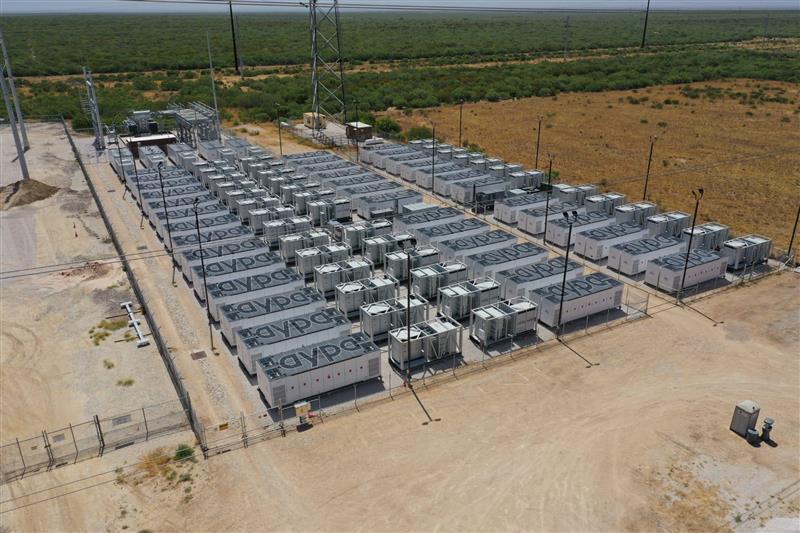
Norges Bank Investment Management (NBIM), the asset management unit of the central bank of Norway, has acquired a 10% interest in North American battery storage developer-operator Aypa Power.
Announced 4 November, NBIM paid US$300 million for the 10% interest. This is in addition to its existing indirect investment in Aypa Power through Brookfield’s Global Transition Fund (BGTF) strategy.
On 22 July, Brookfield agreed to acquire the battery energy storage system (BESS) developer-operator at an enterprise value of approximately US$7 billion.
Brookfield will acquire Aypa’s operational, under-construction, and contracted BESS projects, as well as its development pipeline. The asset management firm said Aypa’s 6.5GW portfolio and pipeline exceeding 20GW make it North America’s largest standalone BESS development platform.
Try Premium for just $1
- Full premium access for the first month at only $1
- Converts to an annual rate after 30 days unless cancelled
- Cancel anytime during the trial period
Premium Benefits
- Expert industry analysis and interviews
- Digital access to PV Tech Power journal
- Exclusive event discounts
Or get the full Premium subscription right away
Or continue reading this article for free
Aypa’s operating and under-construction portfolio is 95% contracted long-term, with an average 17-year term, which Brookfield said provides resilient cash flows. The new owner will work with Aypa to accelerate pipeline development.
Blackstone has owned Aypa since 2020, when it was called NRStor C&I, a subsidiary of Toronto-based energy storage developer NRStor. NRStor later became a joint development partner in Oneida Energy Storage, Canada’s largest BESS project with a capacity of 250MW/1,000MWh.
NBIM follows other sovereign wealth funds in investing in BESS around the world, including Samruk-Kazyna, the sovereign wealth fund for Kazakhstan, which entered into an agreement in May 2025 with the United Arab Emirates (UAE)-owned renewables company Masdar.
The UK’s National Wealth Fund (NWF) has committed investments to BESS developer Fidra Energy, which was established by institutional energy investment firm EIG in 2024.
These developments suggest sovereign funds see BESS as stable long-term investments, akin to infrastructure with predictable, bond-like cash flows.
Aypa’s 95% contracted portfolio and 17-year average terms indicate that investors view BESS as established power infrastructure, such as toll roads and pipelines—not as a speculative technology. This signals market maturity.
A US$7 billion deal for a standalone BESS platform, alongside a second investor’s stake in the same asset, marks a change from fragmented, project-by-project ownership to large, institutionally backed platforms.