Renewable energy company Masdar and a sovereign wealth fund for Kazakhstan will collaborate on a ‘baseload’ project and battery energy storage systems (BESS).
Masdar, state-owned by the United Arab Emirates (UAE) and headquartered in the capital, Abu Dhabi, announced this week (13 May) that an agreement has been signed with Samruk-Kazyna, which invests in or owns many of the major companies in Kazakhstan.
Taking place during an official visit to the Central Asian country by Abu Dhabi Crown Prince Sheikh Khaled bin Mohamed bin Zayed Al Nahyan, at a ceremony also attended by the President of the Republic of Kazakhstan Kassym-Jomart Tokayev, the two parties will explore the potential for a large-scale project which delivers renewably generated electricity on a 24/7 basis.
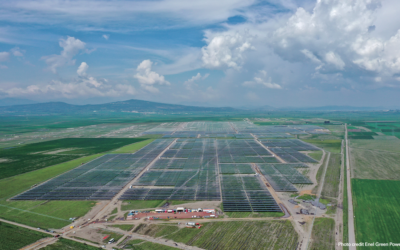
The project would provide up to 500MW of power and presumably require sufficient quantities of energy storage to make the solar PV, wind, or other renewable energy sources dispatchable through day and night.
Try Premium for just $1
- Full premium access for the first month at only $1
- Converts to an annual rate after 30 days unless cancelled
- Cancel anytime during the trial period
Premium Benefits
- Expert industry analysis and interviews
- Digital access to PV Tech Power journal
- Exclusive event discounts
Or get the full Premium subscription right away
Or continue reading this article for free
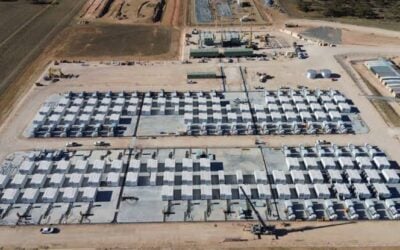
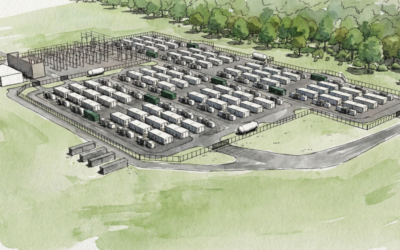
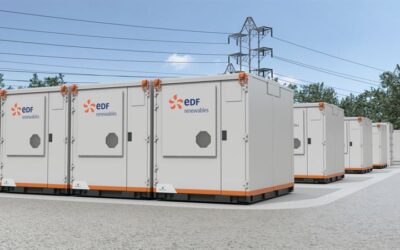
In addition, the two parties agreed to explore the development of 2GW of battery storage at an unspecified number of projects.
The ceremony also saw Masdar and the Kazakh government ratify the agreement for a 1GW wind power project featuring a 600MWh BESS that the Emirati company has been developing in the country.
Samruk-Kazyna CEO Nurlan Zhakupov said the agreement with leading international players such as Masdar is aligned with president Tokayev’s policy goal for Kazakhstan to achieve carbon neutrality by 2060.
“This agreement represents a step forward toward increasing the share of renewable energy in Kazakhstan’s energy mix, using advanced technologies to support a more sustainable and resilient energy future,” Zhakupov said.
Kazakhstan energy transition attracts partnerships, investment
Kazakhstan is aiming to source 15% of its power from renewable sources by 2030 and 50% by 2050.
In 2023, Samruk-Kazyna signed a deal with another Middle Eastern developer, ACWA Power, for a gigawatt-scale wind power plant that, like the Masdar project, would also include battery storage. At the time of that announcement, ACWA Power said it would invest an initial US$1.5 billion in its entry into the Kazakh market.
ACWA Power and Masdar have both also signed similar renewable energy and BESS development agreements with state entities in neighbouring Uzbekistan.
Samruk-Kazyna is also holding an equity stake in another 1GW wind plant with a 600MWh, in development by Total Eren, the regional subsidiary of French energy major TotalEnergies.
Total Eren’s Mirny plant will sell electricity to the government-owned Financial Settlement Center of Renewable Energy after the June 2023 signing of a power purchase agreement (PPA). According to the French company, Mirny will require around US$1.4 billion investment.
More recently, in January, Chinese wind turbine, battery storage and digital energy solutions provider Envision announced the construction of wind turbine and BESS factories in Kazakhstan with annual production outputs of 2GW and 1GWh, respectively.
In January, Masdar said it is developing what could be the world’s biggest solar PV-plus-storage project to date, in Abu Dhabi, planned to include 5.2GW of solar PV generation and 19GWh of battery storage.