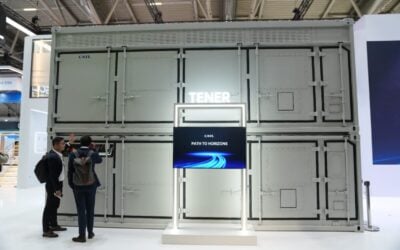
The programme is designed to establish a technological foundation to consolidate lead batteries as the leading technology in the rechargeable battery market. Credit: ALABC
The Advanced Lead Acid Battery Consortium (ALABC) has set out a three-year research programme to improve the performance of lead batteries in energy storage and electric vehicles. It has called for investment of up to US$2 million per year from governments and research agencies to fund its studies, which will run through 2018.
The programme is designed to establish a technological foundation to consolidate lead batteries as the leading technology in the rechargeable battery market. Sales of lead batteries reached US$43 billion in 2013, representing 68% of total market sales, said ALABC. However, lithium-ion batteries are the chemistry in both the energy storage and electric vehicle markets.
“The market for energy storage is expected to continue to grow, based on continued investment in telecoms, data networks and general economic growth. Advances in lead batteries would therefore be expected to meet the requirements of these applications, whilst also taking the market share in some niche applications,” said ALABC in a statement.
“Improved technical performance of lead batteries would also be expected to continue and expand markets such as civil and defence applications, e-bikes, motorcycles and scooters.”
Try Premium for just $1
- Full premium access for the first month at only $1
- Converts to an annual rate after 30 days unless cancelled
- Cancel anytime during the trial period
Premium Benefits
- Expert industry analysis and interviews
- Digital access to PV Tech Power journal
- Exclusive event discounts
Or get the full Premium subscription right away
Or continue reading this article for free
As it stands, lead batteries are unsuited for both energy storage and electric vehicle markets, which require batteries to have extended periods when they are under-charged. Unlike lithium ion batteries, lead batteries have relatively low charge acceptance, or dynamic charge acceptance (DCA), precluding them from providing ‘start-stop’ functionality.
However, ALABC said: “Given the low-cost, excellent recycling and proven safety of lead batteries compared to alternative technologies, even a modest improvement in DCA performance and stability through the life of the battery would contribute to making lead batteries the most attractive option.”
At the same time, ALABC notes the requirements of these sectors are moving at such a pace that there is a risk lithium-ion technology will be adopted, either as the sole battery or as part of a dual-battery solution.
ALABC said improvements in the performance and lifecycle of lead batteries, which have been traditional strengths, should not compromise their other benefits, notably their status as a safe, low cost, recyclable battery alternative. It noted previous work has resulted in increased DCA, but also increased gassing and water loss, poorer performance at high and low temperatures, and charging and corrosion issues.
ALABC said: “The work should also be aimed at industrial batteries, especially for renewable and utility energy storage, to improve the lifetime in applications where the charging regime puts a higher stress level on batteries.
ALABC observes two future scenarios for the lead market, where it either consolidates its position as leader, or else loses share to lithium-ion solutions, and contracts in the long term.