Lithium-ion (Li-ion) battery cathode material producer Nano One has reaffirmed its strategy for addressing growing demand for lithium iron phosphate (LFP) cathode active materials outside China, focusing on a licensing-based approach through regional development company partnerships.
The Vancouver, Canada-based company plans to license its One-Pot process technology into regional markets through localised development companies (DevCos) designed to establish partnerships and build industrial-scale operations using a capital-light structure.
Nano One cites research firm Benchmark Mineral Intelligence stating that LFP chemistries represented approximately 60% of global Li-ion battery cell demand in 2025—roughly 1TWh—with annual demand outside China forecast to reach 2.1TWh by 2035.
This would require the equivalent of approximately 168 new LFP cathode plants with 25,000 tonne-per-annum-capacity each, according to the company.
Try Premium for just $1
- Full premium access for the first month at only $1
- Converts to an annual rate after 30 days unless cancelled
- Cancel anytime during the trial period
Premium Benefits
- Expert industry analysis and interviews
- Digital access to PV Tech Power journal
- Exclusive event discounts
Or get the full Premium subscription right away
Or continue reading this article for free
LFP dominates battery energy storage system (BESS) applications, accounting for more than 90% of installations, with North American growth led by grid and AI data centre storage. European demand is primarily driven by battery electric vehicles (EVs), with EV registrations across 17 European markets growing 33.7% in the first half of 2026.
The addressable LFP market outside China is estimated at approximately US$8-10 billion annually in 2026, forecast to grow to approximately US$40 billion annually by 2035.
Nano One also noted that government policy is increasingly supporting localised production. In the US, the National Defense Authorisation Act (NDAA) has placed restrictions on batteries from prohibited foreign entities (PFEs) starting in 2028, whilst maintaining the 45X manufacturing credit at US$35/kWh. The European Union and G7 have committed to diversified regional battery supply chains.
The International Energy Agency (IEA) has warned that Chinese export controls announced in October 2025 put downstream cell production capacity outside China at risk.
Nano One’s One-Pot process produces cathode materials directly from non-sulphate metals or oxides feedstock, bypassing the need for China-dominated precursor cathode active materials. The company claims that the technology also eliminates certain byproduct waste streams, potentially simplifying permitting processes.
For each target market, Nano One plans to establish or participate in DevCos—joint-venture-style entities created to advance development, finance, build and potentially operate LFP cathode plants. These vehicles are intended to pair Nano One’s technology with regional partners, customers and capital.
Rather than being sole shareholder of a project, Nano One aims to contribute technology, engineering and services whilst consortium partners contribute construction capital and offtake. Each plant would be financed on its own merits under this model.
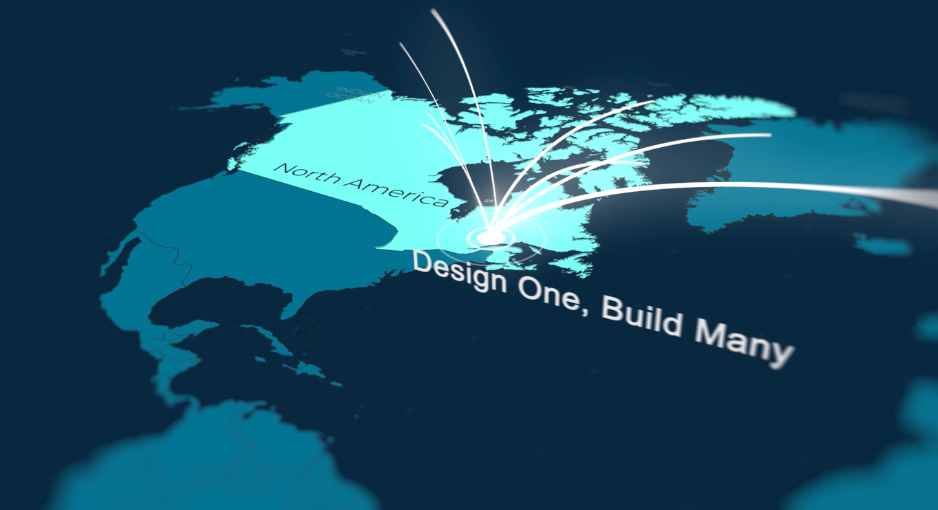
Under its Design One Build Many strategy, the company intends to license its One-Pot process technology through flexible adoption paths matched to customer needs. Nano One aims to earn licensing fees and royalties, complemented by support services across the plant lifecycle, from pre-final investment decision development through construction, commissioning, ramp-up and ongoing operations and maintenance.
The company is also monitoring emerging technologies such as sodium-ion (Na-ion) chemistries with a view to potentially leverage its supply chain experience in feedstock pre-qualification and circularity, including recycling.
On 23 July 2026, the company announced that detailed engineering on the Candiac capacity expansion was 85% complete, with commissioning of the expanded approximately 800 tonne-per-annum-production line currently targeted for the first half of 2027. The existing approximately 200 tonne-per-annum pilot line is supporting customer sampling and product qualification.
Small-volume commercial supply discussions are ongoing with defence and energy storage customers, with initial commercial agreements targeted for the end of 2026.
Nano One expects to provide further updates on progress in the coming months, including updates on supply chain qualification initiatives and the establishment of DevCo vehicles.
Samsung SDI
In March, South Korean battery and electronics materials manufacturer Samsung SDI signed a mid- to long-term supply agreement with L&F, a Korean battery materials manufacturer, for cathode materials used in LFP batteries.
Under that agreement, Samsung SDI will receive cathode materials worth approximately KRW1.6 trillion (US$1.15 billion) over three years starting 2027.
The LFP cathode materials will be used to manufacture ESS batteries at StarPlus Energy (SPE), its joint venture with Stellantis located in Indiana, US.
SPE has been gradually converting part of its production lines from EV batteries to ESS batteries since the Q4 of last year. Earlier this month, the company stated that it is on track to begin LFP battery cell production in Q3 of this year.