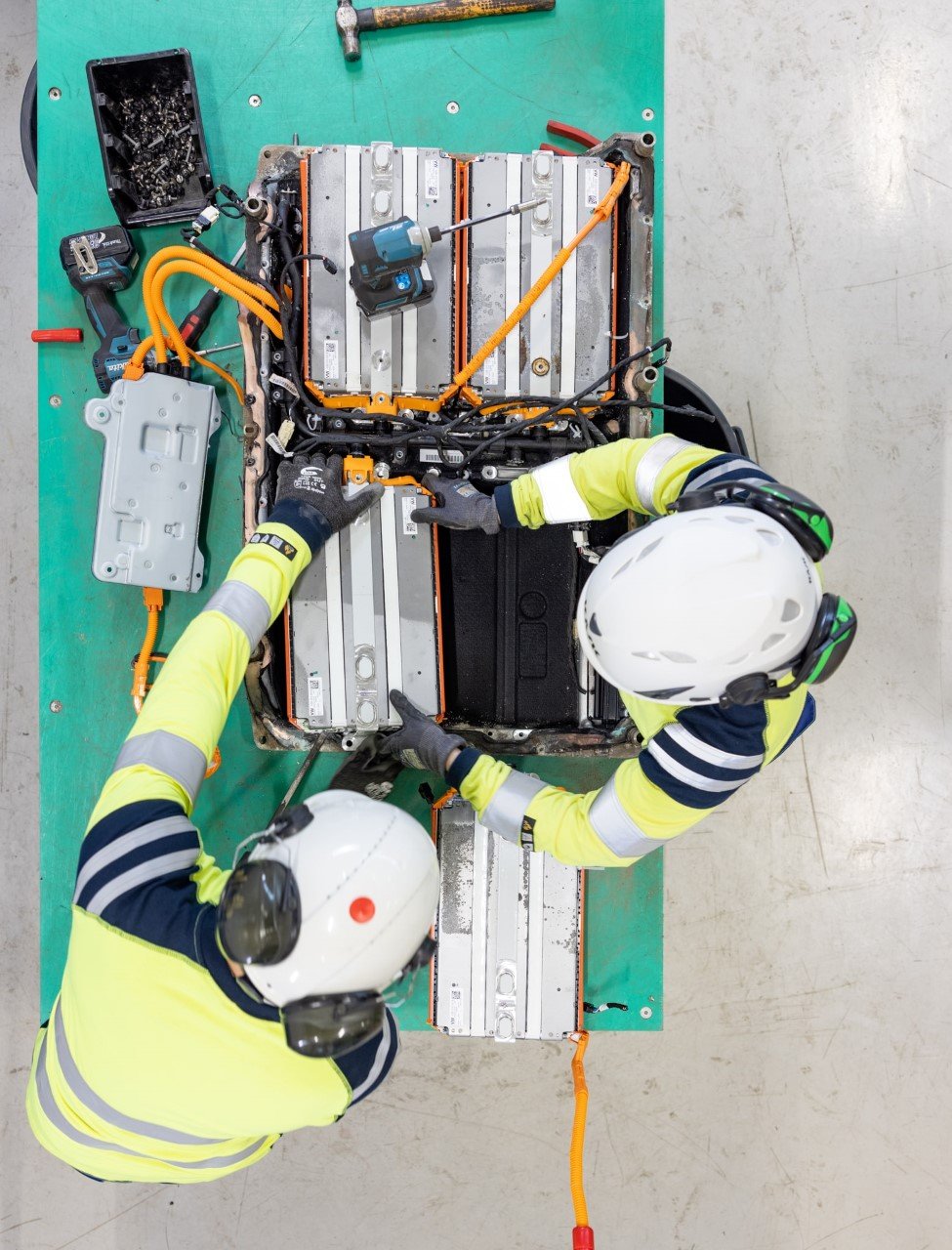
The stationary energy storage system (ESS) industry will be a significant source of lithium-ion batteries that can be recycled and reused, the head of Finnish state-owned energy company Fortum’s battery business line has said.
Fortum has just announced a €24 million (US$28.55 million) investment into expanding a battery materials recycling plant that it has in Harjavalta, Finland. The expansion will add facilities capable of recovering lithium-ion, nickel, cobalt and manganese from used batteries through a hydrometallurgical process. The group hopes to have the plant open in 2023, adding to existing capacity at Harjavalta and also a mechanical recycling facility in the Finnish town of Ikaalinen.
While the company emphasised in a press release that it will be recycling electric vehicle (EV) batteries at the facility, battery energy storage systems (BESS) will also have a role to play in the market for recycling and reuse of battery ingredients, Fortum’s Tero Holländer told Energy-Storage.news.
“It is forecasted that the largest volumes for recycling will come from the EV segment, but we do expect the share of batteries from ESS to be significant,” he said.
Try Premium for just $1
- Full premium access for the first month at only $1
- Converts to an annual rate after 30 days unless cancelled
- Cancel anytime during the trial period
Premium Benefits
- Expert industry analysis and interviews
- Digital access to PV Tech Power journal
- Exclusive event discounts
Or get the full Premium subscription right away
Or continue reading this article for free
“We recognise it is very important that all lithium-ion batteries, once they can no longer be used, are recycled back into raw materials. This will enable the transition to clean energy and the growth of e-mobility.”
Holländer claimed that Fortum’s technology can recycle both EV and ESS batteries and is aiming to produced battery chemicals that can be used in new batteries, sustainably. The Harjavalta plant will recover scarce and critical metals from old batteries and recycle various waste fractions from throughout the battery supply chain. Fortum is keen to recycle all types of available industrial-sized batteries, he said.
Energy-Storage.news first reported on Fortum’s battery recycling processes back in March 2019. The company claims up to 80% of a battery device can be recycled and the CO2 production of batteries could be reduced by as much as 90% through extensive use of recycled materials. Fortum’s hydrometallurgical processes create so-called ‘black mass’, a sludgy mixture of lithium and other materials that can be separated out and reused.
Fortum is active in a wide range of areas from building district heating networks to decommissioning nuclear power plants, and has already built a couple of grid-scale battery storage systems in Finland, include the memorably-named 1MWh ‘Batcave’ project, commissioned back in 2017 and a project pairing a hydroelectric power plant with 6.2MW of battery storage. In May the company got export permits to be allowed to send EV batteries from Norway and Sweden to Finland for recycling. Its recycling ambitions have also been financially supported by the Finnish government through being awarded IPCEI (Important Project of Common European Interest) status, which was administered via the European Commission’s European Battery Innovation project.
On a national level, Finland launched National Battery Strategy 2025 in January, a plan to put the country firmly on the map in terms of battery manufacturing, with BloombergNEF analyst James Frith commenting at the time that Finland is in a “great position to develop a battery supply chain” due to its access to raw materials, refining capacity and green electricity infrastructure. Fortum’s recycling cluster of facilities in Hjarlavalta was prominently mentioned as the strategy was unveiled.
It won’t be the only major Nordic recycler of lithium-ion batteries — Hydrovolt, a joint venture (JV) formed by Swedish lithium battery manufacturing startup Northvolt and Norwegian materials processing company Hydro is set to open a plant in Norway this year capable of processing more than 8,000 tonnes of EV battery modules annually.
Other recent battery industry recycling developments around the world include the recent stock market listing for Canada-headquartered commercial recycler Li-Cycle. Li-Cycle earlier this month said that it is also working on the recycling of ESS battery equipment, with the company’s chief commercial officer Kunal Phalpher making similar comments to Energy-Storage.news as Fortum’s Tero Holländer on the likeliness of stationary storage systems playing a big role in the recycled battery space.
Redwood Materials, a recycling and reuse company started and led by former longtime Tesla CTO JB Straubel, is investing several hundred million dollars on expanding its footprint in Nevada, Straubel said in an online event hosted by the US Department of Energy last week. Straubel noted that lithium battery recycling is already economically competitive today — recycled materials can compete with the prices of mined materials, he said. The event Straubel appeared at was hosted by the DoE as part of nascent attempts by the US government to support the kickstart of a lithium-ion battery value chain within the US, with the country heavily dependent on imports for much of that value chain at present.