A recycling process for lithium-ion batteries already up and running, by Finnish state-owned energy services company Fortum could make dramatic reductions in their environmental footprint, the company has said.
Using a hydrometallurgical process Fortum said it is able to recycle up to 80% of a device, with its efforts focussed primarily on high energy density NMC batteries of the type used in electric vehicles (EVs). After removing plastics, copper and aluminium to be recycled by more conventional methods, a sludgy mixture of lithium, manganese and cobalt is left behind in what is known as a ‘black mass’.
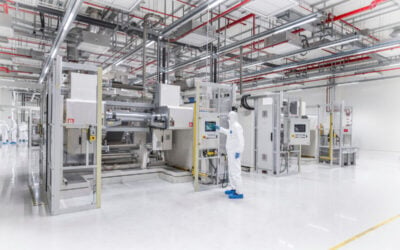
Fortum claimed it has developed a unique process for recovering these precious materials, which it has already implemented “on an industrial scale” at a facility in Harjavalta, Finland. Start-up Crisolteq developed the technology for Fortum.
Fortum is also piloting the repurposing of EV batteries for stationary storage applications. Makers of many stationary storage systems – particularly in the residential space – tend to favour lithium-iron phosphate (LFP) battery chemistry, which have less energy density than NMC, but also do not carry the risk of thermal runaway, or use cobalt in their production.
Try Premium for just $1
- Full premium access for the first month at only $1
- Converts to an annual rate after 30 days unless cancelled
- Cancel anytime during the trial period
Premium Benefits
- Expert industry analysis and interviews
- Digital access to PV Tech Power journal
- Exclusive event discounts
Or get the full Premium subscription right away
Or continue reading this article for free
Companies that favour LFP cells are also not tied to the demand and supply chain for EVs, with some stationary storage companies that do use NMC experiencing shortages last year, according to various sources. Nonetheless, there is often an upfront cost advantage for NMC cells, particularly if they can be reused in their ‘second life’, after an initial ‘lifetime’ of use on the road.
After the Batcave
The news was announced as BloombergNEF teased details of its latest levelled cost of energy (LCOE) reports, which state that the LCOE for lithium-ion batteries has fallen 35% since the first quarter of 2018 to US$187 per MWh. Fortum also called for higher targets for recycling to be set by policy, with the EU currently only requiring 50% eventual recycling of the weight of a battery. The company claimed that use of recycled materials could enable as much as a 90% reduction in the carbon emissions of battery production.
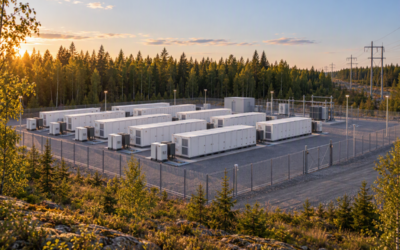
Fortum is also behind the Nordic region’s largest energy storage projects involving batteries to date, announcing a 6.2MWh system to be deployed at a hydropower plant in Sweden in November. It follows the successful commissioning in March 2017 of the 1MWh ‘Batcave’ frequency regulation project in Järvenpää, Finland.