From the Midwest to New York, local and state governments are introducing new zoning rules and restrictions on BESS and data centre projects.
Virginia approves BESS ordinance
On 13 October, the Board of Supervisors (BoS) in Washington County, Virginia approved a battery energy storage system (BESS) ordinance restricting where facilities can be placed.
The BoS requested a Virginia code pertaining to zoning ordinances for BESS be re-codified to “include purpose, applicability, restrictions and requirements on BESS.”
The restriction primarily applies to tier 2 BESS with a capacity greater than 600kWh, more likely to be used in data centre projects.
Try Premium for just $1
- Full premium access for the first month at only $1
- Converts to an annual rate after 30 days unless cancelled
- Cancel anytime during the trial period
Premium Benefits
- Expert industry analysis and interviews
- Digital access to PV Tech Power journal
- Exclusive event discounts
Or get the full Premium subscription right away
Or continue reading this article for free
As a result, BESS projects will only be permitted in manufacturing zones and projects that begin with without approval will be halted.
Notably, Virginia is home to the largest concentration of data centres in the world and in January legislation was introduced to promote investment in BESS.
BESS and data centre restrictions on Kansas ballots
Emporia, Kansas voters are deciding on two ballot questions involving restrictions on data centres and certain BESS on 3 November.
As reported by local news outlet The Emporia Gazette, the proposals appear as Question No. 2 and Question No. 3. Question No. 2 asks voters to decide on prohibiting the construction, installation, operation and maintenance of data centres throughout Emporia’s zoning districts.
Question No. 3 asks about prohibiting the construction, installation, operation and maintenance of Tier 2 and Tier 3 BESS throughout the city’s zoning districts.
The two proposals would not immediately take effect as the Emporia City Commission would have to address legal questions concerning the proposals, and notably, as The Emporia Gazette observed, they refer to a nonexistent provision in current city regulations.
Because of this, it is unclear how penalties would be enforced if the measures were approved in the election.
In 2025, a 2.5 year ban was placed on BESS facilities by officials in Harvey County, Kansas.
Missouri approves new zoning requirements
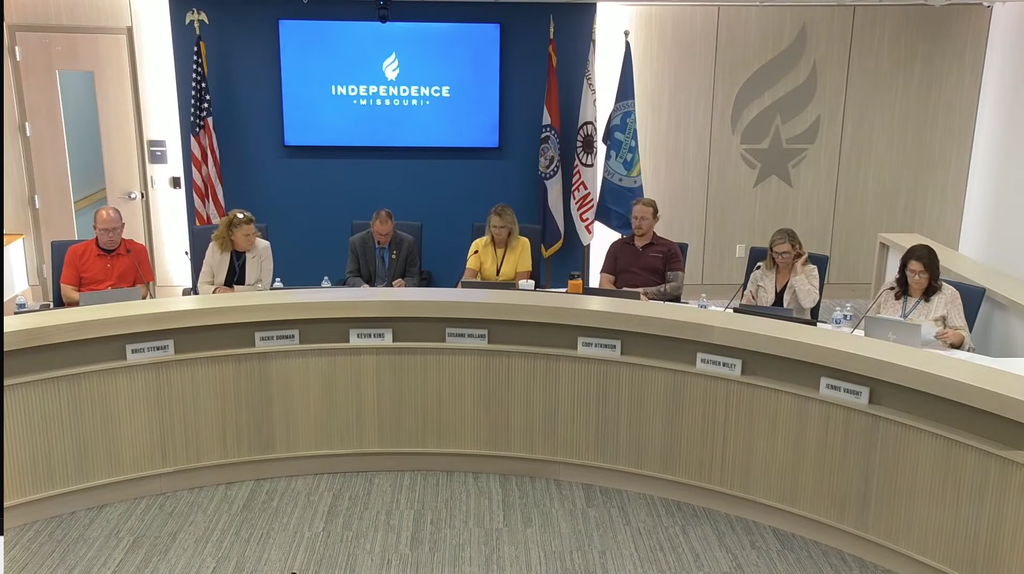
On 5 October, the City Council of Independence, Missouri approved new zoning requirement for data centres and BESS within the city limits.
This followed a series of actions and conversations concerning data centre and BESS development in the city. In July, Independence approved a 180 day moratorium on BESS and data centre projects within city limits.
This was done after an AI data centre campus from Dutch developer Nebius broke ground in May despite strong opposition from community members.
The latest decision from the City Council places requirements on BESS and data centre developments involving distancing from residences and public spaces, noise-impact assessments, decommissioning plans, and generator compliance reports.
They also require data centres larger than 2.5MW to seek a special use permit from the city.
In September, utility Ameren Missouri updated its integrated resource plan (IRP) outlining a 20-year energy roadmap, including expanding BESS capacity with 2,400MW planned by 2030.
Michigan considers BESS request from NexAmp
On 14 October, Lansing, Michigan’s Zoning Board of Appeals (ZBA) will hear from US solar and storage developer NexAmp and Jerry Smith, LLC about its BESS site plan application.
According the ZBA meeting agenda, NexAmp has applied for an area variance to install a 10-foot acoustical fence around 6 Tesla Megapack battery units in a proposed 5MW/23.5MWh BESS project.
A 10-foot fence is proposed for safety, security, screening, and noise mitigation of the 9-foot, 2-inch-tall units.
NexAmp is stating it needs relief from Town of Lansing Zoning Law § 270-24, Article IV General Provisions, Fences and Walls, where fences and walls up to six feet high are permitted as of right in all zones and in all locations.
In August, South Korean battery giant LG Energy Solution (LG ES) began production at its lithium iron phosphate (LFP) and nickel manganese cobalt (NMC) battery cell factory in Lansing.
Kansas approves zoning regulations
On 13 October, the Custer County BoS, in Kansas, approved zoning regulations for data centres and established a 12-month moratorium on BESS.
According to local news outlet KRVN, The BoS approved Resolution 77Z-26, bringing in Section 7.21 of the county’s zoning rules to govern how data centres are sited, built, run, maintained and eventually decommissioned. The rules cover knock-on effects for farmland, groundwater, noise, lighting, traffic, utilities and emergency response.
Alongside this, supervisors passed Resolution 78Z-26, putting a 12-month freeze on new BESS applications or expansions within the county.
The pause, citing worries over fire safety, emergency response, electrical infrastructure, land use, noise and setbacks, gives officials breathing room to review state and federal rules and liaise with agencies and emergency crews before drafting proper zoning standards.
The new amendments also require community benefit agreements for data centres drawing 10MW or more of peak demand, in line with Nebraska law, with the county retaining discretion to extend this to smaller sites.
These agreements could cover road and infrastructure upgrades, emergency response funding, public safety training, utility mitigation and environmental monitoring.
A data centre will be classed as abandoned once processing operations halt for 12 straight months, though brief spells of testing, maintenance, emergency work or minimal activity won’t break that clock. Once deemed abandoned, a site must be decommissioned and restored to match its surroundings under the approved plan.
Recently in Kansas, thermal energy storage (TES) technology provider Antora Energy announced a 5.8GWh “multi-day” TES project at Pratt Energy’s biorefinery in Pratt.
Kingston, New York, approves BESS task force
On 6 October, the Common Council of Kingston, New York approved the creation of a task force to draft zoning rules pertaining to BESS facilities.
The council sought to add an additional member to the task force, the city’s environmental specialist, or a member who has environmental expertise.
This was unanimously approved. The council is noted that current city regulations were not written with BESS in mind. The task force will take 6 months to create proper regulations for the city.
New York is leading the US in BESS moratoriums and earlier this year, renewables service provider Carina Energy had noted at least 97 moratoriums in place within the state. Westchester County had the highest number of active moratoriums, with Chautauqua County close behind, and Erie County following. Overall, 35 out of New York’s 62 counties currently have at least one active moratorium.
New York Governor Kathy Hochul also enacted a statewide data centre moratorium in July.