Updating the New York Fire Code for battery storage will increase the safety and standardisation of installations in the state, with lessons learned from previous incidents, Energy-Storage.news has heard.
A draft of proposed changes to the Fire Code was published last week (26 July), almost exactly a year on from the formation of the New York State Inter-Agency Fire Safety Working Group by state governor Kathy Hochul, in response to concerns around battery energy storage system (BESS) safety.
The Working Group recommended updates as well as additions to the existing Fire Code of NY (FCNY), adopted in 2020 when battery storage installations were in their nascency. There are also additional considerations that the group put forward for instances where issues identified did not fall into either category.
Among them is that the state should mandate peer reviews for all BESS installations that exceed established capacity thresholds for lithium-ion (Li-ion) batteries, to be paid for by the industry.
Try Premium for just $1
- Full premium access for the first month at only $1
- Converts to an annual rate after 30 days unless cancelled
- Cancel anytime during the trial period
Premium Benefits
- Expert industry analysis and interviews
- Digital access to PV Tech Power journal
- Exclusive event discounts
Or get the full Premium subscription right away
Or continue reading this article for free
It also calls for the availability of staff with knowledge of each BESS installation to respond within 15 minutes to an incident, extended safety signage, central monitoring of fire detection systems, and regular safety inspections, also to be industry-funded.
Meanwhile, every BESS installation should have an Emergency Safety Response Plan in place, and a Fire Code exemption for electric utility-owned or operated projects should be removed, the Working Group said.
More information on the Working Group, including its draft recommendations in full, can be found here.
‘Working diligently to ensure concerns of the fire service, public, and overall industry are accounted for’
The Working Group was led by state agencies Division of Homeland Security and Emergency Services (DHSES), New York State Energy Development and Research Agency (NYSERDA), Office of Fire Prevention and Control (OFPC), New York State Department of Environmental Conservation (DEC), Department of Public Service (DPS), and the Department of State (DOS).
It also consulted with various industry and otherwise interested stakeholders, subject matter experts and organisations.
One of those expert organisations was Energy Safety Response Group (ESRG), which specialises in safety and risk mitigation for energy storage technologies and projects.
ESRG told Energy-Storage.news yesterday that the Working Group “has worked diligently to ensure that the concerns of the fire service, public, and overall industry are accounted for, allowing for continued progress while also bolstering safety.”
“As a contributing member of the Governor’s Interagency Fire Safety Working Group, ESRG is proud to leverage our experience in battery energy storage safety, large-scale fire testing, and emergency response to ensure the greatest level of safety for BESS across the New York State,” the company said.
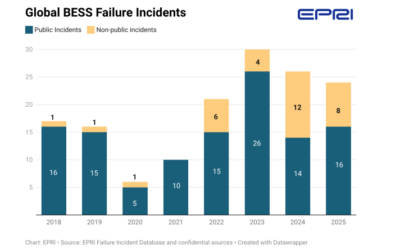
The Working Group was convened after three fires happened in relatively quick succession from March to June in New York’s Jefferson, Orange and Suffolk Counties.
While New York, particularly New York City, already has some of the US’ strictest fire codes, it was deemed necessary to both evaluate the state’s existing installations and prepare for a massive growth in installed capacity: from a couple of hundred megawatts of installations today, New York’s Climate Leadership and Community Protection Act (CLCPA) policy calls for the deployment of 6GW of storage in New York Independent System Operator (NYISO) territory by 2030.
“The incidents which occurred last year were unfortunate, but we have learned a great deal from them and the associated Working Group efforts which will benefit the industry as a whole,” ESRG said.
Learnings that came directly from those fires were that the fire service needs better support, in both training and during emergency response, developers and AHJs must continue their due diligence in ensuring code and standards compliance, “and must continue to be educated on the current state of codes and enforcement,” ESRG said.
Meanwhile, the Working Group’s investigation of those fires found no significant off-site environmental impacts had occurred as a result of them.
Consultation period open
The proposals are a revision of the initial recommended changes which emerged from the Inter-Agency group towards the beginning of this year.
One interesting aspect is that when Energy-Storage.news reported on those back in February, the group had recommended provisions to allow stakeholders, including authorities having jurisdiction (AHJs) and first responders, access to the battery management system (BMS) data of battery storage assets.
This site is aware that there had been some pushback on this from the industry. One source said at the time that BMS data would not necessarily be helpful or readily usable information for those stakeholders. The recommendation does not appear in the final Inter-Agency Working Group report.
The industry and other stakeholders now have their chance to comment on the draft proposal, with a consultation period open until 24 September 2024.
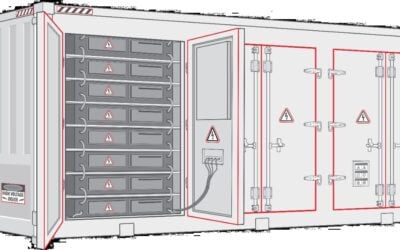
“Key proposed updates to the fire code – such as requirement for third-party peer reviews, site-specific Emergency Response Plans (ERPs), additional protections for cabinet-style enclosures, and timely on-site support for local fire departments – will provide added levels of safety and standardisation for BESS installations across the state,” ESRG said.
“New York State has been, and will continue to be, a leader in BESS safety across the country, and we look forward to continuing to support the Working Group in their efforts.”
A few months ago, California introduced legislation requiring safety and communications protocols to be put in place for all BESS installations.