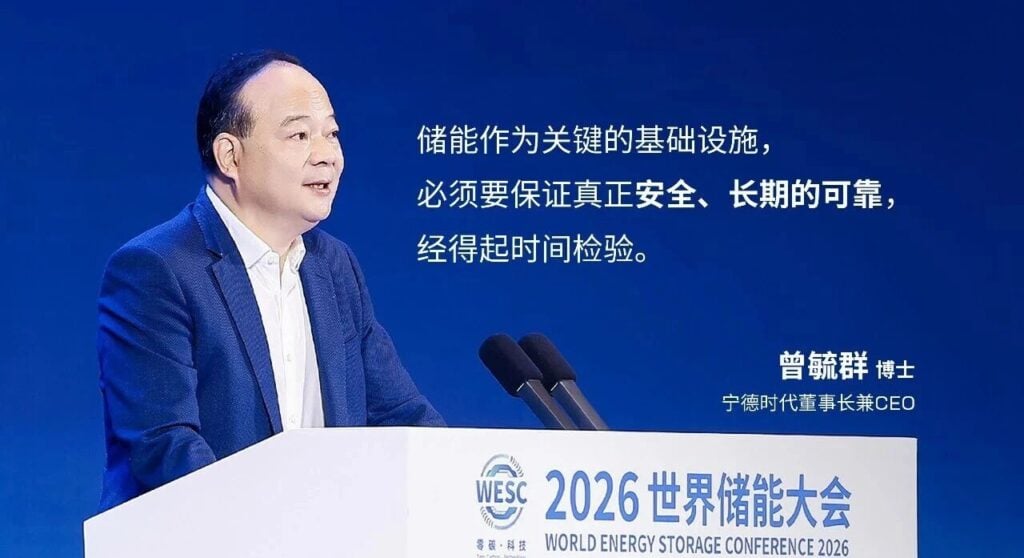
Energy storage is shifting from a supporting facility for renewable energy to an indispensable new-type power system infrastructure, CATL chairman and CEO Robin Zeng said in an industry speech last week.
Addressing the 2026 World Energy Storage Conference in Ningde, Fujian province, China, on 15 October, Zeng said this shift means the industry can no longer focus solely on improving equipment specifications. It must also build system-level capabilities and long-term reliability that meet grid requirements.
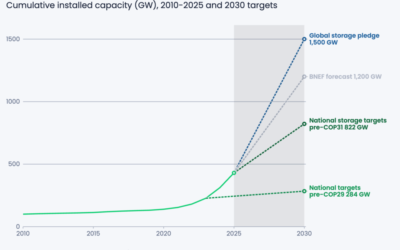
According to SNE Research, global energy storage battery shipments rose 71% year-on-year in H1 2026, with markets outside China accounting for more than half of total volume for the first time. From Europe and the Americas to emerging markets in Latin America, Southeast Asia and Africa, a growing number of countries are deploying storage at scale.
Zeng pointed out that more notable than the growth rate itself is the profound change in storage’s role within the power system. On the one hand, the continued expansion of wind and solar capacity has brought stability challenges on the generation side. On the other hand, accelerating electrification in industry and transport, together with fast-growing new loads such as compute-intensive data centres, is placing greater demands on power system reliability and flexibility.
Try Premium for just $1
- Full premium access for the first month at only $1
- Converts to an annual rate after 30 days unless cancelled
- Cancel anytime during the trial period
Premium Benefits
- Expert industry analysis and interviews
- Digital access to PV Tech Power journal
- Exclusive event discounts
Or get the full Premium subscription right away
Or continue reading this article for free
Three core capabilities which the industry must strengthen
Against this backdrop, “energy storage is shifting from a supporting facility for renewable energy to an indispensable new-type power system infrastructure.” Robin Zeng argued that for energy storage to mature into new-type infrastructure, the industry must strengthen three core capabilities.
Firstly, it must build full-station solution capabilities tailored to diverse grid requirements. He noted that once storage is recognised as infrastructure, evaluation criteria will extend beyond equipment capacity, efficiency and cost to include grid-mandated support, response and regulation capabilities.
Grid requirements are now diverging across regions: Europe needs more flexible resources to integrate renewable power; fast-growing, compute-intensive hubs in the US demand highly reliable power supplies; and grids in Africa and Southeast Asia remain relatively fragile, making voltage and frequency regulation additional critical tasks for storage assets. Meeting these demands requires deep grid expertise, seamless integration of cells, power electronics and smart-control technologies, and holistic optimisation of power plant operations.
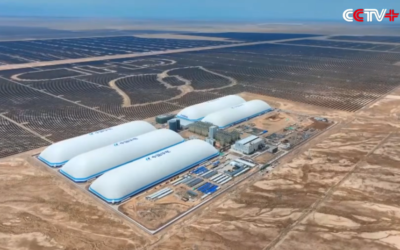
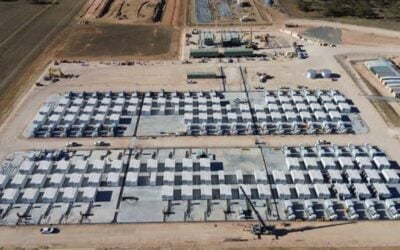
Zeng cited two landmark projects. CATL recently supported South Africa’s Hydra project through full-station turnkey delivery. As Africa’s largest hybrid renewable energy project, it can meet the annual electricity needs of 200,000 households. Meanwhile, Supernode, Australia’s largest storage facility delivered by CATL, has been commissioned and will supply clean power for the 2032 Brisbane Olympics. To date, CATL has delivered more than 3,000 storage projects worldwide, accumulating over 500 billion battery R&D and test data records.
Secondly, the industry must pursue foundational innovation and enhance technical adaptability to complex operating scenarios. Robin Zeng explained that deployments in hot climates require superior thermal stability to mitigate capacity fade, sites in cold climates need strong capacity retention, and applications with rapid load swings call for higher power output and faster response. These challenges can only be addressed through foundational innovation in materials and electrochemical systems.
CATL has long advanced multiple technology pathways in parallel: leveraging sodium-ion batteries’ low-temperature performance and resource advantages to complement lithium-ion batteries; using material and structural innovation to enable stable cell operation at elevated temperatures; and, for the highly dynamic loads at AI data centres, deploying high-rate cells with smart control strategies to deliver millisecond-level, precise system response, while coordinating lithium-ion and sodium-ion batteries in hybrid power plants.
Thirdly, the sector must shift from product and component testing to systematic, full-station empirical validation. Large-scale battery energy storage system (BESS) facilities are complex systems, Zeng said. Even if all individual components meet specifications, the integrated system is not guaranteed to deliver long-term reliability. Reliability validation must therefore extend beyond cell and equipment testing to full-station, full-spectrum empirical validation. It should simulate real-world and even extreme operating conditions, test the system’s operational limits, and identify and resolve issues before commissioning.
In May this year, CATL officially opened its Empirical Energy Storage Technology Research Institute in Xiamen, with a planned total investment of RMB3 billion (US$450 million). The institute is now open to the wider industry. It can conduct full-station, multi-dimensional tests, including grid-connection testing, extreme-environment trials and electromagnetic compatibility (EMC) testing. To date, the Xiamen institute has provided systematic empirical validation for 32 projects worldwide, covering more than 16GWh power plant capacities.
“The global energy storage sector is entering an era of unprecedented growth opportunities. As a participant in this sector, we are excited by this outlook, yet we always maintain a sense of reverence.” Closing his address, Robin Zeng said that, as critical infrastructure, energy storage must deliver genuine safety and long-term reliability and stand the test of time.