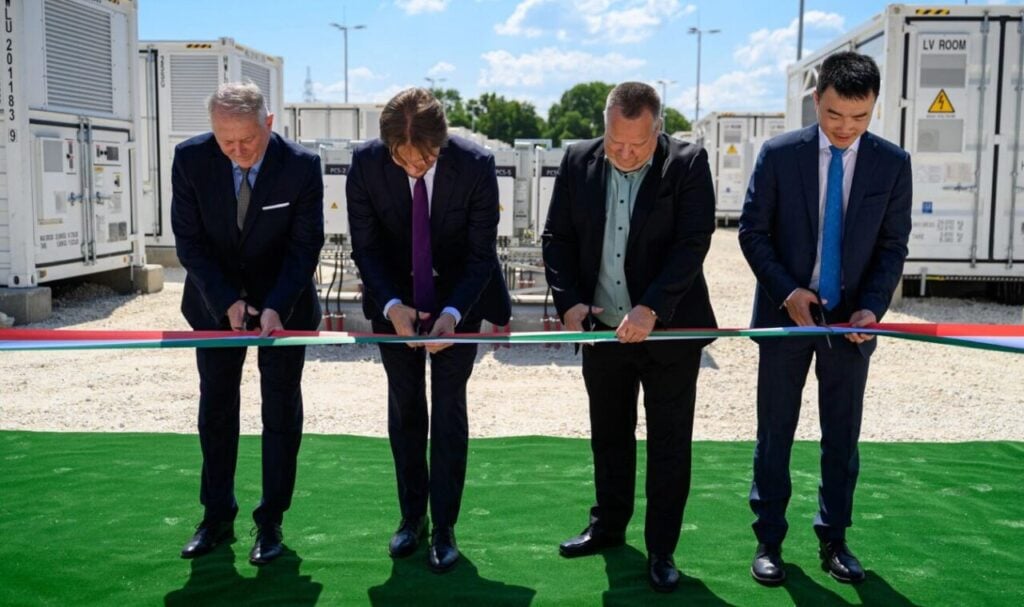
IPP MET Group has put a 40M/80MWh BESS in Hungary into commercial operation, deployed using technology from Huawei.
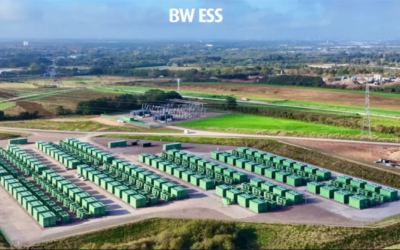
The 2-hour battery energy storage system (BESS) is the largest in Hungary, Switzerland-headquartered MET Group said, deployed at its Dunamenti thermal power plant in Százhalombatta, near Budapest.
The company already deployed a 4MW/8MWh BESS there using Tesla Megapacks in 2022, but for the larger project opted to use China-based electronics giant Huawei.
Although not the most regular figure in BESS news, Huawei does have a major presence in the industry. Wood Mackenzie ranked it as the fourth-largest BESS integrator in the world in 2022, after Sungrow, Tesla and Fluence.
Try Premium for just $1
- Full premium access for the first month at only $1
- Converts to an annual rate after 30 days unless cancelled
- Cancel anytime during the trial period
Premium Benefits
- Expert industry analysis and interviews
- Digital access to PV Tech Power journal
- Exclusive event discounts
Or get the full Premium subscription right away
Or continue reading this article for free
Images of the Hungary project provided by MET Group show the BESS units but without any clear Huawei branding. That would indicate the company gets its product to market via white-labelled supply to other system integrators, meaning it may have a much larger market presence than is apparent at first.

The project’s main contractor was Forest-Vill Ltd, MET Group added.
Péter Horváth, CEO of the Dunamenti Power Station, commented: “The application of battery energy storage systems is a key element on the road to energy transition, as they allow to increase the penetration of new renewable sources into the power grid.”
MET Group is also active in the French energy storage market, having acquired combined heat and power (CHP) and BESS operator Comax last year.
In 2023, the EU approved a €1.1 billion (US$1.2 billion) capex support scheme in Hungary to kickstart the country’s large-scale energy storage market. A panellist at our publisher Solar Media’s Energy Storage Summit Central and Eastern Europe (CEE) 2024 last year in Warsaw called the scheme one of the most advanced subsidies schemes they had seen to-date.