India’s first commercial regulated utility-scale battery storage project has gone into operation, and a new partnership claims it will establish local manufacturing in the country this year.
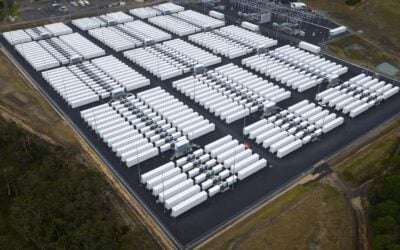
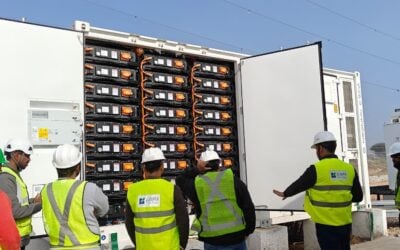
Last week (4 April), IndiGrid, a power sector infrastructure investment trust, announced the commissioning of a 20MW/40MWh utility-scale standalone battery energy storage system (BESS) in Delhi, India’s capital territory.
IndiGrid claimed that Kilokari BESS Private Limited (KBPL) was India’s first commercial project of its type when the National Capital Territory’s (NCT’s) regulator, the Delhi Electricity Regulatory Commission (DERC), granted it approval in May last year.
It was the subject of a winning bid in a tender hosted by electricity distribution company (‘discom’) BSES Rajdhani Power Limited (BRPL), which is a joint venture between India’s Reliance Industries and the NCT government of Delhi.
Try Premium for just $1
- Full premium access for the first month at only $1
- Converts to an annual rate after 30 days unless cancelled
- Cancel anytime during the trial period
Premium Benefits
- Expert industry analysis and interviews
- Digital access to PV Tech Power journal
- Exclusive event discounts
Or get the full Premium subscription right away
Or continue reading this article for free
IndiGrid was awarded the BRPL contract in October 2023. The project will connect to the discom’s Kolkari substation, and BRPL will pay a fixed capacity tariff based on availability. It will be used to meet network needs for applications including ancillary services, grid stabilisation and peak demand management.
Non-profit organisation Global Energy Alliance for People and Planet (GEAPP), partnered with the investment trust and co-owner Ampere-hour Energy (AHE) to provide a concessional loan for 70% of its capital cost.
As the Kolkari project was granted regulatory approval, GEAPP said it could be a viable business model for replication elsewhere. GEAPP VP for India Saurabh Kumar said it “demonstrates the viability of battery energy storage solutions and sets a new standard for affordability in the energy sector.”
BRPL will pay a levelised annual tariff of IR5.76 million/MW (US$69,000/MW) which GEAPP said was 55% lower than previously set benchmarks for battery energy storage system (BESS) offtake in India.
It also marks the first project delivered through the non-profit’s BESS Consortium, launched at COP28 United Nations climate talks to facilitate 5GW of energy storage deployments in low- and middle-income countries by the end of 2027, including 1GW in India.
“We are excited to announce commissioning of KBPL on time and within budgets while maintaining the highest level of safety during the construction,” IndiGrid CEO Harsh Shah said last week.
“Battery energy storage is a key enabler of a resilient and efficient power system in India as the country moves toward a cleaner energy mix. The ability to store and dispatch power intelligently will be essential in maintaining grid stability and optimising renewable integration,” Shah said.
IndiGrid is backed by US investment group Kohlberg Kravis Roberts & Co (KKR) and Indian power transmission company Sterlite Power.
Energy Vault targets multi-gigawatt deployments in India’s growing market
Earlier last week (2 April), New York Stock Exchange (NYSE)-listed energy storage company Energy Vault announced a licensing and royalty agreement in India with energy and water infrastructure developer SPML Infra Limited.
Energy Vault first became known in the industry for a novel proprietary gravity-based energy storage technology but has since diversified to add a significant focus on battery storage system integration and BESS hardware and software.
The company claimed the agreement will see a minimum volume of 500MWh of Energy Vault BESS manufactured locally in India over the next 12 months, and a ‘minimum targeted volume’ of 30-40GWh over the next 10 years.
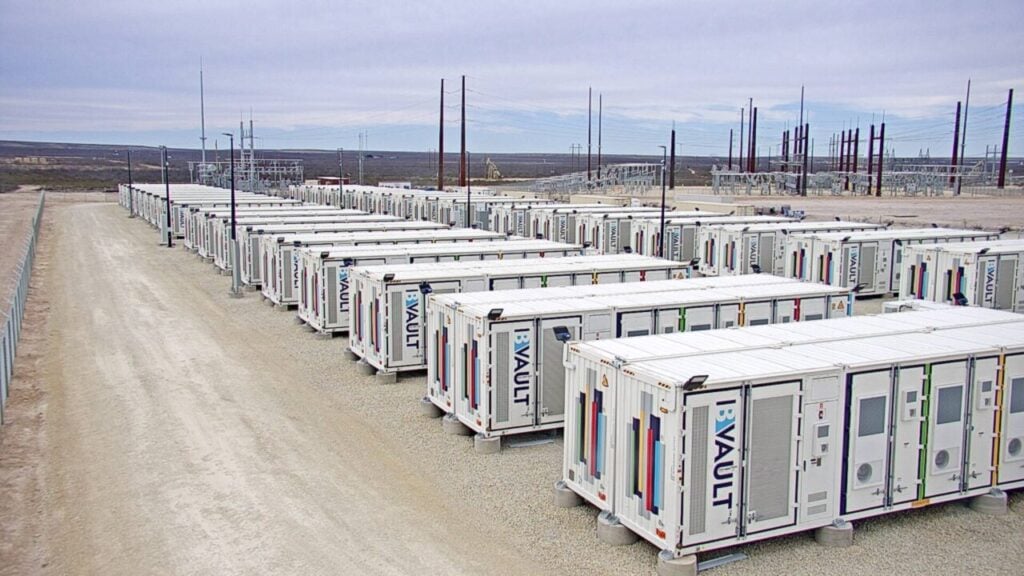
The licensing agreement covers both Energy Vault’s B-Vault integrated BESS hardware solution and its energy management system (EMS) software, VaultOS. Energy Vault said B-Vault is both DC and AC-configurable.
“India is becoming one of the larger energy storage growth markets globally given their ambitious energy transition goals, and we are pleased to have the opportunity to partner with a leading player in the country’s critical infrastructure service sector such as SPML,” Energy Vault CEO and chairman Robert Piconi said.
Partner SPML Infra Ltd will provide local market expertise. The partners expect to leverage cost efficiencies by manufacturing locally for projects in the region.
SPML will pay the energy storage provider upfront licensing fees and long-term royalties.