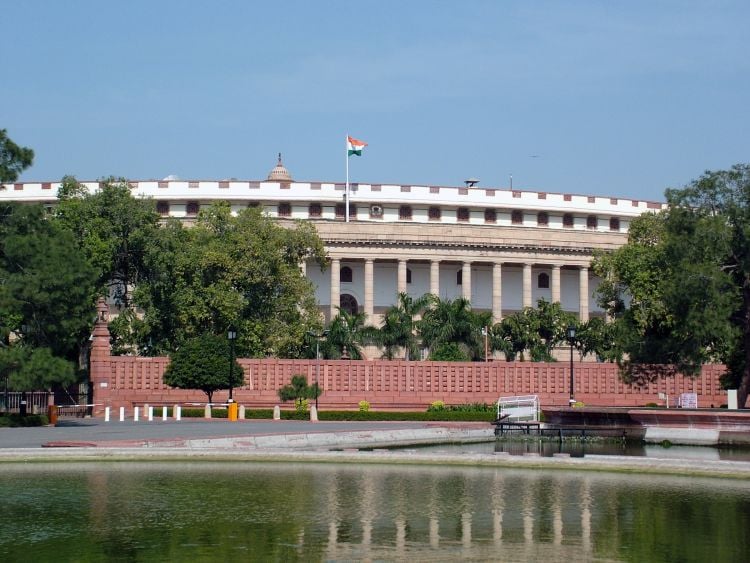
India’s Union Cabinet chaired by prime minister Narendra Modi has approved the ‘National Mission on Transformative Mobility and Battery Storage’, with a focus on local manufacturing across the whole supply chain for electric vehicles (EV) including battery and cell manufacturing.
The mission includes a five-year phased manufacturing program to set up “a few large-scale, export-competitive integrated batteries and cell-manufacturing Giga plants in India”. This also includes such a program to localise production across the entire EV value chain.
A phased roadmap to implement battery manufacturing at Giga-scale will be considered with an initial focus on large-scale module and pack assembly plants by 2019-20, followed by integrated cell manufacturing by 2021-22.
Energy storage analysts and industry members have consistently said over recent years that any major push in EVs across India will naturally help to spur the stationary storage industry given the synchronicities across lithium-ion batteries at present and the likely reduction in battery costs for both sectors as a result. Thus, the stated focus on electric mobility of the Mission should not be of concern to the stationary storage lobby.
Try Premium for just $1
- Full premium access for the first month at only $1
- Converts to an annual rate after 30 days unless cancelled
- Cancel anytime during the trial period
Premium Benefits
- Expert industry analysis and interviews
- Digital access to PV Tech Power journal
- Exclusive event discounts
Or get the full Premium subscription right away
Or continue reading this article for free
Indeed, the approval notice also stated: “These solutions will help improve air quality in cities along with reducing India’s oil import dependence and enhance the uptake of renewable energy and storage solutions.”
However, Energy-Storage.news has previously highlighted how India’s draft National Energy Storage Mission had focused almost exclusively on manufacturing and reducing costs of domestic EV batteries, with little mention of stationary storage.
Nonetheless, the new National Mission on Transformative Mobility and Battery Storage approval comes simultaneously to India’s second attempt at kicking off its large-scale solar-plus-storage ambitions. Solar Energy Corporation of India (SECI) has now released two major tenders including 1.2GW of solar PV combined with 3,600MWh of energy storage connected to the national grid, as well as a smaller tender for 200MW solar with 300MWh of storage in the southern state of Andhra Pradesh.
Significant market potential
Debi Prasad Dash, executive director of India Energy Storage Alliance (IESA), said: “We welcome the cabinet’s decision on setting up of National Mission on Transformative Mobility and Battery Storage. […] This announcement is the result of the work done over the past 6 years by India Energy Storage Alliance (IESA) along with various state agencies, as well as central government departments including MNRE, MOP, and NITI Aayog on different aspects related to energy storage policy. The mission also suggested to have the steering committee with representation of 8 ministries & departments, which will definitely bring appropriate co-ordination on appropriate policy creation.
“India has a significant market potential for batteries and electric vehicles. Electric vehicles are creating a big demand and due to this demand, the cost of batteries will further come down. IESA estimates the market for energy storage would grow to over 300GWh during 2018-25. IESA is working with various EV & charging infrastructure companies through its MOVE (Moving Onwards with Vehicle electrification) initiative to catalyze the adoption through indigenous manufacturing of EV components. Currently, more than 10 companies are doing module and Li-Ion pack assembling in India and we’re expecting 4-5 large companies to enter cell manufacturing in the next 2-3 years. With appropriate policy support through this mission, Indian companies will be able to diversify into energy storage business. Through Make In India initiative, India will able to compete with the countries like China, Australia, Germany, USA, Taiwan, South Korea other Li-Ion manufacturing countries.”