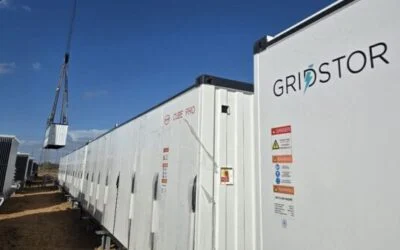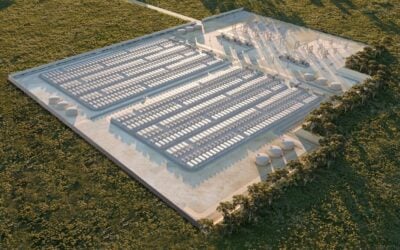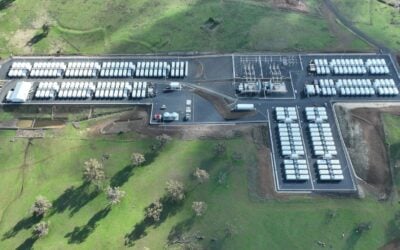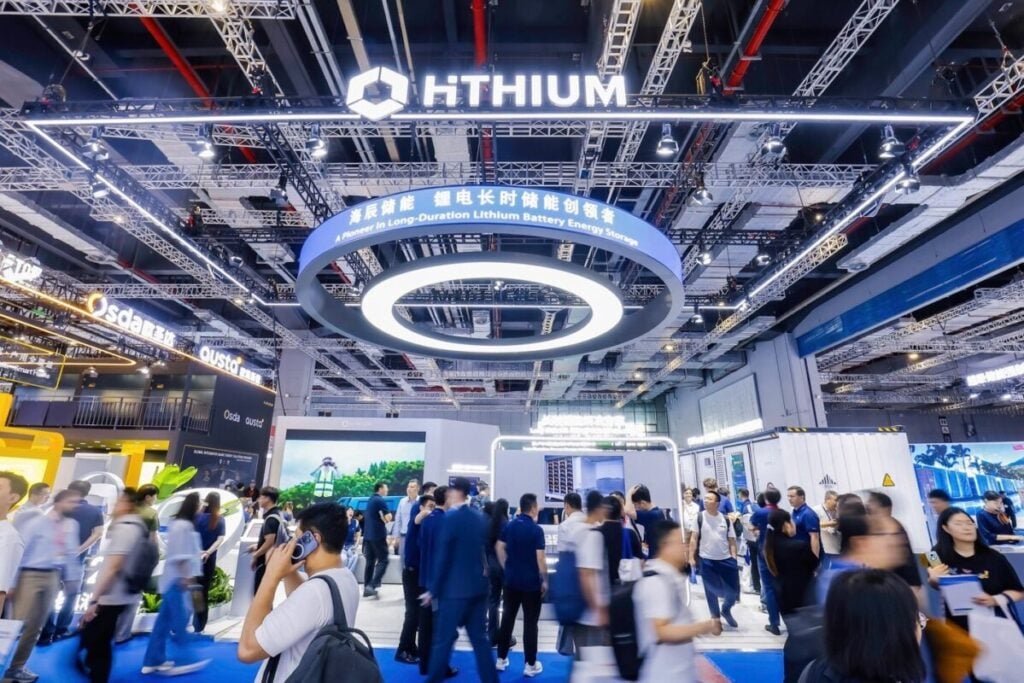
Hithium has signed a supply agreement with Global Power Generation (GPG), the Australian generation arm of Spain’s Naturgy Group, to deliver a 421MWh battery energy storage system (BESS) for the Fraser Coast project in Queensland.
Under the agreement, Hithium will supply 84 liquid-cooled BESS units, along with system design, manufacturing, factory acceptance testing, delivery, commissioning, technical support and training.
Although the capacity of the battery storage system has been disclosed, the power output has not been revealed at the time of reporting. Previous reports indicated that it would be a 180MW system, however, this seems to have been upsized.
The deal marks Hithium’s first utility-scale collaboration with GPG. The Fraser Coast BESS is AC-coupled and connects to the 33kV switchgear of an adjacent solar farm, allowing it to charge from both the solar plant and the grid.
Try Premium for just $1
- Full premium access for the first month at only $1
- Converts to an annual rate after 30 days unless cancelled
- Cancel anytime during the trial period
Premium Benefits
- Expert industry analysis and interviews
- Digital access to PV Tech Power journal
- Exclusive event discounts
Or get the full Premium subscription right away
Or continue reading this article for free
The system features grid-forming capabilities and will provide energy arbitrage and frequency control ancillary services (FCAS).
A larger hybrid development already under construction
The battery storage system forms part of GPG’s broader Fraser Coast Hybrid Project, which entered construction in July 2026 near the township of Brooweena, roughly 50km south-west of Maryborough.
The 330MW solar-plus-storage development is GPG’s largest renewable energy project in Australia, backed by more than €300 million (US$342 million) of investment and a ten-year power purchase agreement (PPA).
The project cleared federal environmental assessment under the Environment Protection and Biodiversity Conservation (EPBC) Act in late 2025, with commercial operations targeted for 2028 and grid connection via a 275kV line to Powerlink’s Teebar Substation.
Fraser Coast is GPG’s second hybrid solar-plus-storage project in the country, following the Cunderdin development in Western Australia, which paired a 128MW solar plant with a 55MW/220MWh battery system supplied by Sungrow.
Construction at Fraser Coast began weeks after GPG commissioned two solar plants in New South Wales and Queensland, taking the company’s total installed capacity in Australia to 1.3 GW across ten operating assets.
The Fraser Coast deal adds to Hithium’s expanding footprint in the Asia-Pacific region. In March 2026, the company signed a cooperation agreement with Hong Kong-based investor Brawn Capital covering a potential 3GWh of battery storage deployments across the region by 2030, targeting long-duration applications alongside shorter-duration containerised systems.
Hithium’s position in the broader battery supply chain has strengthened over the past two years. According to Benchmark Mineral Intelligence, Hithium moved from fourth place to second in global BESS cell shipments between 2024 and 2025, capturing approximately 12% of the market as competition intensified among Chinese manufacturers.
The system integration segment of the market, where Hithium also competes, has grown more fragmented, with the top ten integrators accounting for around 68% of shipments in 2025, down from a more concentrated market the previous year.
The scale of the Fraser Coast supply deal is consistent with the size of battery contracts increasingly common in the Australian market, where utility-scale BESS projects have grown alongside rising renewable energy penetration and the retirement of coal generation capacity.
Grid-forming systems, such as the one specified for Fraser Coast, have become a standard requirement for new BESS projects connecting to the National Electricity Market (NEM).
However, it should be noted that grid-forming inverter-equipped battery storage systems have not yet been confirmed to meet the highest tier of system strength requirements in the NEM, according to the Australian Energy Market Operator (AEMO).
This hasn’t stopped the technology from becoming a core pillar of battery storage systems in Australia, with grid-forming inverters featuring in 74% of Australia’s 33.2GW NEM battery storage pipeline.
The project also reflects a broader pattern in the Australian market of BESS units being co-located with solar generation while retaining the ability to charge independently of the grid, a configuration that gives asset owners the flexibility to participate in both energy arbitrage and ancillary services markets regardless of solar output.
Never miss an Australian energy storage story. Sign up for our Australia newsletter and get the latest project announcements, policy updates and market analysis delivered directly to you.
Solar Media (part of Informa Group) will host the Battery Asset Management Summit Australia 2026 on 25-26 August at the Amora Hotel Jamison in Sydney, bringing together asset owners, operators, trading teams and optimisers to address revenue strategy, lifecycle management and operational performance across Australia’s fast-growing battery storage fleet.
Readers of Energy-Storage.news can get 20% off their tickets using the code ESN20 at checkout. Find out more about the Summit on the official website.