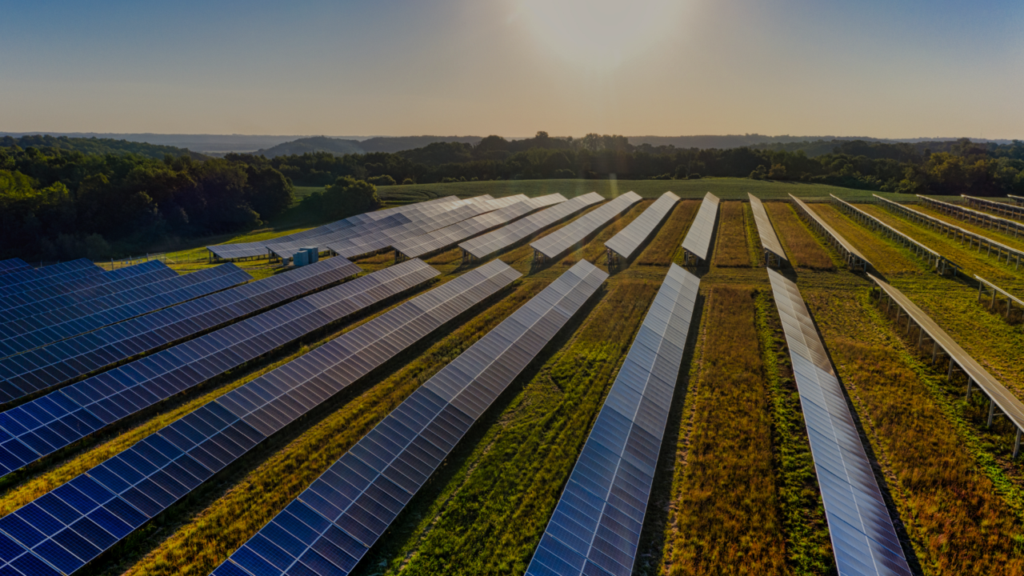
Renewables developer-operator MN8 Energy, zinc hybrid cathode battery and storage system maker Eos Energy Enterprises, and tech giant Google are backing a multi-technology renewables project on the PJM grid in the US.
Announced 2 September, the Mammoth Solar project in Kanawha County, West Virginia combines 86MW of solar, 10MW/100MWh of Eos’ Z3 zinc-based long-duration energy storage (LDES) solution, and a 70MW/280MWh lithium-ion (Li-ion) battery energy storage system (BESS).
The solar project is expected to reach commercial operation in 2028, with the Li-ion BESS and LDES solution following in 2029 and 2030, respectively.
MN8 stated that the multi-technology project fills a critical grid need by delivering capacity matched to data centre load profiles. It also claimed that it is the first commercial-scale LDES deployment in West Virginia.
Try Premium for just $1
- Full premium access for the first month at only $1
- Converts to an annual rate after 30 days unless cancelled
- Cancel anytime during the trial period
Premium Benefits
- Expert industry analysis and interviews
- Digital access to PV Tech Power journal
- Exclusive event discounts
Or get the full Premium subscription right away
Or continue reading this article for free
Under the agreement, Google will purchase the energy, capacity, and clean energy attributes of the project, “advancing the company’s commitment to bring new capacity to the grids where it operates.”
The project is also part of Google’s broader efforts to accelerate LDES technology commercialisation.
In June, Carbon dioxide-based LDES company Energy Dome announced it would add a 19MW/190MWh ESS to the grid, selected through Google and Arizona utility Salt River Project’s (SRP’s) collaboration to accelerate deployment of non-lithium-ion LDES technologies. Google is also a member of the Long Duration Energy Storage Council trade association which brings together global LDES technology providers, key offtakers such as Google and Microsoft, and service providers to the industry.
Mammoth Solar marks Google’s first project that uses Eos’ Z3 technology and the first project under the previously announced 750MWh MN8-Eos master supply agreement from October 2025.
Constructed on a former coal mining site in West Virginia, MN8 claimed that Mammoth Solar is anticipated to generate economic opportunities in a community with deep energy sector roots.
According to MN8’s projections, the development represents capital investment of up to US$350 million and is forecast to deliver approximately US$4 million in property tax revenue to the county and local schools during the initial 20 years of operation, with additional millions expected over the subsequent 15-20 years. The construction phase is projected to create roughly 200 jobs, with further full-time and part-time positions supporting the project throughout its operational lifespan.
The project’s influence extends throughout the PJM interconnection, linking new energy infrastructure in West Virginia with American manufacturing and regional innovation.
MN8 and Eos maintain substantial operations and workforces across the Mid-Atlantic and Northeast regions, from MN8 projects distributed throughout the area to Eos headquarters and manufacturing facilities in Pittsburgh, Pennsylvania. Collectively, the companies claim to bolster domestic supply chains and regional economies.
Google also announced 1 September, a 396MW power purchase agreement (PPA) with geothermal energy developer Fervo Energy for its Cape Station enhanced geothermal systems GeoCluster project in Utah, expected to come online in 2028.
Under the agreement, Google will purchase energy designed “to serve as a foundational building block “for a potential data centre in the state.
As part of the PPA, Fervo will offer Google an option to expand its offtake by approximately 600MW, for a total of nearly 1GW, by June 2030. Final data centre plans will remain subject to a variety of factors including engineering feasibility, state and local approvals, and commercial conditions.
Fervo first partnered wit Google on Project Red, a commercial pilot in Nevada that came online in 2023. It provides power to the local grid and Google’s Nevada data centres.
Following that project, Fervo signed a 115MW PPA with Google and utility NV Energy in June 2024.
In May, MN8 began commercial operation of its 100MW/400MWh Pome BESS project in Poway, California.
In July, Eos received a Golden Dome for America contract from the US Department of Defense (DoD) to integrate “mission-ready LDES supporting requirements of the nation’s defence shield.”
Eos will deploy its Z3 solution for the contentious Golden Dome defence initiative announced by President Trump, although the project’s completion within the proposed timeline, and indeed its overall realisation, remains highly uncertain.
An ESN Premium article published earlier this week examined the recent Level 3 Essential Action Alert issued by the North American Electric Reliability Corporation (NERC), acknowledging that AI data centres will cause significant load swings that could jeopardise grid operation. ESN Premium spoke with representatives of flow battery provider XL Batteries, Wärtsilä Energy Storage and transformer manufacturer IONATE about order and the technology solutions that can step in and mitigate those risks, which NERC characterised as urgent.
Battery Asset Management Summit USA 2026 will be held 15-16 September in Garden Grove, California, hosted by Energy-Storage.news publisher Solar Media (part of the Informa Group). The agenda emphasises addressing the roles of AI, cybersecurity, and second-life applications, broken down into two tracks: Technical Asset Management and Commercial Asset Management. This year, the conference is also co-located with Solar & Storage Finance Summit USA. Visit the official site for more details.