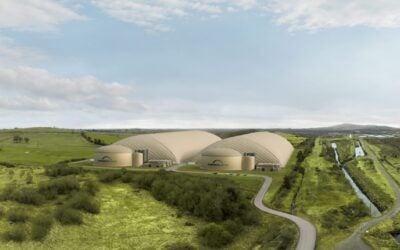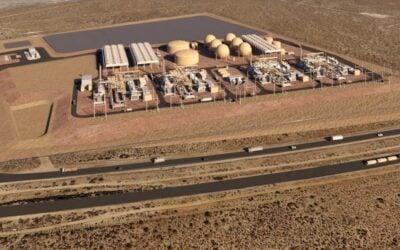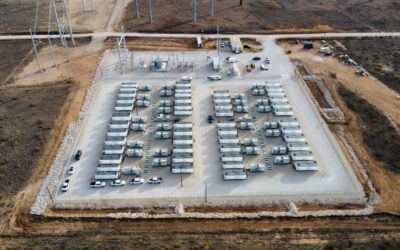
Microsoft, Google and 10 other companies have joined the Long Duration Energy Storage (LDES) Council, a CEO-led organisation launched at COP26 in November to push for the global deployment of technologies that can store and discharge energy for eight hours or longer.
Along with Danish energy company Ørsted, the tech giants are among five new ‘anchor’ members, bringing the total to 13. These comprise a mix of large conglomerates with interests in the renewable energy space, from Indian renewable energy giant Greenko to BP and Rio Tinto.
It has also welcomed seven new ‘technology’ members, companies focused on developing new forms of long duration energy storage, bringing the total to 23.
New technology members include heavy industrial group Sumitomo SHI FW, flow battery company VoltStorage and nickel-hydrogen battery company EnerVenue.
Try Premium for just $1
- Full premium access for the first month at only $1
- Converts to an annual rate after 30 days unless cancelled
- Cancel anytime during the trial period
Premium Benefits
- Expert industry analysis and interviews
- Digital access to PV Tech Power journal
- Exclusive event discounts
Or get the full Premium subscription right away
Or continue reading this article for free
The Council says that LDES has the potential to deploy 1.5-2.5 TW power capacity globally by 2040: 8-15 times the total storage capacity deployed today. LDES could deliver 85-140 TWh by that year which would mean the ability to store up to 10% of all electricity consumed and would account for over half of all installed power flexibility capacity.
Achieving this, it says, will need investment of US$1.5-3 trillion — equal to the current global investment in Transmission & Distribution (T&D) infrastructure made every 2-4 years — and has set out a roadmap of how to get there.
It forecasts US$50bn cumulative investment by 2025 achieving 1 TWh of LDES; US$200-500bn by 2030 achieving 5-10 TWh; and $1.1-1.8bn by 2035 achieving 35-70 TWh before the 2040 target. It concedes that LDES costs must decrease by 60% for it to be cost optimal, but notes that even larger cost savings have been achieved in wind and solar.
Maud Texier, leading carbon-free energy activities at Google, commented that: “…we view long duration energy storage as a key pillar on the path to a carbon-free future”.
The Council’s modelling says the average system duration for LDES will increase over this period, with 24-hours-plus duration going from 40% of all TWh of cumulative installed energy capacity in 2030 to 80% by 2040. The average installed duration globally is expected to reach 14 hours by 2030 and a whopping 64 hours between 2030-2040.
The US is expected to account for one-third of LDES capacity with Europe (including UK) and India around 10% each, and Japan the next-largest at around 3%, according to data from the Council’s knowledge partner McKinsey. It does not give a figure for China.