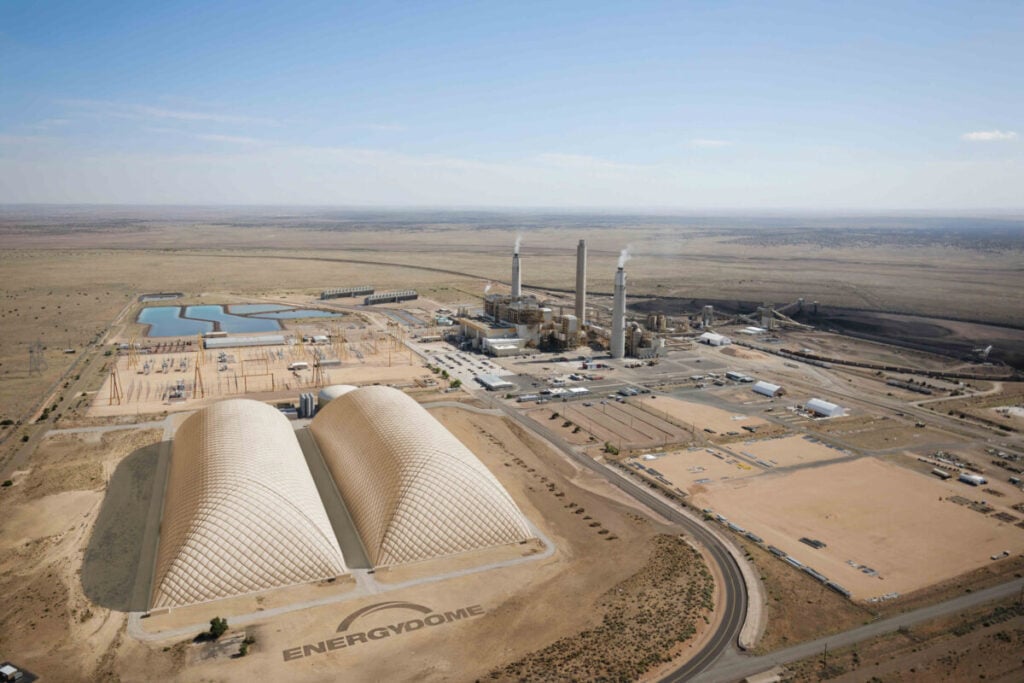
Energy Dome is advancing a 10-hour duration CO2 Battery project in Arizona, with SRP and Google, while Invinity announces the sale of North America’s largest vanadium redox flow battery (VRFB), in California.
Energy Dome announces 10-hour duration BESS with SRP, Google
Carbon dioxide-based long-duration energy storage (LDES) company Energy Dome and not-for-profit public utility Salt River Project (SRP) have announced an energy storage project in St. Johns, Arizona.
Announced 15 June, Energy Dome and SRP will add a 19MW/190MWh energy storage system (ESS) based on Energy Dome’s proprietary CO2 Battery technology to the grid, co-located on the site of SRP’s Coronado Generating Station (CGS).
Energy Dome will develop the project with SRP under a 20-year tolling agreement, with Energy Dome owning and operating the facility and SRP dispatching its output.
Try Premium for just $1
- Full premium access for the first month at only $1
- Converts to an annual rate after 30 days unless cancelled
- Cancel anytime during the trial period
Premium Benefits
- Expert industry analysis and interviews
- Digital access to PV Tech Power journal
- Exclusive event discounts
Or get the full Premium subscription right away
Or continue reading this article for free
The project, selected through a request for proposals (RFP) for LDES pilots issued by SRP in 2024 is part of tech giant Google and SRP’s collaboration to accelerate deployment of non-lithium-ion LDES technologies.
The partnership was announced in 2025 and sees Google funding a portion of the costs for LDES pilot projects developed on the grid operated by SRP. It will also evaluate data on the pilot projects’ operational performance and provide input on research and testing.
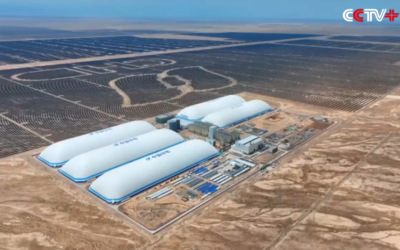
Energy Dome’s 19MW project will use the company’s CO2 Battery and proprietary thermomechanical LDES process. According to Energy Dome, it works by using power from the grid to compress and store CO2, then, when power is needed, expanding the CO2 through a turbine to generate energy to send back to the grid.
The energy storage project is expected to come online in 2029. SRP and Energy Dome will work with independent research nonprofit Electric Power Research Institute (EPRI), to monitor performance data from the project.
Google has also partnered with Energy Dome previously. In 2025, the company made a strategic investment in Energy Dome, details of potential projects were not given at the time.
Data centres, such as those from Google, are increasingly looking toward LDES technology to assist with their massive energy demands.
Energy Dome has gotten in on the trend. In April, the company and digital infrastructure company New Era Energy & Digital (NUAI) signed a memorandum of understanding (MOU) to implement its technology at NUAI’s Texas Critical Data Centres (TCDC).
At an industry conference in the same month, Francesco Oppici, co-founder and CCO of Energy Dome, stated, “In the last couple of years, we have seen mainly here in the US, the 8-hour application, being used to bring capacity for data centres.”
Invinity sells North America’s largest VRFB project in California
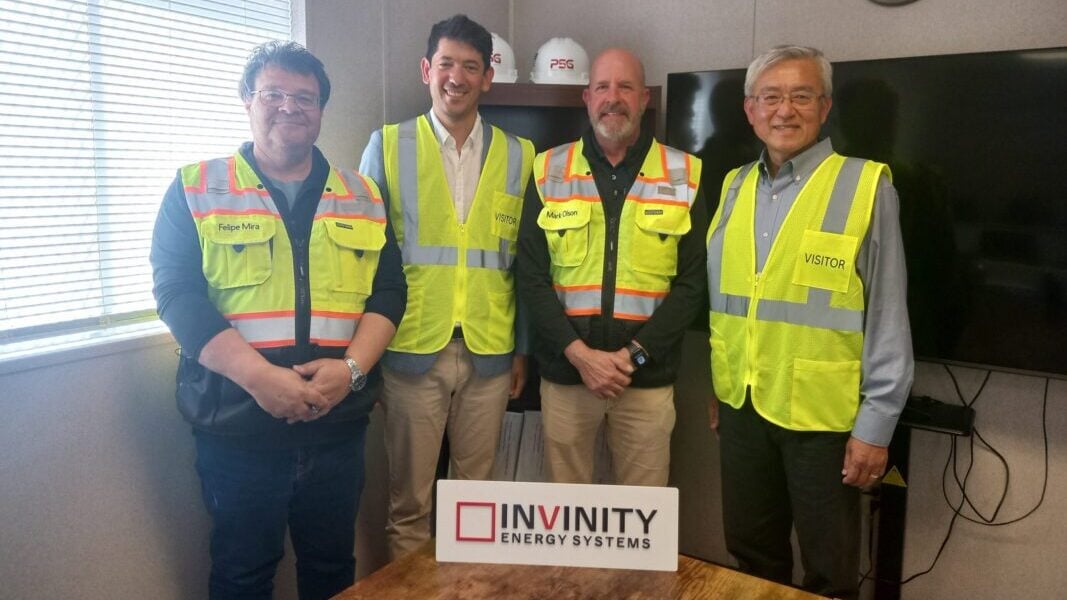
Invinity Energy Systems has announced the sale of the largest vanadium flow battery system announced to date in North America.
Announced 15 June and expected to be commissioned in 2027 in Kern County, California, the 32MWh vanadium redox flow battery (VRFB) project will be located at Pacific Steel Group’s Mojave Micro Mill, the first new steel mill to be built in California in 50 years.
The California Energy Commission (CEC) awarded Pacific Steel Group a US$14 million grant to deploy the LDES system in 2025. According to the CEC, “it will be integrated with the plant’s on-site microgrid and solar PV system to provide clean electricity, reliable backup power, optimise renewable energy use, and support the energy-intensive, rapidly fluctuating demands typical of steel mill operations.”
Invinity claims its VRFBs were selected for the project due to their technical, operational and safety characteristics, particularly the ability to cycle heavily to match the energy-intensive power requirements of the mill.
As part of the competitive selection process, Invinity also claims it was able to evidence a strong project delivery track record both globally and in the US, including several other CEC-funded projects delivered in recent years.
At the end of 2025, the US Department of Energy’s (DOE’s) Pacific Northwest National Laboratory (PNNL) began fire testing utility-grade batteries at its Grid Storage Launchpad (GSL). The first round of battery testing was announced to be centred on a VRFB built by Invinity.
In July of that same year, Invinity said that partnering with Chinese vanadium electrolyte and battery product manufacturer Guangxi United Energy Storage New Materials Technology Limited (UESNT), would enable the company to significantly reduce the cost of its VRFB technology.
Notably, it did claim that the batteries for the Pacific Steel Group project would be manufactured in the US.
Invinity is also the current holder of the ‘biggest operational vanadium flow battery in North America’ title. Its Chappice Lake project in Canada features a 2.8MW/8.4MWh Invinity VS3 model flow battery system, paired with a 21MWp solar PV array.
Chappice Lake solar-plus-storage was inaugurated in 2023. Meanwhile, the biggest operational VRFB project in the US is still thought to be Sumitomo Electric’s 2MW/8MWh system for California utility SDG&E, deployed in 2017.
Sumitomo Electric has delivered 60MWh and 51MWh projects in Hokkaido, a northern island in its home country, Japan. These two projects were the world’s biggest until the completion of a number of demonstration projects in China, which each ran to the hundreds of megawatts, including the 5-hour duration 200MW/1,000MWh Jimusaer Vanadium Flow Battery Energy Storage Project in Xinjiang, delivered by flow battery company Rongke Power and infrastructure developer China Three Gorges Corporation (CTG). Jimusaer Vanadium Flow Battery Energy Storage Project began operating at the end of 2025.
Recently, Invinity won a contract for the design of the 1.5GW/2.1GWh flow battery project being deployed along with a data centre being developed by Swiss company FlexBase, which is the largest VRFB system under development in the world.
Speaking with ESN Premium earlier this month, Invinity president Matt Harper emphasised two key advantages of the company’s VRFB technology: superior fire safety and the ability to cycle without degradation.