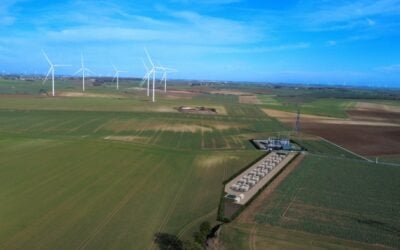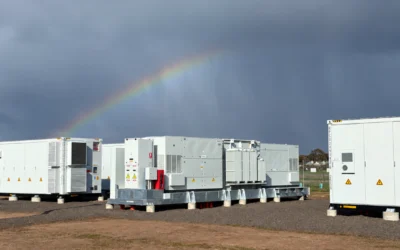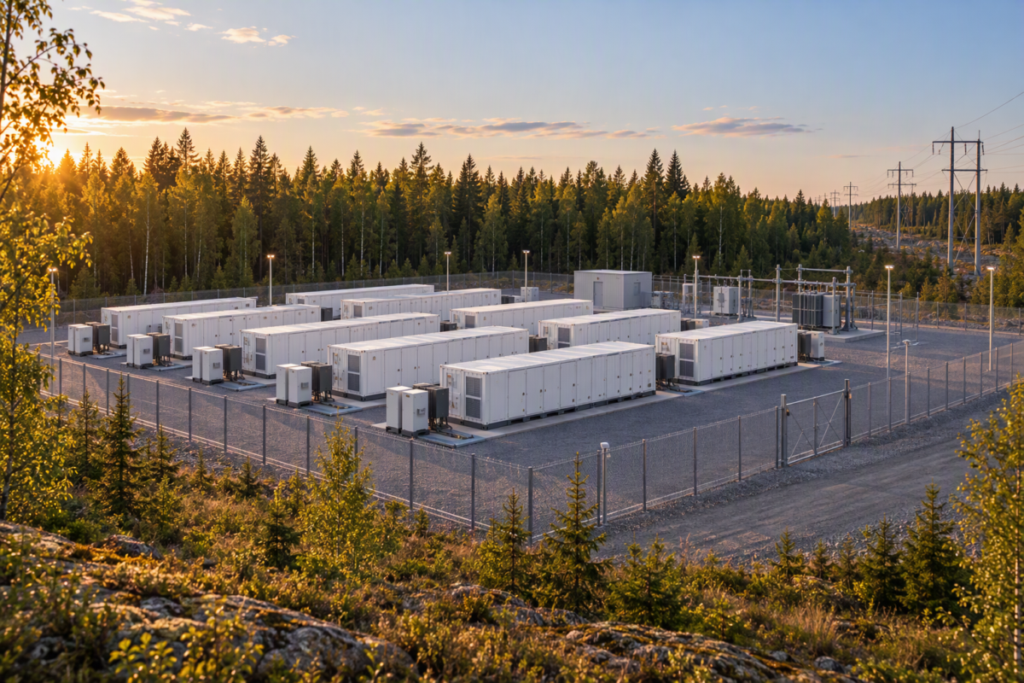
Fu-Gen has closed a 100MW ready-to-build (RtB) battery energy storage system (BESS) deal with Nala Renewables in Teuva municipality, South Ostrobothnia, Finland, selling the standalone project outright.
The Fu-Gen Nala Renewables transaction was completed on 29 September. It falls under a framework agreement that the two companies established in October 2025, covering a pipeline of ready-to-build BESS projects in Finland.
Fu-Gen is a Swiss-based renewable energy developer and independent power producer (IPP) active across onshore wind, solar and energy storage in the Nordic region. Nala Renewables is a global power and renewable energy platform and independent power producer (IPP).
The project, known as the Kärppiö BESS, is the third ready-to-build Finnish battery storage system Nala Renewables has acquired from Fu-Gen. It follows the 50MW Kauhava project in 2025 and the 125MW Vuolijoki project earlier this year.
Try Premium for just $1
- Full premium access for the first month at only $1
- Converts to an annual rate after 30 days unless cancelled
- Cancel anytime during the trial period
Premium Benefits
- Expert industry analysis and interviews
- Digital access to PV Tech Power journal
- Exclusive event discounts
Or get the full Premium subscription right away
Or continue reading this article for free
Construction is expected to begin later this year.
Why Fu-Gen sold the 100MW Finland battery storage project to Nala Renewables
Seppo Tupeli, Fu-Gen’s Nordic development director, said the Kärppiö BESS deal demonstrates the company’s capacity to take projects from origination through to delivery.
“The successful divestment of this 100 MW ready-to-build BESS project in Finland demonstrates Fu-Gen’s ability to originate, develop and deliver high-quality renewable energy assets across the Nordic region,” Tupeli said.
He added that capital from the sale would support Fu-Gen’s broader pipeline of wind and storage projects. It also supports a newer strategy of developing data centre sites alongside wind projects under a “bring your own power” model.
Remy Verot, Nala Renewables’ interim chief executive, said the acquisition extends the company’s position in a market it considers central to its European storage strategy.
“We are delighted to have closed on our third ready-to-build project with Fu-Gen, which brings our pipeline in Finland to 275MW/550MWh,” Verot said.
“Finland is a strategic market for BESS in Europe with a strong business case and we are delighted to continue expanding our footprint in the Nordics.”
Finland’s battery storage pipeline expands across multiple developers and technologies
The Kärppiö BESS deal adds to a run of battery storage activity across Finland this year. Much of it is concentrated in similarly sized standalone projects designed to participate in the shared Nordic ancillary services market.
Covenergo and Delta Capacity began construction in September on the 125MW/300MWh AKKU One project in Lapinlahti. That project was also acquired as a ready-to-build asset, this time from developer Helios Nordic Energy, with commissioning targeted for the fourth quarter of 2027.
Investment is also coming from a wider pool of European capital. Mirova, an affiliate of Natixis Investment Managers, announced a €65 million (US$73 million) equity investment in September across two Nordic BESS projects developed by Ingrid Capacity.
That includes the 45MW/90MWh Pedersöre project in Finland, marking Mirova’s first investment alongside the Swedish developer-operator.
Wind co-location has also emerged as a route into the Finnish battery storage market. Investment manager Downing confirmed in April it is developing a 20MW BESS at Konttisuo, the site of a 30MW wind project in Finland’s Southern Ostrobothnia region that Downing acquired in 2022.
Downing identified spare grid capacity at the site as the opportunity.
Technical requirements for Finland BESS projects remain demanding regardless of the developer. Hitachi Energy, which is supplying the power conversion system for a separate 125MW/250MWh BESS under construction in Haapajärvi, has said Nordic projects must cope with “especially challenging” operating conditions, including low temperatures, high humidity, snow and ice, alongside increasingly stringent grid code requirements set by Finland’s transmission system operator, Fingrid.